
Category: Taxes Made Simple
-

When someone does not file, the IRS files for them, and the substitute return carries no deductions
A person who never sends in a tax return does not stop a tax bill from being calculated. Under Internal Revenue Code Section 6020(b), the Internal Revenue Service can prepare a return on that person’s behalf using only the income already reported by employers, banks and other payers. The resulting document, called a substitute for…
-
The IRS charges 7 percent a year, compounded daily, on anything still unpaid after October 15
Every quarter, the Internal Revenue Service recalculates the interest rate it charges on tax bills that go unpaid, and for the final quarter of 2026 the number did not move. Individual filers who still owe money after October 15 — the deadline for anyone who requested a filing extension back in the spring — will…
-

The IRS mailed more than 3.1 million nonfiler notices last year after mailing none two years earlier
The Treasury Inspector General for Tax Administration counted the mail the Internal Revenue Service sent to taxpayers who had not filed a return, and the swing was stark: zero notices in fiscal year 2023, 1.68 million in fiscal year 2024, and 3.16 million in fiscal year 2025. Almost the entire increase traces back to one…
-

The IRS says a refund paid on a fake Tribal Tax Credit still has to be paid back
A federal scam warning issued on September 18, 2026 names a scheme built around a tax credit that does not exist. Promoters have been marketing a so-called “Tribal Tax Credit,” a “Native American Tax Credit,” or a “Sovereign Tribal Tax Credit” to taxpayers, tribal communities, and even tax professionals, claiming it can erase a tax…
-

Taxpayers in federally declared disaster areas have until February 1, 2027, not October 15
Most taxpayers who requested extra time on their 2025 return are working toward the same date: October 15, 2026. For households living inside nine separate 2026 disaster declarations — an earthquake in Hawaii County, wildfires that have burned across Nebraska since March, a typhoon in the Northern Mariana Islands — that date does not apply…
-

The IRS replaced its January guidance on overtime in August, and anything written from the old version may be wrong
Guidance issued in January on this year’s new overtime tax break has since been retired by the Internal Revenue Service itself, and the fine print of that swap matters more than a routine update usually would. On August 6, 2026, the IRS published Fact Sheet 2026-13, stating outright that it supersedes Fact Sheet 2026-01, the…
-
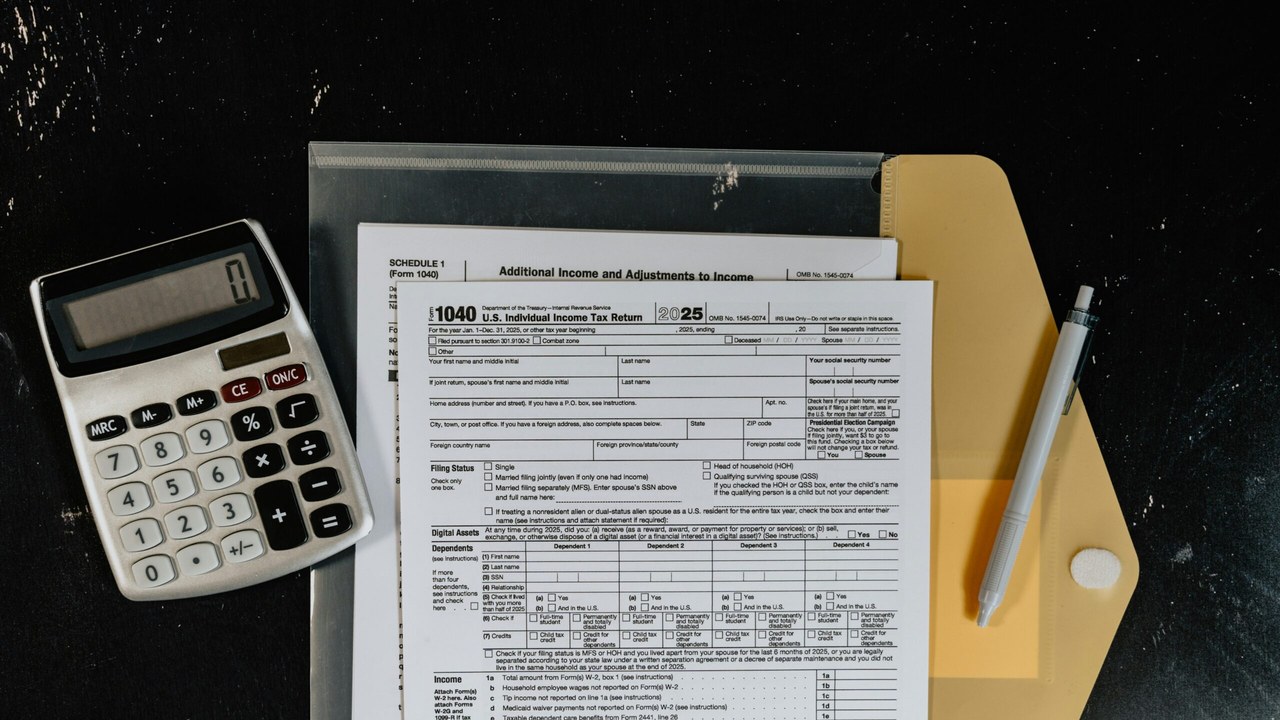
A return claiming the senior, tips, overtime or car loan deduction is wrong without the new Schedule 1-A
The One, Big, Beautiful Bill created four new individual deductions for the 2025 tax year: no tax on tips, no tax on overtime, a car loan interest deduction, and an enhanced deduction for people age 65 and older. All four now run through a single new IRS form, and a return that claims any of…
-

A leased vehicle never qualifies for the new car loan interest deduction, but a refinanced loan still does
The Internal Revenue Service has drawn a bright line between two of the most common ways households finance a car, and it works against nearly half of them. A new deduction for interest paid on vehicle loans, created by the 2025 tax law commonly called the Working Families Tax Cuts, excludes lease payments entirely from…
-

Workers at a law firm, medical practice or accounting business cannot take the new tips deduction at all
A new federal deduction lets tipped workers write off as much as $25,000 in tip income starting with the 2025 tax year, part of a package of individual tax breaks Congress passed last year. The deduction phases out above $150,000 of modified adjusted gross income for single filers and $300,000 for joint filers, according to…
-
Only the premium half of an overtime check qualifies for the new overtime deduction
A pay stub showing $9,000 in overtime for the year does not turn into a $9,000 deduction under the overtime tax break built into the 2025 federal tax law. The Internal Revenue Service says only the portion of overtime pay that exceeds a worker’s regular hourly rate — the “half” inside “time and a half”…