
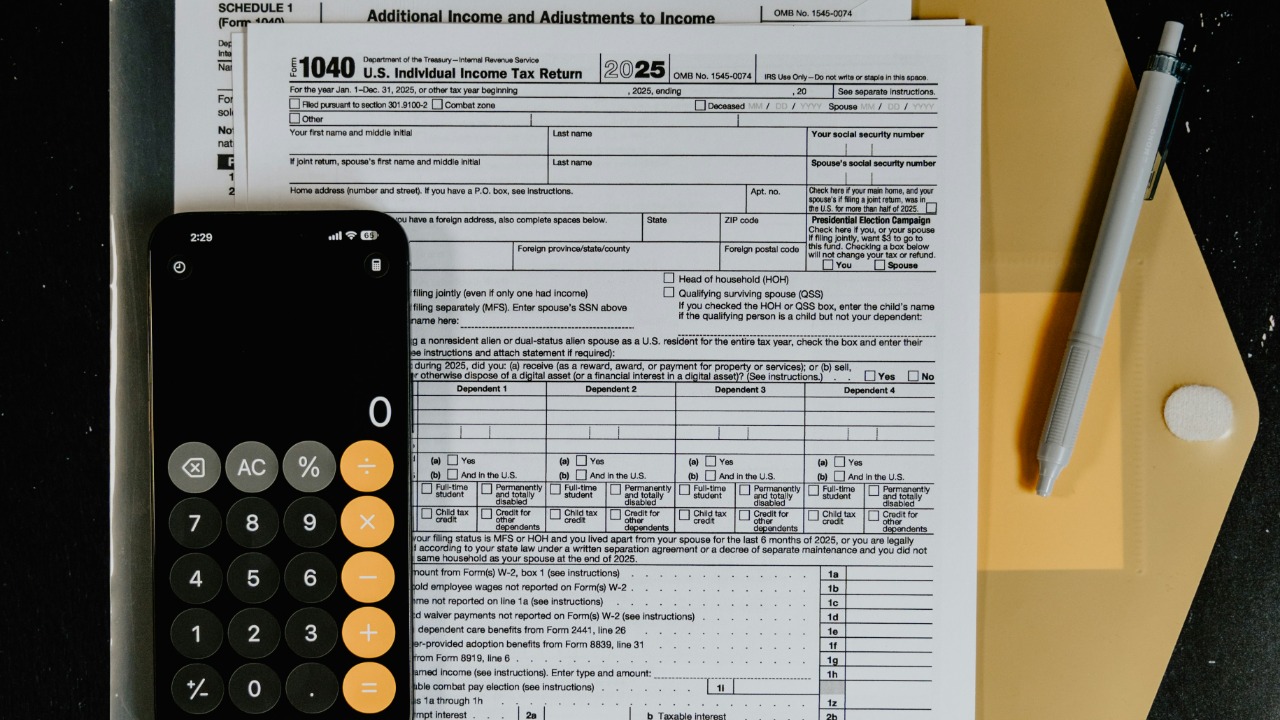
A pay stub showing $9,000 in overtime for the year does not turn into a $9,000 deduction under the overtime tax break built into the 2025 federal tax law. The Internal Revenue Service says only the portion of overtime pay that exceeds a worker’s regular hourly rate — the “half” inside “time and a half” — counts as qualified overtime compensation. For most hourly employees paid the standard 1.5x overtime rate, that premium works out to roughly one-third of the total overtime wages listed on the pay stub, not the whole line item. The gap between what the pay stub shows and what the tax return can actually deduct is where most of the confusion around this provision starts.
Only the Overtime Premium Meets the IRS Definition
Section 70202 of the Working Families Tax Cuts law created a temporary deduction for “qualified overtime compensation,” running from tax year 2025 through tax year 2028. The IRS defines that term narrowly: it is not the overtime pay a worker actually receives, but specifically the portion of qualified overtime pay that exceeds the regular rate of pay required under the Fair Labor Standards Act — the added half-rate that turns straight time into time-and-a-half. The straight-time portion of an overtime hour, the part a worker would have earned anyway at the normal rate, was already ordinary taxable wages before this law existed and stays that way under the new provision. Only the added premium is new, and only the added premium is deductible. The amount has to appear on a Form W-2, Form 1099 or another statement furnished to the worker, or be calculated directly by the taxpayer when no such statement is issued.
Free refund decision tree: A delayed refund usually means one of a few specific things, and each has a different next step. Find the reason with the free refund tracker.
What a $9,000 Overtime Total Actually Deducts
The arithmetic is straightforward once the definition is applied to a real pay stub. Time-and-a-half means the overtime hourly rate is 1.5 times the regular rate, so the premium — the “half” — is only one-third of the total overtime wage, not one-half of it and certainly not all of it. Consider a worker earning $20 an hour whose overtime rate is $30 an hour. Working 300 overtime hours in a year produces gross overtime pay of $9,000. Of that $9,000, $6,000 reflects the straight-time portion the worker would have earned for those same hours at the regular $20 rate, and the remaining $3,000 is the premium above that rate — the only part that qualifies as deductible overtime compensation. The deduction on that worker’s return is $3,000, not the $9,000 that shows up as the “overtime” total on the pay stub or the year-end wage statement.
The same one-third ratio holds regardless of the wage level involved. A nurse earning $40 an hour who logs 150 overtime hours at a $60-an-hour overtime rate also receives $9,000 in gross overtime pay for those hours — an identical total to the factory example above — and again nets a $3,000 deduction, because the underlying hourly rate does not change the fraction; only the total hours and pay do. A worker who assumes the entire overtime line is deductible, and adjusts withholding or a refund estimate on that basis, ends up overestimating the benefit by roughly two-thirds.
The $12,500 Cap and the Income Phase-Out Above $150,000
Even the smaller, premium-only deduction is capped. The maximum annual deduction is $12,500 for a single filer and $25,000 for a married couple filing jointly, regardless of how much overtime premium a household actually earned. That ceiling matters most to workers who put in heavy, sustained overtime; a joint-filing household would need roughly $75,000 in combined gross overtime pay at time-and-a-half before the $25,000 premium cap, rather than the one-third-of-total math, becomes the binding limit. The deduction also phases out for taxpayers with modified adjusted gross income above $150,000 for single filers and $300,000 for joint filers, so higher earners with overtime income lose some or all of the benefit regardless of how the premium is calculated. It is available whether a taxpayer itemizes or takes the standard deduction, but it requires a valid Social Security number, and married taxpayers must file jointly to claim it. None of those mechanics change the core rule confirmed by the IRS: the deduction is built on the overtime premium alone, so a worker who reads a $9,000 overtime total off a pay stub and expects a $9,000 write-off will be recalculating downward at tax time, not up.
Sorting Out a Refund After an Overtime Recalculation
Workers who assumed a full overtime total was deductible sometimes file a return that needs correcting once the premium-only rule is applied, and an amended or flagged return can leave a refund status unclear for weeks or months. A notice from the IRS explaining a recalculated deduction is common in these situations, and figuring out what the notice is actually asking for is often the first hurdle. Knowing which paperwork starts a refund trace, and where a household’s own numbers stand next to the IRS’s, can shorten that wait considerably.
The IRS Refund Recovery Kit is a 13-page kit built around a notice decoder and the refund-trace steps tied to Form 3911, so a taxpayer working through a recalculated overtime deduction can match an IRS letter to its actual meaning and next step.
See the notice decoder in The IRS Refund Recovery Kit.
AI-assisted research and drafting; reviewed by an editor.


