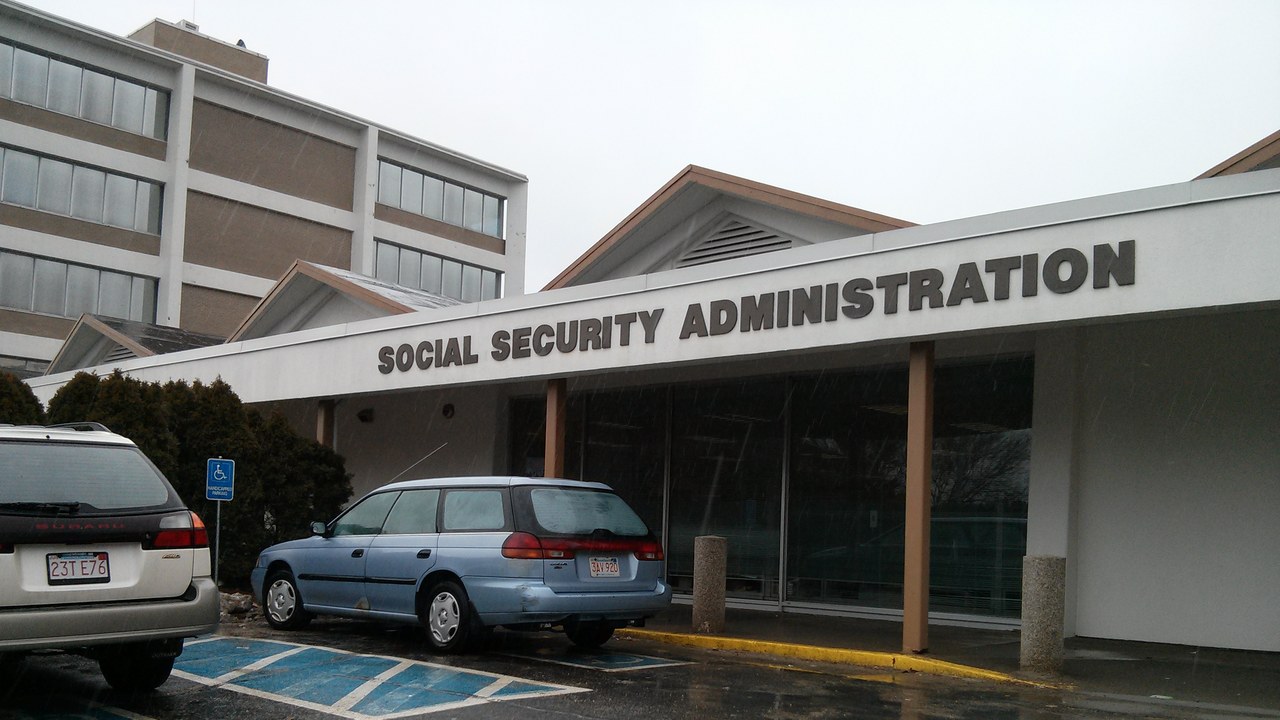
A child-benefit overpayment that traces back to March 2015 had become a $59,232 debt by the time the Social Security Administration identified it in April 2024, and the agency’s own watchdog says $57,676 of that debt went unrepaid. The case appears in a September 2026 audit from the SSA Office of the Inspector General, which examined how well the agency resolves overpayments made to children. The case is a single example drawn from the audit’s work, not an average, and the audit’s wider numbers describe a much larger problem.
The Overpayments to Children audit and its September 30 memorandum
The inspector general’s Audit Report 052502, titled Overpayments to Children, is dated September 30, 2026. Its memorandum is addressed to SSA Commissioner Frank Bisignano and signed by Michelle L. Anderson, the Assistant Inspector General for Audit, acting as First Assistant. The stated objective was to determine whether SSA resolved overpayments in accordance with policy for individuals who received child benefits.
Auditors examined two groups drawn from SSA’s Master Beneficiary Record. The first, 349 individuals, had child’s insurance benefits suspended or terminated while still carrying overpayments they were only contingently liable for. The second, 249,227 individuals, had overpayment balances of $243 or more as of September 2025 and had been selected for a federal tax refund offset. A random sample of 175 people from the second group produced most of the headline statistics.
How one child-benefit overpayment became $59,232
The report describes the case in a single passage. In April 2024, SSA determined that it had overpaid an individual $59,232 because it should have terminated that person’s child benefits in March 2015. That is a gap of roughly nine years between the date benefits should have ended and the date SSA recognized the error, which is how an ordinary monthly payment can grow into a debt of that size.
According to the inspector general, the individual did not repay the $57,676 balance or enter into a repayment agreement. Both figures belong to the same person: $59,232 is the overpayment SSA determined, and $57,676 is the balance still owed. The difference, $1,556, is not explained in the report, and the audit does not say how it was recovered.
The missing alert on SSI payments
With no repayment in hand, SSA’s External Collection Operation system selected the individual for a tax refund offset and mailed a pre-offset notice. The individual did not respond and was referred for the offset. Under the process the audit describes, a person who does not answer a pre-offset notice within 60 days, and who still meets every requirement, is referred to the Department of the Treasury.
The breakdown came next. The report says the agency had no process to tell its employees that the individual was receiving Supplemental Security Income, so staff did not start withholding from the SSI payments, as required. The audit lists the case as an example of withholding that should have happened and did not, with a refund offset standing in for the more direct tool of holding back part of a monthly payment.
What the 175-person sample shows about collection
Across the 175 sampled individuals, the inspector general found that SSA had not properly resolved the overpayments of 54 people, or 31 percent. Those 54 cases carried $227,012 in unresolved overpayments. Projected to the full population of 249,227, the auditors estimate about 76,904 individuals with roughly $242.6 million unresolved.
Collection did happen for some. As of June 2026, SSA had received $53,651 in tax refund offsets that partially or fully recovered the overpayments of 34 of the 175 sampled individuals. That figure covers 34 people in total, so it is a different number from the $57,676 balance on the single case above, and the two should not be read as parts of the same sum.
In the first group, the auditors estimate that 6,980 individuals across all segments of the record had suspended or terminated child benefits yet remained contingently liable, with about $38.5 million in overpayments attached. Contingent liability, the report explains, lets SSA recover an overpayment from benefits payable to another person on the same Social Security record, including people who receive child benefits, when the overpaid person is not due a benefit and collection from that person has failed.
The 30-day window and the three SSA forms that pause collection
The audit looks at SSA’s collection machinery rather than at a reader’s own notice, but SSA publishes the response rules for anyone who receives one. On its overpayments page, SSA gives 30 days to repay after an overpayment letter arrives and says that when a waiver request or appeal is submitted before the 30 days pass, collection does not begin until SSA decides the case.
Three forms carry the options. The Request for Waiver of Overpayment Recovery or Change in Repayment Rate, SSA-632, asks SSA to decide whether it can waive collection or change the monthly amount, and it includes a financial statement signed under penalty of perjury. The Request for Change in Overpayment Recovery Rate, SSA-634, is for a person who cannot meet necessary living expenses at the current withholding rate, and it asks for recent pay stubs, bank statements and bills. The Request for Reconsideration, SSA-561, is the appeal form for a person who disagrees with a determination, including on overpayment issues.
The standard for SSI waivers is written into regulation. Under 20 CFR 416.550, the overpaid person must have been without fault, and recovery must either defeat the purpose of the SSI program, be against equity and good conscience, or impede efficient administration because the amount is small.
The five recommendations SSA accepted
The inspector general made five recommendations: resolve the overpayments of the 403 individuals the auditors identified; review the estimated 6,600 people who received child’s insurance benefits and no longer met the requirements for contingent liability; add controls so employees are told to remove overpayments from contingently liable records; add alerts that start withholding from SSI payments and Social Security benefits for individuals selected for the Treasury Offset Program; and identify why employees did not properly update benefit records. The report records SSA’s response in one sentence: the agency agreed to implement the recommendations.
Sorting an overpayment letter from the collection that follows
The audit shows what happens on the agency’s side once an overpayment balance goes unanswered: a pre-offset notice, a 60-day clock and, in the one case, no withholding from SSI payments. On the recipient’s side, an overpayment letter still leaves a choice between a waiver request and an appeal, and the practical work is lining up the right form with the right situation before the 30 days run out.
The Social Security Check Protection Kit includes the three SSA forms that stop or pause collection (SSA-561, SSA-632 and SSA-634) and an overpayment response worksheet for organizing the response.
Line up the overpayment forms with The Social Security Check Protection Kit →
This piece was drafted with AI assistance; the figures were checked against SSA Office of the Inspector General Audit Report 052502 and SSA’s published overpayment page and forms.