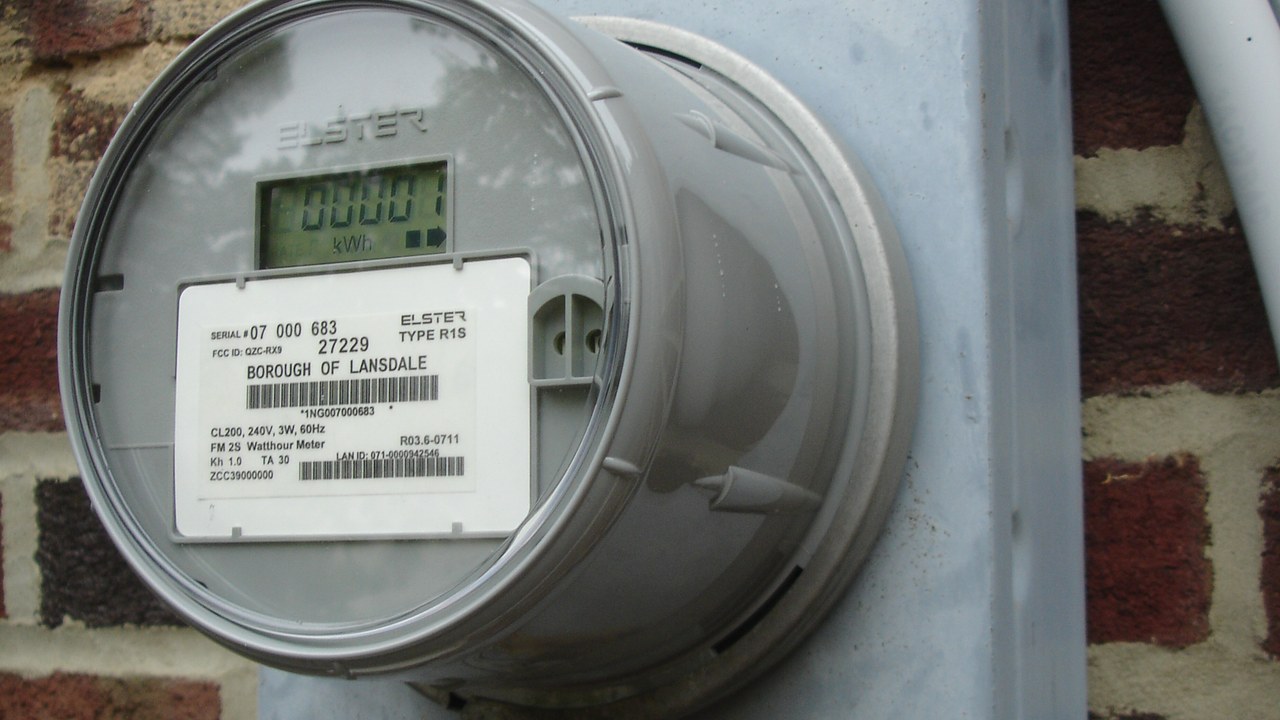
Rhode Island Energy has told state regulators exactly how it will return roughly $175 million to its customers, and the mechanics are simpler than most utility refunds: a flat line on the bill, no form, no application. Electric accounts are scheduled to start seeing $14.51 a month with the October billing cycle, while gas accounts start seeing $51.55 a month in December. The two credits run on different clocks and for different lengths, which is where most of the confusion is likely to start.
What the September 4 tariff filing says about the electric credit
The controlling document is the Hold Harmless Bill Credit Tariff compliance filing that The Narragansett Electric Company, doing business as Rhode Island Energy, submitted to the Rhode Island Public Utilities Commission on September 4, 2026 in Docket 25-45-GE. It was signed by Jeremy Licht, Assistant General Counsel for PPL Services Corporation, the parent company’s service arm. The electric tariff says it applies to “each active electric distribution customer account that is issued a bill during the months specified.”
The credit itself is labeled a “miscellaneous bill credit” of $14.51 per account. The filing applies it to the billing periods of October, November and December 2026, then every month from January through September 2027. That is twelve billing periods, so the credit adds up to $174.12 per active electric account across the full window. The filing puts the electric total at $91,081,790.
The amount does not scale with usage. A household that burns very little power and one that runs electric heat in January both receive the same $14.51, because the filing sets a fixed figure per account rather than a rate per kilowatt-hour.
The gas credit starts two months later and ends in April
The gas tariff uses the same structure with a different calendar. A miscellaneous bill credit of $51.55 is applied to each active gas distribution account in the billing periods of December 2026 and January, February, March and April 2027, according to the same filing. Five billing periods at $51.55 comes to $257.75 per active gas account over the winter.
The timing matters for a practical reason. The gas credit lands during the months when heating bills are highest and stops when the season ends, so a household with both fuels sees the electric credit alone for October and November, then both credits from December through April, then electric alone again until September. The filing shows $71,957,974 distributed to gas customers as bill credits, out of a gas allocation of $83,456,444 that appears in the Commission staff summary, and the filing does not break out the difference in the pages summarized here.
Why the title says “each active account” and not every customer
The tariff language is narrower than “every account.” Both credits attach to an active account that is issued a bill in the months specified. An account that is closed, or that is not billed in a given month, falls outside that wording, and the credit is tied to billing periods rather than paid as a lump sum. The filing lists no income test, no usage minimum and no rate-class carve-out, so a billed residential or commercial account on the distribution system is covered on the filing’s face.
That distinction affects movers in particular. A customer who closes an account in the winter would not collect the remaining months of the credit on that account, and a new account opened later picks up only the months still running. The tariff text, not a press summary, defines the test.
Where the money comes from: a rate case and a hold-harmless pledge
The credits are the output of the rate case the Commission voted on August 21, 2026. The Commission staff’s preliminary summary records an approved electric distribution increase of $44.27 million, against $78.75 million requested, and an approved gas distribution increase of $93.69 million, against $129.69 million requested. New rates took effect September 1, 2026.
The hold-harmless piece is separate from those increases. The staff summary sets the total hold-harmless credit at $174,784,794, split between $91,081,790 for electric distribution and $83,456,444 for gas distribution. The September 4 filing identifies the funding source as the 2022 acquisition of the company by PPL Corporation and PPL Rhode Island Holdings from National Grid USA, which closed May 25, 2022. The effect is that PPL’s acquisition-related costs are offset through the credits rather than carried in rates.
The staff summary itself carries a caveat worth repeating. It states that the information is “subject to further review and approval by the Commission,” with an open-meeting decision then scheduled for August 31, 2026. The September 4 filing likewise asks the Commission to approve the tariff provisions “with the effective dates stated therein.”
What the Docket 25-45-GE record shows as of October 4
The Commission’s docket page lists four relevant filings: the company’s acceptance letter on August 25, a schedules cover letter on August 28 with the NH-1, NH-2 and NH-3 calculation files, the bill credit tariff compliance filing on September 4, and the Division of Public Utilities and Carriers’ position memorandum on compliance, filed September 22. As of the read made for this article, the docket page does not post a separate order approving the compliance tariff, which is why the headline says Rhode Island Energy is “set to” credit the accounts and why the amounts and dates above are the company’s filed terms.
Customers do not need to do anything to receive them. The credit is described as a line item on the monthly distribution bill, so the October electric bill is the first place to look for a $14.51 entry labeled as a miscellaneous bill credit, and the December gas bill is the first place to look for $51.55. A missing entry on an active account is a question for Rhode Island Energy, and an unresolved dispute can be taken to the Commission through the Docket 25-45-GE record.
The figures in this article come straight from the company’s tariff filing and the Commission staff summary, and the per-account amounts, windows and totals match across both documents.
Heating help that sits outside the bill credit
A flat monthly credit on the Rhode Island Energy bill is automatic, and it leaves untouched the winter heating and cooling costs that a fixed credit may not cover. The gap the Docket 25-45-GE tariff leaves is the separate, application-based help that exists for home energy costs and property-tax relief.
The Senior Property Tax & Home-Cost Relief Kit is an 11-page kit that lays out heating, cooling and home-repair help alongside an application log and renewal calendar for keeping track of what has been filed.
Open The Senior Property Tax & Home-Cost Relief Kit’s heating and home-repair pages →
This piece was drafted with AI assistance; the credit amounts, windows and totals were checked against the Rhode Island PUC’s September 4 tariff compliance filing and staff summary.