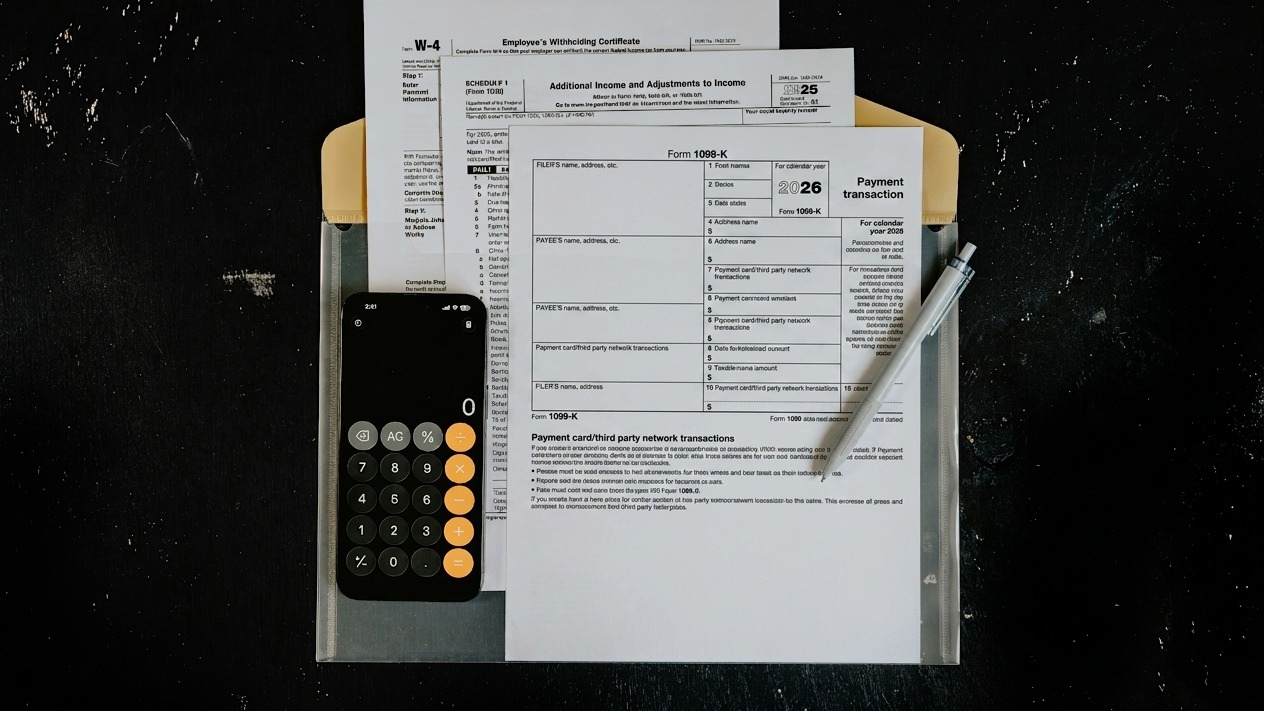
For the millions of people who sell a few things online or get paid through an app, the threshold that triggers a tax form landing in the mailbox just moved back up — a lot. Under the tax law enacted in 2025, payment platforms only have to send you a Form 1099-K when your payments top $20,000 and you have more than 200 transactions in a year. That reverses a planned crackdown that would have flagged accounts at just $600, and it spares millions of casual sellers a confusing tax document.
What changed with the Form 1099-K threshold
Form 1099-K is the information return that payment apps, online marketplaces, and card processors — what the IRS calls “third-party settlement organizations” — send to report money that flows through their platforms to a seller or payee. For years, the reporting bar was high: a platform only had to issue the form if a user cleared both $20,000 in gross payments and more than 200 transactions. A 2021 law slashed that to a single $600 trigger with no transaction minimum, a change that was repeatedly delayed amid concerns it would swamp ordinary users with paperwork.
The 2025 tax law settled it. According to the IRS’s updated FAQs, the One, Big, Beautiful Bill retroactively reinstated the threshold that was in place before the 2021 change. So platforms are again not required to file a Form 1099-K unless the gross amount of payments to a payee exceeds $20,000 and the number of transactions exceeds 200. Both conditions have to be met, not just one.
Free retirement updates: A quiet rule change can shrink your Social Security or Medicare check, and no one warns you. The free Retirement Shield newsletter catches these early and tells you what to do. Get it free.
Who this helps
The people most affected are casual, small-scale sellers and anyone who moves modest sums through payment apps. Think of someone cleaning out a closet on an online marketplace, reselling concert tickets at face value, splitting a vacation rental with friends, or running a tiny side hustle that brings in a few thousand dollars a year. Under the $600 rule, many of those users would have received a Form 1099-K — often for activity that generated little or no taxable profit — and then had to sort out on their tax return why the form did not represent income they owed tax on.
Restoring the $20,000-and-200-transactions bar means most of those users will not get the form at all. That removes a real source of confusion, because a 1099-K reports gross payments, not profit. A person who sold a used couch for $400 that they originally paid $900 for has a loss, not income, yet a low-threshold form would still have shown the $400 and invited questions from the IRS if it went unexplained. That mismatch was the heart of the worry about the $600 rule: a flood of forms reporting gross payments, many of them for personal transactions that carried no tax at all, followed by taxpayers scrambling to prove they did not owe anything. Restoring the higher threshold pushes most of that paperwork back off the table for small, casual users while leaving the reporting in place for the larger sellers it was originally designed to capture.
The catch: income is still taxable even without a form
Here is the part that trips people up, and it is worth stating plainly. The threshold change is about paperwork, not about what you owe. Whether or not you receive a Form 1099-K, income you earn is still taxable and must be reported. The IRS is explicit on its Understanding your Form 1099-K page that the form is simply one way payments get reported — it does not create or erase a tax obligation. If you run a genuine business, flip goods for profit, or freelance through an app, that profit belongs on your return no matter how much or how little the platform reports.
What the higher threshold does is spare people whose activity was never taxable income to begin with — personal sales at a loss, reimbursements from friends, gifts — from getting a form that made it look like they had unreported earnings. It does not give anyone a pass on real income. Selling personal items at a loss is not taxable, but you also generally cannot deduct that loss; you simply do not report it as income.
What to do this tax season
A few practical steps keep things clean. Keep records of what you sell and what you originally paid, so you can show whether a transaction was a personal sale, a loss, or a profit. If you do receive a Form 1099-K — some platforms may still send them, and a few states set lower thresholds of their own — do not ignore it; match it against your own records and report any actual income. And if a form shows payments that were not taxable income, such as reimbursements or the sale of a personal item at a loss, the IRS provides guidance on how to reflect that on your return rather than paying tax you do not owe. When in doubt, the agency’s Form 1099-K pages walk through common situations, and a tax professional can help with anything unusual.
This article was produced with AI assistance and reviewed by a human editor. Figures are linked to their primary sources; where a claim could not be verified from the public record, we say so.
More Financial Reading