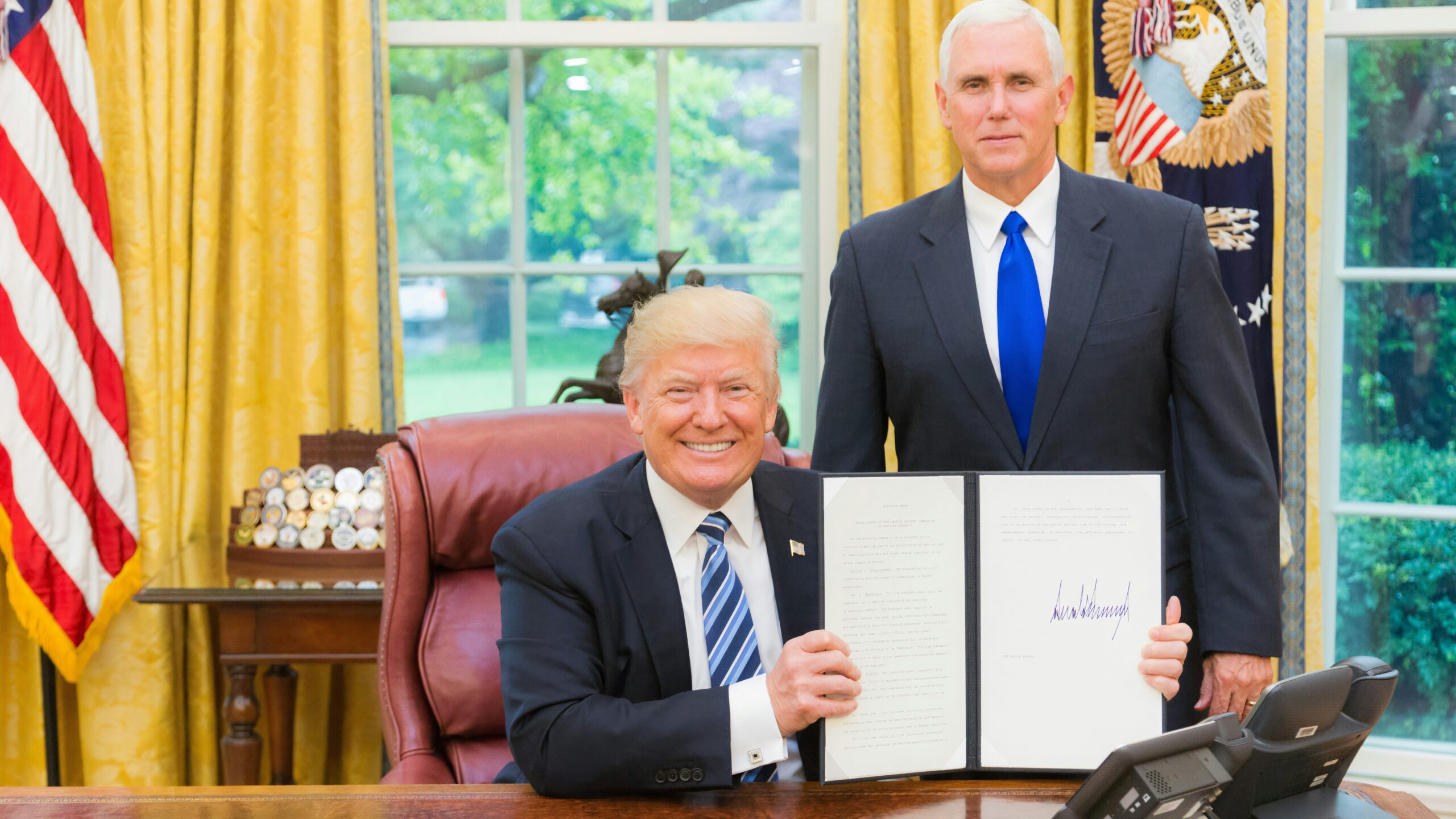
The $2,000 “tariff dividend” check that President Trump has floated remains just a proposal, and the Senate bill that would create a version of it has stalled. No checks have gone out, no agency is sending money, and there is no application to file, because the payment does not exist. For households that have seen the idea circulate and wondered when the money arrives, the honest answer is that it may never — and treating it as anything other than an unresolved proposal is a good way to get taken in by a scam that promises to “help you claim” it.
Where the idea actually stands
The concept is that revenue from tariffs could be rebated to Americans as direct payments, sometimes described as $2,000 per person. But it is a promise, not a program. As CNBC reported on the legislative effort, a bill introduced by Senator Josh Hawley would create a tariff-funded rebate, but that bill remains in committee and has not advanced into law. Other lawmakers have floated competing rebate proposals with different amounts and eligibility, none of which has been enacted.
There has also been public disagreement over whether such payments could even happen without Congress. The president has suggested checks could go out without congressional approval, while administration economic officials have indicated the payments would depend on legislation. That disagreement itself signals how unsettled the idea is: when officials cannot agree on whether a payment is legally possible, it is nowhere near reaching a mailbox.
Free retirement updates: Want plain-English help keeping more of your money in retirement? The free Retirement Shield newsletter covers the benefits, deadlines, and money mistakes that cost retirees, a couple times a week. Subscribe free.
Why “proposal” is the operative word
A direct payment to households requires either a law authorizing it or clear legal authority to spend the money that way, plus an agency to administer it. None of that is in place for the tariff dividend. There is no enacted statute, no appropriated funding, no eligibility rules, and no agency processing payments. Cost is another obstacle: sending $2,000 to a broad swath of Americans would run into the hundreds of billions of dollars, and lawmakers have not agreed on whether or how to pay for it.
This is different from tax provisions that are actually law, like the new deductions for overtime, tips, and older taxpayers created by the 2025 tax package. Those are enacted and claimable on a tax return. The tariff dividend is not in that category — it is a political proposal that has been discussed, introduced as legislation, and stalled, which is exactly how many proposed payments end.
The scam risk while it stays in limbo
Whenever a stimulus-style payment is in the news, scammers exploit the confusion. Expect texts, emails, and calls claiming you can “register” for your tariff dividend, “verify eligibility,” or “claim your $2,000” by clicking a link or providing bank details. All of it is fraudulent, because there is nothing to register for. The government does not require you to sign up in advance for a payment that has not been created, and it never asks for a fee or your bank login to release money. The FTC’s scam resources describe how these government-payment scams operate.
The safe posture is to ignore any message offering to help you get a tariff check. If real legislation ever passes, it would be widely reported and administered through official channels like the IRS, not through a link in a text message.
What to watch, and what to do now
For now, do not budget around a tariff dividend, and do not give personal or financial information to anyone claiming to process one. If you want to track the idea, follow whether the Hawley bill or a similar measure actually advances through Congress and is signed into law — that, not a promise or a press mention, is the moment a proposal becomes a payment. In the meantime, the reliable ways to put money back in a household budget are the tax breaks and benefits that are actually enacted, from the child tax credit to the new overtime and senior deductions, all of which exist today and can be claimed without waiting on a stalled proposal.
How to tell a real payment from a promise
Because stimulus-style ideas resurface often, it helps to know the markers that separate an actual government payment from a political promise. A real payment has a law behind it, a funded appropriation, published eligibility rules, and a named agency — usually the IRS — administering it through official channels, with the details reported widely and posted on government websites you can reach directly. A promise, by contrast, lives in speeches, press interviews, and bills that have not passed. The tariff dividend is squarely in the second category: a talked-about idea and a stalled bill, with no statute, funding, rules, or agency behind it.
That distinction is also your scam filter. Any message telling you to “register,” “verify eligibility,” or “claim” a tariff check — especially one asking for a fee, a bank login, or personal details through a link — is fraudulent, because there is nothing to sign up for and the government never charges you to receive a payment. If a real program is ever enacted, it will be announced through official channels, not a text. Until then, the reliable ways to add money to a household budget are the tax breaks already in law, from the child tax credit to the new deductions for overtime, tips, and older taxpayers, none of which require waiting on a proposal that may never pass.
This article was produced with AI assistance and reviewed by a human editor. Figures are linked to their primary sources; where a claim could not be verified from the public record, we say so.
More Financial Reading