An overdraft fee is one of the few bank charges you can switch off in advance, and most people never do. The average fee runs about $27 a shortfall, and some banks still charge $30 to $35 — enough to turn a $5 coffee bought on an empty account into a $40 morning. A federal rule gives you the power to decline the coverage that makes those charges possible, and turning it off costs nothing.
What “about $27” actually measures
The average is real, but it hides a range. Bankrate’s annual checking survey, summarized in NerdWallet’s overview of what banks charge for overdrafts, put the average overdraft fee at $26.77, slightly lower than the year before. That is the figure behind the “about $27” shorthand. But averages smooth over the outliers, and the outliers are where the pain is: plenty of banks still charge $30, $34, or $35 per item, and a single bad day with several transactions can stack multiple fees before you notice the balance dipped.
The fee is also flat, not proportional. The bank charges the same $27 or $35 whether you overdrew by $4 or $400, which is why small everyday purchases — a gas fill-up, a fast-food order, a streaming charge that hit at the wrong time — are the ones that produce the most lopsided fees relative to what you actually bought.
Free retirement updates: Want plain-English help keeping more of your money in retirement? The free Retirement Shield newsletter covers the benefits, deadlines, and money mistakes that cost retirees, a couple times a week. Subscribe free.
The opt-in rule most people never knew they answered
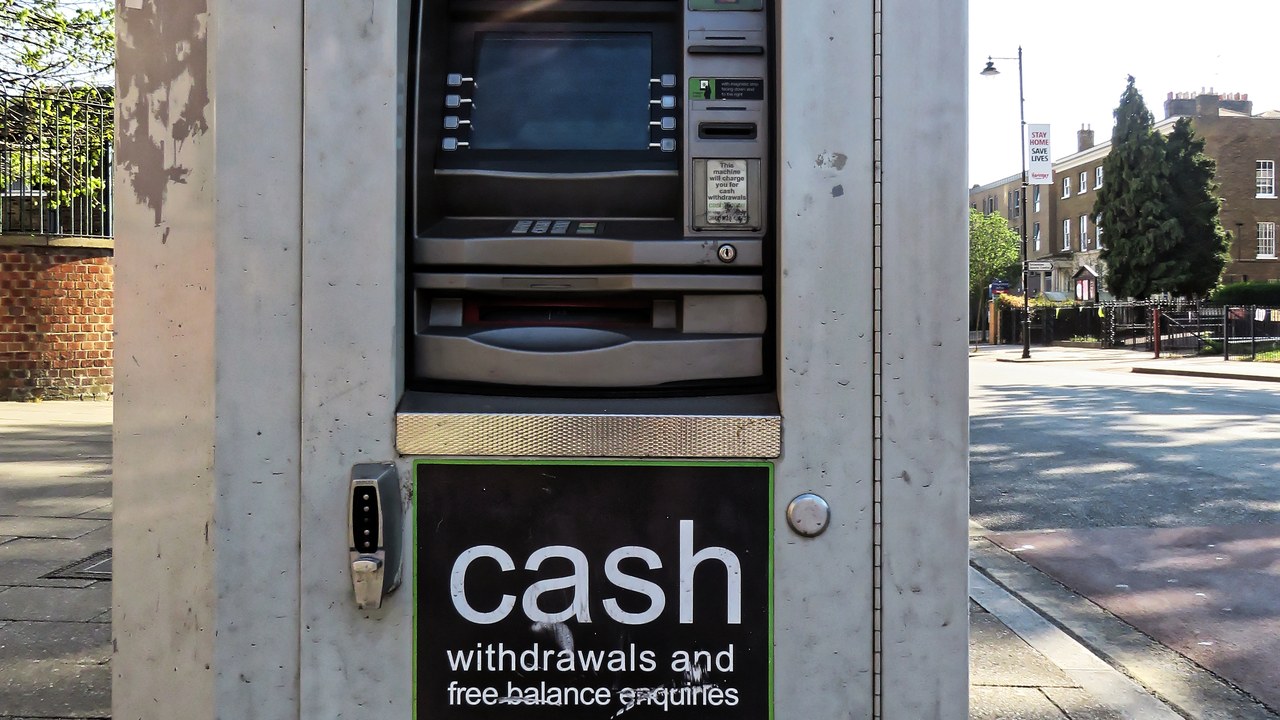
The reason you can be charged for a $5 debit swipe on an empty account is that you almost certainly said yes to it — often years ago, on a form you barely read. Under the Federal Reserve’s Regulation E, a bank cannot charge you an overdraft fee on an ATM withdrawal or a one-time debit-card purchase unless you have affirmatively opted in to overdraft coverage for those transactions. Opting in is what lets the bank approve the purchase and then charge you for the privilege of covering it.
Decline that coverage and the outcome flips. When your balance can’t cover a debit-card purchase, the card is simply declined at the register — a moment of mild inconvenience, and no fee. The transaction does not go through, so there is nothing to cover and nothing to charge. For everyday debit and ATM use, opting out trades the occasional declined swipe for the certainty of never paying $35 to spend $5.
What opting out does and does not cover
The Regulation E opt-out is specific, and it helps to know its edges. It applies to ATM withdrawals and one-time debit-card purchases — the everyday transactions where surprise fees pile up. It does not automatically cover checks or recurring automatic payments, such as a monthly utility draft or insurance premium, which follow different rules and can still overdraw an account. So opting out sharply reduces exposure without eliminating every path to an overdraft.
That is a feature, not a gap. Most people want a bounced utility payment handled differently than a declined coffee, and the rule leaves recurring bills on their own track. The point of opting out is to stop paying flat fees on small, avoidable debit-card shortfalls, and it does that cleanly.
It is worth distinguishing overdraft coverage from a separate product some banks offer: overdraft protection that links your checking account to a savings account or line of credit. That linked transfer moves your own money to cover a shortfall, often for a smaller fee or none at all, and is a different, generally cheaper arrangement than the pay-a-flat-fee coverage this rule addresses. A customer can decline debit-card overdraft coverage under Regulation E and still keep a savings-linked transfer as a backstop, getting the safety of a covered payment without the $35 charge.
How to turn it off
Switching off debit-card overdraft coverage takes minutes. You can do it in most banking apps under account settings or overdraft preferences, by calling the number on the back of your card, or in a branch. Ask specifically to opt out of overdraft coverage for ATM and one-time debit-card transactions, and confirm the change in writing or by screenshot.
The deeper reason to bother is that overdraft fees are one of the few bank costs that are entirely optional on your side. The average may be $27 and falling, but the Federal Reserve’s own rule means you never agreed to pay it unless you checked a box — and the same rule lets you uncheck it. For a household watching every dollar, declining a coverage you didn’t need is one of the cleaner ways to make sure a low balance costs you an inconvenience instead of a fee.
This article was produced with AI assistance and reviewed by a human editor. Figures are linked to their primary sources; where a claim could not be verified from the public record, we say so.
More Financial Reading