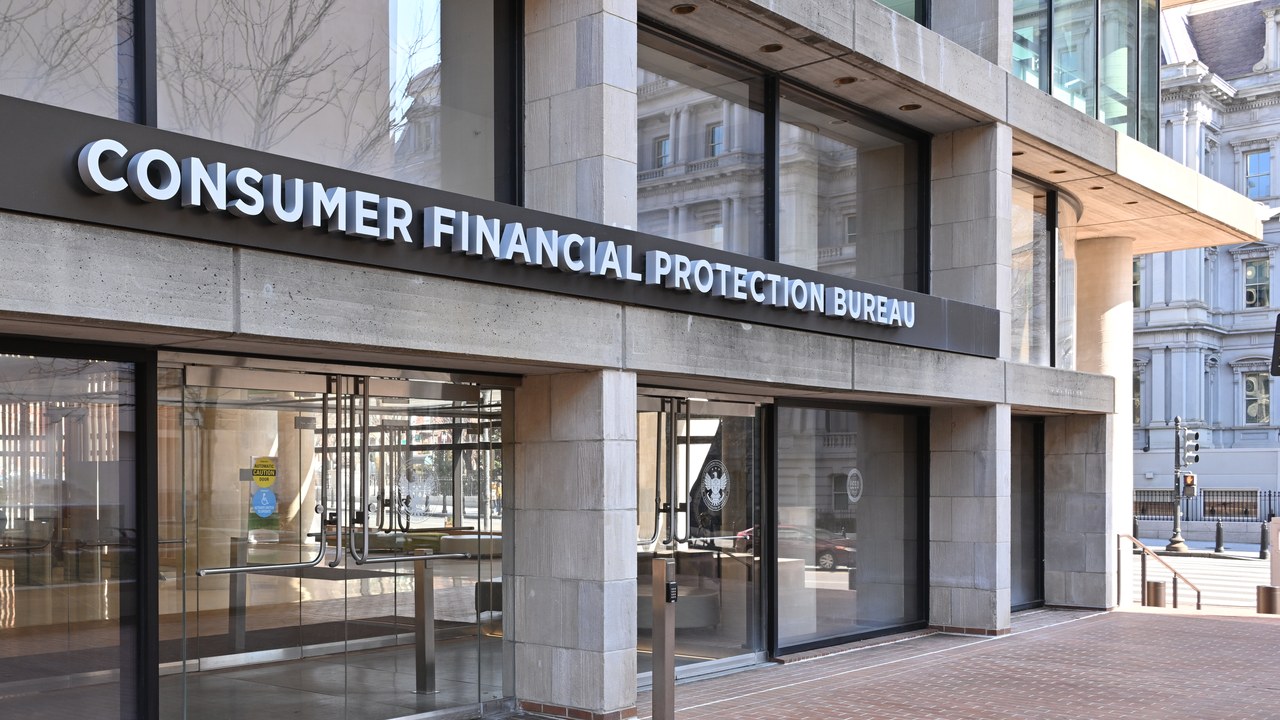
A lot of households came out of 2024 believing overdraft fees had finally been capped by federal rule. A rule really was written, finalized and published, with an effective date sitting on the calendar. It never took effect. There is still no federal limit on what a bank or credit union may charge you when a transaction pushes your account below zero.
$12.4 billion in overdraft and NSF fees in 2025
The size of that gap is measurable, because banks report the revenue themselves. In 2025, banks and credit unions extracted over $12 billion in overdraft and nonsufficient funds fees from struggling families, according to an issue brief from the National Consumer Law Center. Working from the reported figures, the brief puts the estimate a little finer: people paid an estimated $12.4 billion in overdraft and NSF fees in 2025.
That is a full-year total for a calendar year that has already closed, not a monthly snapshot and not a forecast. The underlying numbers come from call reports submitted to the Federal Financial Institutions Examination Council, the standardized filings banks file on their own operations. The brief compiling them was published in June 2026 and last modified on July 1, 2026.
Free retirement updates: One number can cost or save hundreds a month in retirement. The free Retirement Shield newsletter surfaces the ones worth knowing. Sign up free.
The rule was disapproved five months before its October 1, 2025 effective date
The rule in question is the Consumer Financial Protection Bureau’s final rule on overdraft lending at very large financial institutions. The Bureau issued it on December 12, 2024, and it was published in the Federal Register on December 30, 2024, carrying the citation 89 FR 106768. The CFPB’s own record of the rule lists an effective date of October 1, 2025.
That date arrived with nothing left to enforce. On May 9, 2025, a joint resolution became Public Law 119-10, and its operative language runs a single sentence: Congress “disapproves the final rule submitted by the Bureau of Consumer Financial Protection relating to ‘Overdraft Lending: Very Large Financial Institutions’ (89 Fed. Reg. 106768 (December 30, 2024)), and such rule shall have no force or effect.” The enrolled law also records how it moved: the Senate considered and passed it on March 26 and 27, 2025, and the House on April 9.
The order of those events is the whole story. Written, then disapproved, then the effective date came and went. Nothing about overdraft pricing changed on October 1, 2025, because there was no longer a rule to change it.
Chase at $1.1 billion, Wells Fargo at $924 million, and a 6.2% climb
Two names sit at the top of the 2025 figures. Chase collected $1.1 billion in overdraft fee revenue, slightly up from 2023, and Wells Fargo took $924 million, slightly down from 2023. Collectively, the top 20 consumer banks earned $4 billion in overdraft fee revenue in 2025.
The direction of travel matters more than any single bank. Overdraft revenues at the top 20 banks were up 6.2% in 2025 over 2023. Revenue from this one fee category rose across the largest consumer banks over a two-year stretch, which is the opposite of what a household would expect from a category that many people assumed was on its way out.
Capital One, Citibank, American Express and Ally Bank charge nothing
Here is the part of this you can actually do something with. Capital One, Citibank, American Express, and Ally Bank charge no overdraft fees. Not a reduced fee, not a courtesy waiver you have to call and request, and not a fee that returns after the second incident in a year. None.
That turns an overdraft fee from a fact of banking life into a choice about where you keep your checking account. If your household overdrafts even occasionally, the fee schedule at your current institution is a recurring monthly cost with a zero-dollar alternative available at four large, nationally known institutions. Switching a primary checking account is real administrative work, mostly around direct deposit and automatic payments, and it is worth pricing that work against what the fees have cost you over the last twelve months rather than what they cost you in any single bad week.
It also changes the question worth putting to your current bank. Not whether one fee can be waived this time, which is a conversation about a single incident, but what the standing overdraft fee schedule is and whether the institution intends to keep charging it. Those four names give that comparison a floor to measure against.
The Congressional Review Act blocks a substantially similar rule
Public Law 119-10 was a Congressional Review Act joint resolution, S.J.Res.18 in the 119th Congress, and that procedural label decides what can happen next. A rule struck down through the CRA does not simply vanish and leave the agency free to try again. The Act also bars a substantially similar rule absent new legislation from Congress, so a future CFPB cannot quietly re-issue the same protection under a different name.
For a household, that distinction is not academic. It sets the realistic timeline. A protection that could have arrived automatically through one federal agency now depends on legislatures acting one state at a time, which is slower and produces different answers depending on where you live.
That is why the National Consumer Law Center’s own recommendation coming out of the 2025 data points at state legislatures rather than at a federal agency. The route that produced the disapproved rule is closed, and the group compiling the call-report figures is arguing that states are the level of government still able to act on overdraft and NSF fees.
For anyone trying to work out what protection currently exists, the Bureau’s compliance page for the rule answers it in one sentence, still posted for the industry it was written for: “Consistent with the joint resolution, the Final Rule has no force or effect.” That is the standing position as of August 2026. No federal cap on overdraft fees exists, and a household budgeting as though one does is budgeting around a rule that never started.
This article was produced with AI assistance and reviewed by a human editor. Figures are linked to their primary sources; where a claim could not be verified from the public record, we say so.
More Financial Reading