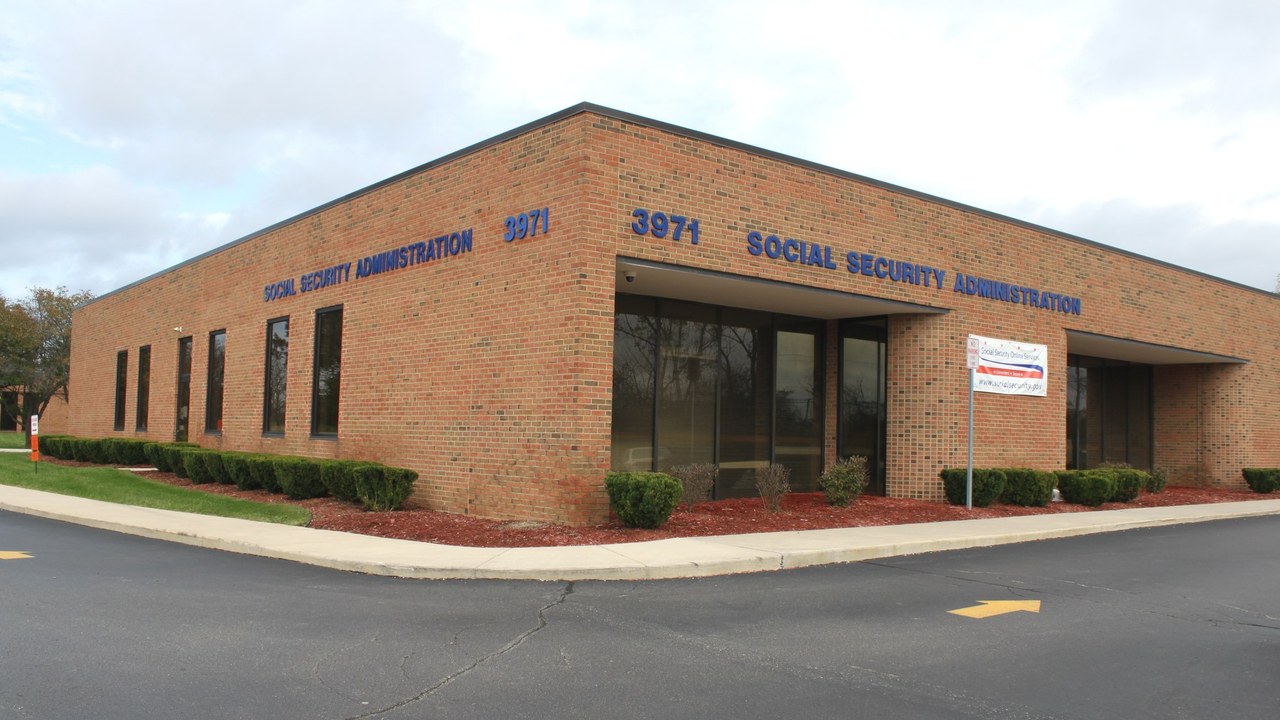
The notice a bank failure generates in the Federal Register is addressed to creditors and lawyers, not to the people who kept a checking account there. That division is the design. At every American bank placed in federal receivership this year, the cost of the failure was routed to the federal Deposit Insurance Fund rather than to account holders, and the paperwork that followed was a matter of public record instead of a demand on anyone’s household.
The four receiverships the government has recorded this year
The Federal Deposit Insurance Corporation assigns each receivership a reference number, and those numbers run in order. Reading them in sequence is the cleanest way to count a year without relying on anyone’s tally.
The first came on January 30, when the Illinois Department of Financial and Professional Regulation took possession of Metropolitan Capital Bank & Trust in Chicago and named the FDIC receiver. The FDIC’s inspector general later reported that the bank had “experienced continued asset quality issues, which ultimately eroded its capital position,” and put the cost to the insurance fund at $19,647,000, or 8 percent of the bank’s $232,051,439 in total assets, in a failed bank review issued June 1.
The second is recorded at reference number 10551. A Federal Register notice published May 7 lists Community Bank and Trust of LaGrange, Georgia, with a date closed of May 1, 2026. Reference numbers 10552 and 10553 followed in July. No notice bearing 10554 has been published, which is why the count for 2026 still stands at four.
Free retirement updates: Main Street money decisions get easier when the numbers are explained without jargon. The free Retirement Shield newsletter delivers that help in a short email. Sign up free.
Seven days apart, on July 10 and July 17
The July closings arrived exactly a week apart, and they came from opposite ends of the banking system. Kentland Federal Savings and Loan Association of Kentland, Indiana was closed first. The FDIC’s receivership notice published July 17 logs it as reference number 10552 with a date closed of July 10, 2026.
Small Business Bank of Lenexa, Kansas followed. A notice published July 23, signed by FDIC Executive Secretary Debra A. Decker on July 20, lists it as reference number 10553 with a date closed of July 17, 2026. Two failures inside a single week is unusual for a period when the ordinary run rate has been closer to two a year.
Why the comptroller found Kentland “critically undercapitalized”
Kentland’s closing is the better documented of the two because the Office of the Comptroller of the Currency, rather than a state regulator, made the call and said why. Its news release of July 10 says the institution held approximately $3.7 million in total assets as of March 31, 2026, which is a small figure even by community bank standards.
The findings are stated in a single paragraph. The comptroller acted “after finding that the bank had experienced substantial dissipation of assets and earnings due to unsafe and unsound practices,” and further found “that the bank incurred losses that depleted its capital, the bank is critically undercapitalized, and there is no reasonable prospect that the bank will become adequately capitalized.” Critically undercapitalized is a defined regulatory tripwire, not a description of mood, and reaching it obliges a regulator to act.
Two failures a year had become the recent normal
Four in seven months is a change in tempo rather than a crisis. American Banker’s running list of recent bank failures records only two in 2025, Pulaski Savings Bank in January and The Santa Anna National Bank in June, and only two in 2024, Republic First Bank in April and the First National Bank of Lindsay in October.
Against that baseline, the four recorded in 2026 stand out for their pace, not their scale. Metropolitan Capital held $261.1 million in assets and Kentland held $3.7 million. These are not the multibillion-dollar institutions that dominated the failure headlines of 2023, and the insurance fund absorbed each one without any of the emergency measures that period required.
The $50 million line that triggers an inspector general review
What deposit insurance protects is a balance, not a set of terms. An insured deposit survives a receivership intact; the interest rate, the fee schedule and the account agreement attached to it belong to whichever institution ends up holding the account, and those can be rewritten afterward. That distinction is worth understanding before, rather than after, a bank changes hands.
There is also an audit trail behind each of these losses. The Federal Deposit Insurance Act sets a threshold: when the insurance fund’s loss falls under $50 million, the inspector general of the appropriate federal banking agency must determine the grounds the regulator cited for appointing a receiver and decide whether unusual circumstances warrant a deeper review. The factors include the size of the loss relative to the failed bank’s total assets, whether supervision caught the problem, and whether there are indicators of fraud.
On Metropolitan Capital, the inspector general’s conclusion was one sentence: “Our review did not identify unusual circumstances that warranted an in-depth review of the loss.”
This article was produced with AI assistance and reviewed by a human editor. Figures are linked to their primary sources; where a claim could not be verified from the public record, we say so.
More Financial Reading