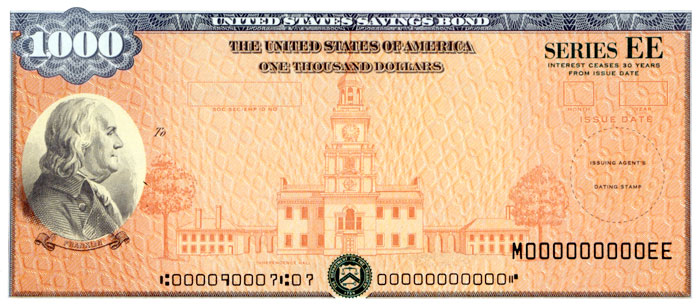
Somewhere in a fireproof box, a desk drawer, or a folder your parents labeled “important,” there may be paper savings bonds bought decades ago for a birth, a graduation, or a payroll savings plan. Here is the fact that should send you to check: savings bonds do not earn interest forever. Series EE and Series I bonds stop earning interest at 30 years, and every Series E bond, the older kind sold through 1980, stopped earning long ago.
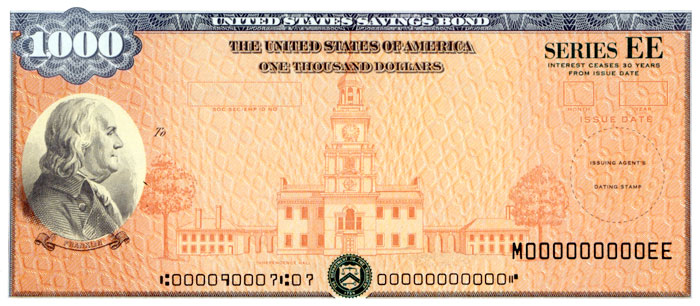
A matured bond is not lost money, the government still owes you every dollar. But it is frozen money: it earns nothing while inflation keeps chewing on it, and it is doing you no good in a drawer when it could be in an account paying interest. The Treasury has a free lookup tool for exactly this situation, and cashing a bond is easier than most people expect. Here is the whole process.
The 30-year clock, and how to read it
The math is simple: look at the issue date printed on the face of the bond. A bond reaches final maturity 30 years after its issue month, and then it stops growing. In 2026, that means anything issued in 1995 or earlier is done earning, bonds issued in 1996 are hitting their final maturity month by month this year, and bonds from the years right after are approaching the line.
Two wrinkles worth knowing. EE bonds carry a guarantee that they will at least double their face value at 20 years, so an older EE bond is usually worth more than the number printed on it. And a bond cashed before five years gives up the last three months of interest, but that penalty is irrelevant for anything old enough to be the subject of this article. To find the exact current value of any paper bond, punch the serial number, series, and issue date into the Savings Bond Calculator on TreasuryDirect; it will tell you to the penny what the bond is worth today.
Treasury Hunt: the government’s lost-bond lookup

What if you are not sure bonds exist at all? Maybe a grandparent bought them and the paper never surfaced. The Treasury runs Treasury Hunt, a free search that checks for matured, uncashed savings bonds issued in 1974 or later, plus certain undeliverable payments. You enter a Social Security number and state, and it tells you whether there is anything to claim. It takes about a minute, and it is worth running for yourself, a spouse, and, with permission, aging parents.
If Treasury Hunt turns something up, or if you have the paper but it is damaged, or you know a bond existed but the certificate is gone, you can file a claim with Treasury to have the bond reissued or paid. Lost paper does not mean lost money; the bond’s registration, not the paper itself, is what proves ownership.
How to actually cash a paper bond

You have two routes, described on TreasuryDirect’s cashing-a-bond page. The first is your own bank or credit union: many will cash savings bonds for established customers, though policies vary, some cap the amount, and some no longer handle bonds at all, so call before you drive over. Bring the bonds, unsigned, and your ID; you sign in front of the teller.
The second route is mailing the bonds to Treasury Retail Securities Services with FS Form 1522, with your signature certified if the value is high. That is the sure path when a bank says no, when you inherited bonds and need to document that, or when you have a thick stack. Electronic bonds are simpler still: log in to a TreasuryDirect account and redeem to a linked bank account, with the money arriving in a few business days.
For inherited bonds, do not sign anything until you know the right procedure: depending on how the bond was registered and whether the estate was probated, there are specific forms for survivors, and Treasury’s site walks through each case.
The tax bill that comes with the windfall
Savings bond interest is exempt from state and local income tax, but it is federally taxable, and here is the part that surprises people: unless the owner chose to report the interest each year, which almost nobody does, all the accumulated interest is taxable in the year the bond is cashed or the year it finally matures, whichever comes first. IRS Topic 403 covers the rules. In plain terms: interest on a bond that matured years ago was technically reportable back then, and a big pile of bonds cashed in one year can bump your taxable income noticeably. You will get a 1099-INT for the interest when you redeem.
None of that is a reason to leave matured bonds idle; the tax was always going to be owed, and the bond is earning nothing while you wait. If the stack is large, spreading redemptions across two tax years, or talking to a tax preparer first, can soften the hit.
Check the drawer this week. The most common outcome is a small, pleasant surprise: a few hundred dollars that has been asleep for years, ready to go back to work.
This article was produced with AI assistance and reviewed by a human editor. Figures are linked to their primary sources; where a claim could not be verified from the public record, we say so.