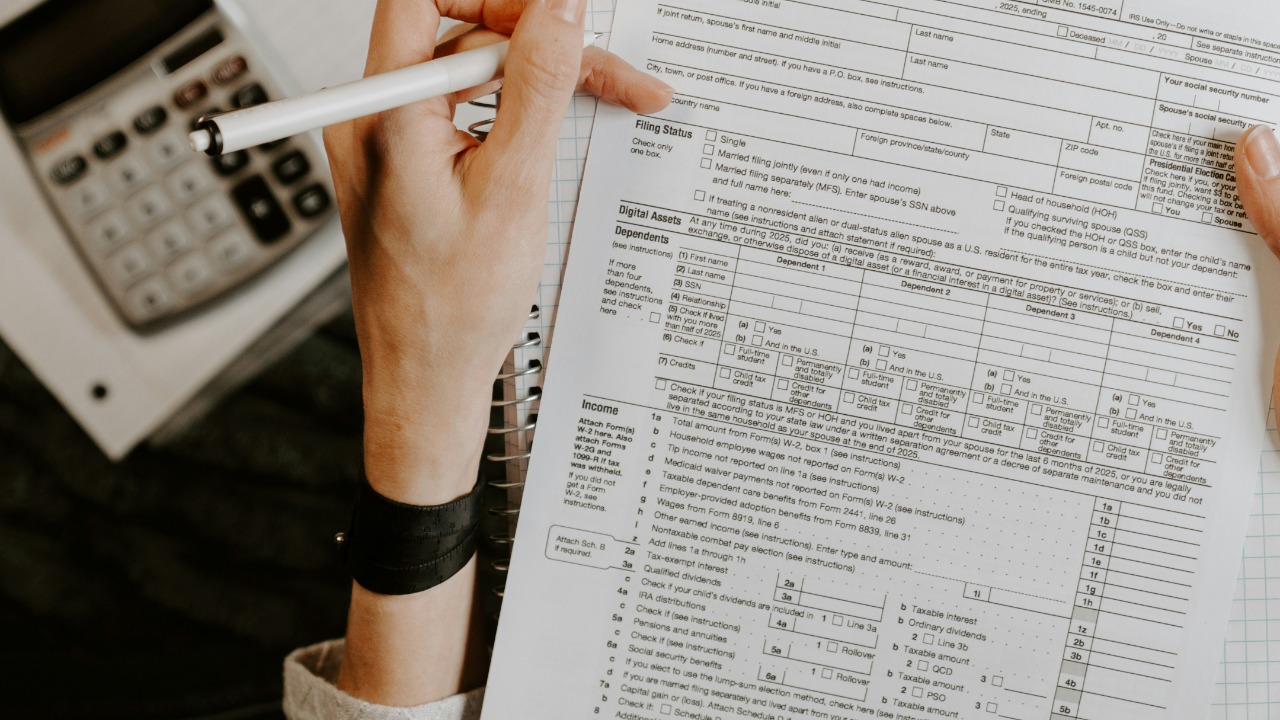
Two people can live under the same roof, share the same grocery bill and still land in different tax brackets. Filing status decides which standard deduction and which bracket widths apply, and head of household sits well above single on both. The IRS ties that status to a plain money test: who paid for the home.
The test trips up grown children who help a parent, grandparents raising a grandchild and single filers who split a house with a relative. Each of them can feel like the household’s anchor and still fail the arithmetic.
So what exactly does the IRS count, and who has to be living in the home?
Retirement deadlines, in your inbox: Miss an enrollment or claim deadline and the money can be gone. Join the Retirement Money Brief and we’ll send you our Will My Social Security Be Taxed? Worksheet as a welcome gift.
Get the Brief + the tax worksheet →
We may earn a commission from links on this page.
The two-part test in the IRS’s own words
The IRS filing status page says head of household is for a filer who is single and who “paid more than half of your living expenses for yourself and a qualifying dependent.” Both halves matter. Paying the bills is not enough without a qualifying dependent, and having a dependent is not enough without paying the larger share.
The same page lists the other statuses for comparison. Married filing jointly is for people who are married, or whose spouse died during the year. Qualifying surviving spouse covers a filer whose spouse died during the past two years and who has a dependent child.
The page notes that most couples save money by filing jointly, which is why head of household is aimed at single filers carrying a household alone. The IRS marked the filing status page as last reviewed on June 29, 2026.
What counts as living expenses
Publication 501, the IRS guide to filing status and dependents, calls the same idea the cost of keeping up a home. It says to include rent, mortgage interest, real estate taxes, insurance on the home, repairs, utilities and food eaten in the home.
Some bills that feel like household costs are left out. Publication 501 says not to include clothing, education, medical treatment, vacations, life insurance or transportation. It also says not to count the value of the filer’s own services or those of another household member.
That list changes the math for many families. A filer who covers a parent’s prescriptions and car payments but not the rent or the utility bill may be spending plenty without getting any closer to the more-than-half line.
Who has to live in the home
The IRS publication lays out three requirements. The filer must be unmarried or considered unmarried on the last day of the year, must have paid more than half the cost of keeping up a home for the year, and must have a qualifying person who lived there for more than half the year.
Temporary absences, such as a child away at school, still count as time in the home. A dependent parent is the main exception, because a parent does not have to live with the filer for the filer to qualify. In that case the filer has to be paying more than half the cost of the parent’s own home, which can be a house, an apartment or a care facility.
Publication 501 on the IRS site is the 2025 edition, written for returns covering tax year 2025. Anyone preparing a 2025 return should work from that edition rather than an older copy.
Where the numbers get tested
The practical step is to total the year’s rent or mortgage interest, property taxes, home insurance, repairs, utilities and groceries, then add up what each adult in the home contributed. Head of household works only if the filer’s share is more than half of that total.
Statements, receipts and bank records are the proof if the IRS asks. A shared household where a sibling or roommate pays the mortgage while the filer pays everything else can come out the other way, which is why the totals are worth writing down before choosing a status.
The IRS also runs an Interactive Tax Assistant for filing status, which asks a short series of questions and picks the status with the lowest tax when more than one applies. The IRS page for the tool says it is for U.S. citizens and resident aliens for the entire tax year, and it was last reviewed on September 5, 2026.
When the status choice moves other lines
Filing status is the first box on Form 1040, and nearly every later number depends on it. The standard deduction, the width of each bracket and the income at which Social Security starts being taxed all shift with the status selected.
That matters for retirees who file as single or head of household. A retiree supporting an adult child or a grandchild who lives in the home may qualify for the higher status, while one who simply lets a relative stay rent-free may not, since the test looks at who paid the home’s expenses and who qualifies as the dependent.
Does a single filer supporting a dependent pass the more-than-half test?
A single filer supporting a dependent who tallies the household bills and falls short of the more-than-half line ends up in single status, with a smaller standard deduction and narrower brackets. For retirees, that same status also feeds how much Social Security gets taxed.
Cut Your Retirement Tax Bill: 12 Moves lays out each income line that sets a retiree’s tax bill in 2026 numbers. It covers the new $6,000 senior deduction ($12,000 for a couple) for 2025 through 2028, how much of your Social Security is taxed, worked out on one worksheet, and the 2026 numbers on one page, which show where each line starts to bite.
See where each filing status lands in the 2026 tax-bill guide →
This article was produced with AI assistance and edited for accuracy against the sources linked above.