
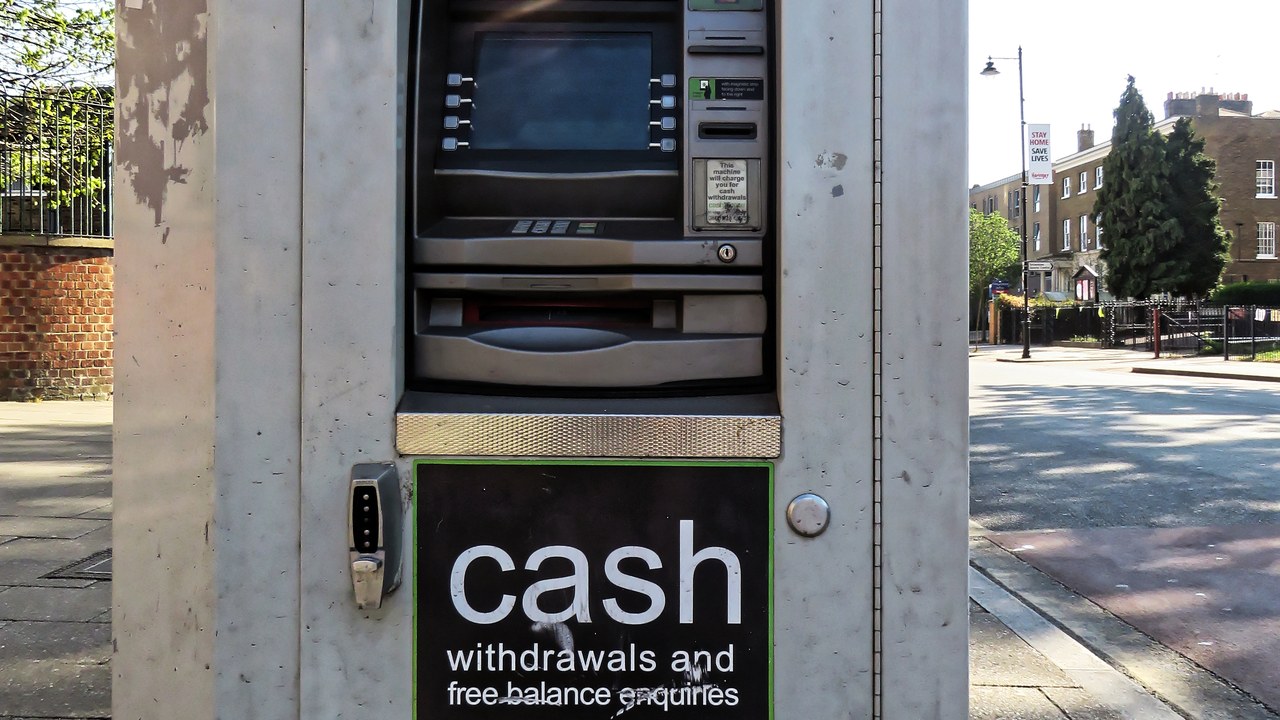
A federal cap on bank overdraft fees, built around a $5 benchmark, was finalized in the last days of 2024 and never reached a single customer statement. Congress cancelled the rule in the spring of 2025, months before its scheduled start date, using the same fast-track procedure that lawmakers have used to undo recently issued agency regulations. The episode is a useful reminder that a rule printed in the federal rulebook is not the same thing as a rule in force.
For households that pay overdraft fees, the practical result is that no federal $5 benchmark applies to the large banks the rule was aimed at. What a bank charges for an overdraft is governed by its own account agreement and by the rules that already existed before the voided one.
What Public Law 119-10 did on May 9, 2025
Public Law 119-10 is a joint resolution that states Congress “disapproves the final rule submitted by the Bureau of Consumer Financial Protection relating to ‘Overdraft Lending: Very Large Financial Institutions.’” Its operative sentence is short: “such rule shall have no force or effect.” The resolution passed the Senate on March 26-27, 2025, passed the House on April 9, 2025, and was approved by the President on May 9, 2025.
The vehicle was S.J. Res. 18, a congressional disapproval resolution of the kind created by the Congressional Review Act. Such a resolution does not amend the rule or send it back for revision. It voids the rule outright, and the law’s text gives the rule’s citation as 89 Fed. Reg. 106768, a December 30, 2024 publication.
The $5 benchmark and the banks it covered
The Consumer Financial Protection Bureau, often called the consumer bureau, wrote the voided rule for overdraft credit at the largest institutions, with a benchmark fee at its centre. In the rule’s text, codified at 12 CFR 1026.62, the test turns on whether a charge exceeds “the greater of” a cost-based figure or “$5.” The cost-based alternative let a bank count only costs and charge-off losses traceable to its non-covered overdraft credit in the previous year, such as its cost of funds, net charge-offs and operating expenses for the program. That $5 figure is the one in the headline: a safe harbour for fees at or under it.
The rule also changed how the credit was packaged. Its text barred a very large financial institution from structuring covered overdraft credit as a negative balance on a checking or other transaction account and required a separate credit account instead. That requirement was part of the voided text.
The coverage was narrow by design. The text defines a very large financial institution as an insured depository institution or an insured credit union with total assets of more than $10 billion. Community banks and smaller credit unions were outside it from the start, so the voided rule would never have reached them.
Take a hypothetical account holder at a covered bank who is overdrawn four times a year. At a $35 fee, the annual total is $140; at a fee kept to $5, it would be $20. The comparison shows what the benchmark was meant to change. Its cancellation does not mean any bank has to charge a particular amount, only that no federal benchmark exists to hold fees to $5.
Why the rule never took effect
The rule was published on December 30, 2024, and its effective date was October 1, 2025, according to the eCFR page for the section. Public Law 119-10 was signed on May 9, 2025, almost five months before that date. The effective date therefore never arrived while the rule stood, which is the sense in which it “never took effect.”
The sequence also explains why the repeal is described as a voiding rather than a repeal of a rule that had been operating. No bank was ever required to comply, and no customer fee was ever reduced under it.
Why the old text still prints in the eCFR
The Electronic Code of Federal Regulations, a government-run compilation, still displays the full text of section 1026.62 as of September 30, 2026, including the $5 language and the $10 billion asset threshold, with a source note pointing to the December 30, 2024 amendment at 89 FR 106837. The page continues to show the section as if it were operative. A Federal Register search of bureau documents on overdraft, run on October 2, 2026, turned up no document removing the voided text from the code, which fits the page still showing it.
That leaves a trap for anyone who finds the section through a search engine. The printed regulation is not evidence that the $5 benchmark applies. The governing document is the public law on govinfo, which says the rule has no force or effect, and any reader weighing an overdraft fee should treat the eCFR text as a historical record of what the bureau issued rather than a description of current obligations.
For bank accounts that creditors have frozen
This kit is written for households whose checking account holds federal benefits and has been frozen, or whose owner is fielding calls and letters from a debt collector. It addresses that account-level problem; it does not cover overdraft pricing rules or the history of any bank regulation.
The Bank Account & Debt Protection Kit gathers the 2-month bank protection rule, the debt-validation steps, the frozen-account response and a protected-funds and dispute log into one 10-page guide that a reader can work through in order.
Open the protected-funds and dispute log in The Bank Account & Debt Protection Kit →
Drafted with AI assistance; the dates and quotations above were checked against Public Law 119-10 on govinfo and the eCFR.


