When an elderly or disabled person lives with relatives or roommates but genuinely cannot buy and cook food with them because of a permanent disability, federal rules let that person and their spouse apply for SNAP as their own household, separate from everyone else in the home. Whether that split is allowed depends on how much the other people in the home earn, not on the elderly or disabled person’s own income. Starting October 1, 2026, the U.S. Department of Agriculture’s fiscal year 2027 update sets that screening line, for a two-person elderly or disabled household counted this way, at $2,976 a month in gross income for the rest of the household. That single number is easy to miss inside a much larger cost-of-living release, but it decides whether a genuinely common living arrangement, an aging parent under an adult child’s roof, qualifies for its own SNAP case at all.
A Household Within a Household
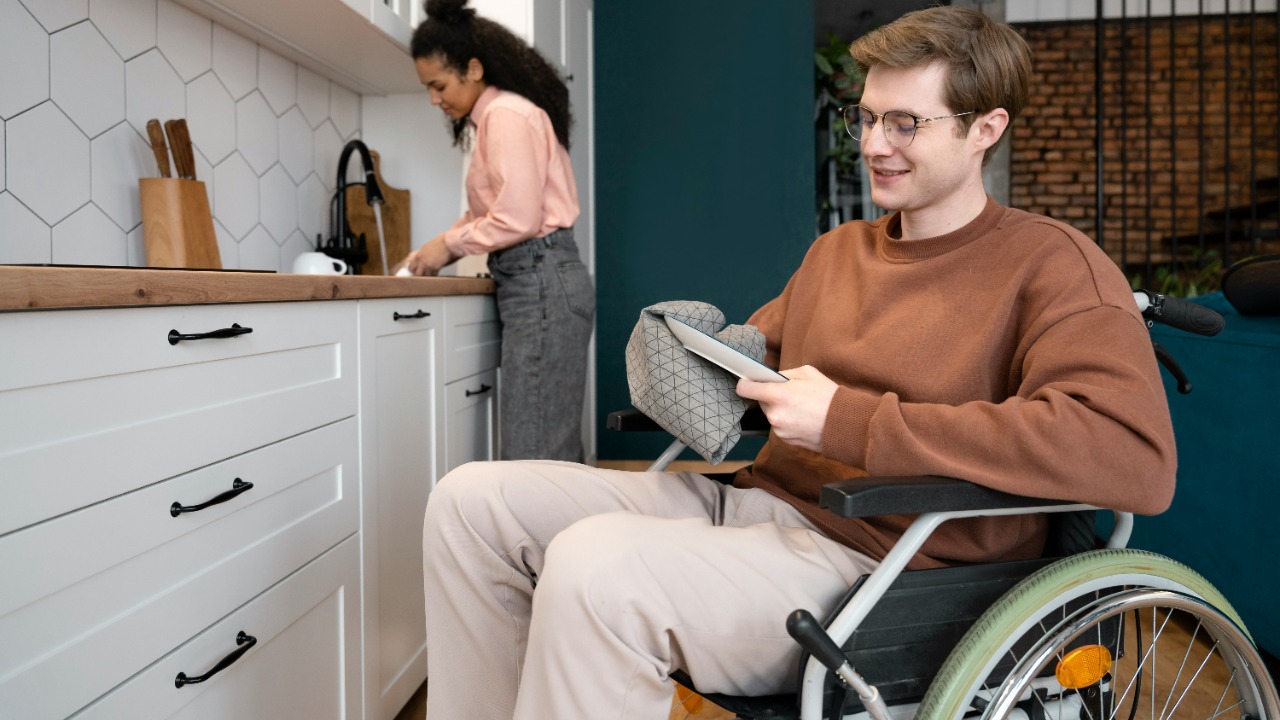
SNAP normally treats everyone who lives together and shares food costs as a single household. The Food and Nutrition Administration carves out one narrow exception: if a person is 60 or older, or unable to purchase and prepare meals separately because of a permanent disability, that person and their spouse can be recognized as a separate SNAP household from the people they live with. The rule exists for situations like an aging parent living with an adult child’s family, or a disabled adult sharing a home with roommates, where the elderly or disabled person’s food needs and finances are genuinely distinct from the rest of the household even though they share an address. That distinction can also apply to a disabled adult of any age, not only someone 60 or older, as long as a permanent disability is what prevents them from managing meals independently from the household around them.
Free retirement updates: Social Security and Medicare change every year, and nobody sends you a memo. Our free Retirement Shield newsletter breaks down what changed and what to do. Get it free in your inbox.
From $2,909 to $2,976: The One-Year Move
The screening test that decides whether that separation is allowed is not about the elderly or disabled person’s own income. It is a gross-income limit applied to the other people they live with: if those other household members’ combined gross income stays under 165 percent of the federal poverty level, the separate household is permitted. USDA’s fiscal year 2027 cost-of-living adjustment memo sets that 165-percent line, for a two-person comparison group in the 48 states, D.C., Guam and the Virgin Islands, at $2,976 a month, effective October 1, 2026. A year earlier, under the fiscal year 2026 figures still posted on the Food and Nutrition Administration’s cost-of-living adjustment page, the same two-person line sat at $2,909, a $67 increase that moved with the rest of this year’s cost-of-living reset.
Why 165% Instead of the Usual 130%
Most SNAP households are screened against a gross income limit set at 130 percent of the federal poverty level. The 165-percent line used here is deliberately higher, and it applies to a different question entirely: not whether the elderly or disabled person qualifies for benefits, but whether the people they live with earn little enough that treating the elderly or disabled person as a separate household still makes policy sense. Set the bar too low and almost no elderly or disabled person living with family could ever separate their case; set it at 165 percent and a working adult child supporting a household can still earn a moderate income without disqualifying a parent’s separate SNAP case.
The Real Test Comes After the Screen
Clearing the $2,976 screen does not set the elderly or disabled household’s actual benefit. Once recognized as its own household, that unit is judged only against SNAP’s net income limit, not the gross one, and it can claim a deduction most other households cannot: out-of-pocket medical expenses above $35 a month for the elderly or disabled member, on top of the standard deduction every household gets. That combination, a separate household plus an uncapped medical deduction, is often worth more to an elderly or disabled person’s monthly benefit than the specific dollar amount of the 165-percent screening line itself. Households that go through the trouble of establishing a separate case but never report their medical costs are the ones most likely to leave money on the table, since the deduction is not applied automatically the way the standard deduction is.
The Document Behind the $2,976
The $2,976 figure comes directly from the Food and Nutrition Administration’s fiscal year 2027 cost-of-living adjustment memorandum, a guidance document issued August 21, 2026 under the annual adjustment process required by the Food and Nutrition Act, and posted on USDA’s own guidance document alongside the same year’s standard deduction and maximum allotment tables. It is the number a state caseworker will check against an applicant’s file this October, not a preliminary estimate, and it replaces the fiscal year 2026 figure the same office published one year earlier.
This article was produced with AI assistance and reviewed by a human editor. Figures are linked to their primary sources; where a claim could not be verified from the public record, we say so.
More Financial Reading