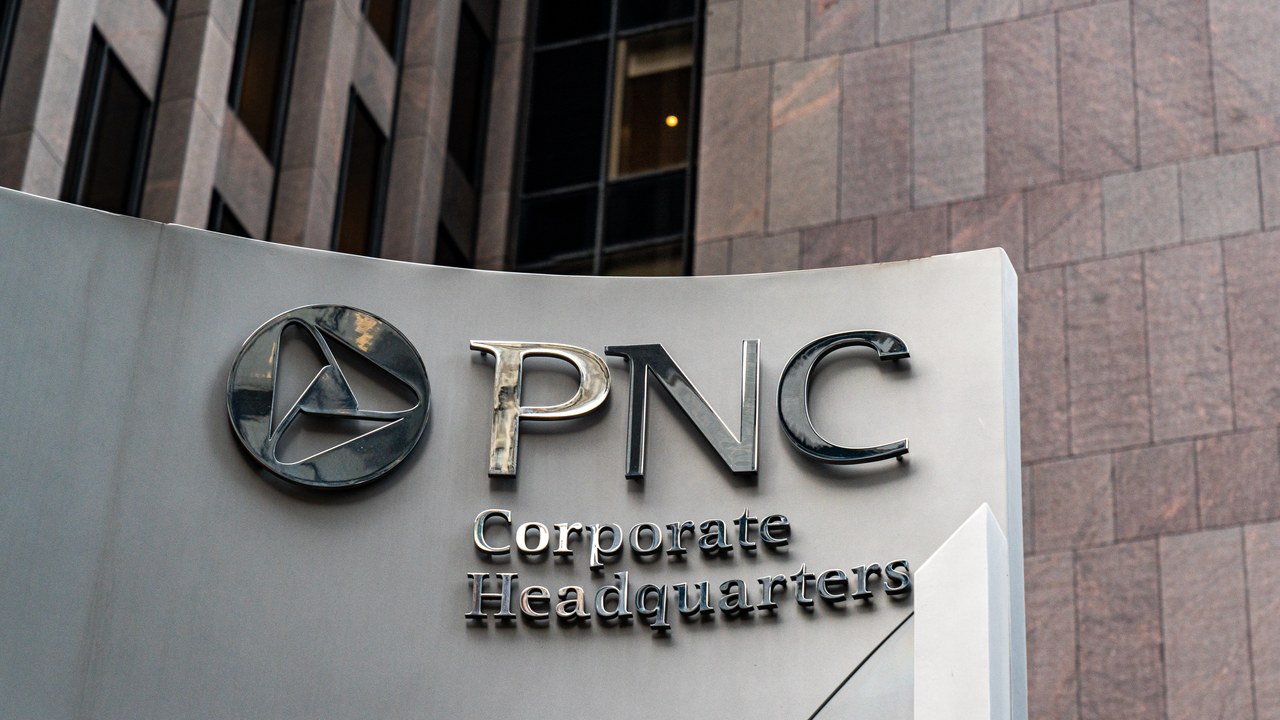
PNC Bank’s overdraft and non-sufficient-funds revenue reached $279 million in 2025, up 8% from what it collected in 2023, according to bank-reported figures compiled by the National Consumer Law Center. PNC is far smaller than the two biggest overdraft collectors in the country, but its two-year growth rate is the kind of detail that gets lost in a single nationwide total, and it says something specific about where overdraft fees are headed at one large, familiar bank.
PNC’s Overdraft Revenue Climbed 8% Since 2023
The National Consumer Law Center’s June 2026 review of 2025 bank call-report data identifies PNC Bank as the third-largest collector of overdraft fees among the nation’s biggest consumer banks, with $279 million in revenue for the year. The report describes PNC as “much smaller” than the two banks ahead of it in total dollars, which makes its ranking a function of how much its fee structure draws in relative to its size rather than simple account volume.
That $279 million figure is up 8% from what PNC collected in 2023, the last year the Consumer Financial Protection Bureau published comparable industry-wide figures before Congress rolled back its overdraft rule. The NCLC’s issue brief places that 8% increase inside a broader trend: total overdraft revenue at the 20 largest consumer banks rose 6.2% over the same two years, meaning PNC’s growth outpaced the group it’s compared against, even though it trails the double-digit jumps posted by several smaller-dollar competitors.
Free retirement updates: Keep more of your Social Security and savings with plain-English updates on the changes, deadlines, and costly mistakes retirees miss. Subscribe free.
Two Much Bigger Banks Still Collect More
PNC’s growth stands out, but its total remains far below the two banks that lead the industry. JPMorgan Chase collected about $1.1 billion in overdraft fees in 2025, and Wells Fargo took in roughly $924 million, according to the same NCLC analysis. Both figures dwarf PNC’s $279 million even though Chase’s total was only slightly up from 2023 and Wells Fargo’s was slightly down, a reminder that a bank’s dollar ranking and its growth trend are two separate measurements that don’t always move together.
Collectively, the National Consumer Law Center’s report found the 20 largest consumer banks brought in $4 billion in overdraft fee revenue in 2025, with the broader industry, including smaller banks and credit unions, estimated at more than $12 billion for the year. PNC’s $279 million works out to roughly 7% of that top-20 total on its own, a sizable share for a bank the report explicitly frames as mid-sized within that group.
The Rule That Would Have Stopped the Climb
PNC’s 8% increase happened during a specific regulatory window. The Consumer Financial Protection Bureau finalized a rule in 2024 that would have capped most large-bank overdraft fees at $5, projected to save households an estimated $5 billion a year combined. Congress voted to overturn that rule in 2025 before it took effect, and the NCLC’s analysis credits that reversal, along with the FDIC’s decision to drop related supervisory guidance, with removing the pressure that had led many banks to voluntarily cut overdraft fees in the years leading up to the rule.
PNC’s growth over the 2023-to-2025 window spans exactly that period of voluntary cuts followed by reversal, though the NCLC’s figures don’t break out which part of the two-year change happened before or after Congress acted.
Not Every Bank’s Overdraft Revenue Is Rising
PNC’s 8% increase is modest next to some of its peers. USAA Federal Savings Bank posted the largest percentage increase of any bank the NCLC tracked, largely because it only began charging overdraft fees in late 2023, and Huntington Bank, M&T Bank, Citizens Bank, First Citizens and TD Bank all posted increases ranging from 22% to 40% over the same two years. At the other end, BMO Bank’s overdraft revenue fell from $27 million in 2023 to $2 million in 2025 after it cut its fee, and Truist posted a 10% decline. PNC’s growth sits closer to the industry-wide average than to either extreme, neither among the sharpest risers nor among the banks pulling back.
What an 8% Increase Looks Like on a Statement
PNC’s fee schedule, like those of other large banks, discloses the dollar amount charged per overdraft item and how many items can be charged in a single day, the specific terms that determine how a two-year revenue trend turns into an individual charge. A two-year, 8% rise in a bank’s total overdraft revenue doesn’t translate directly into a specific dollar figure on any one customer’s account, since it reflects the combined effect of PNC’s fee amount, how many customers overdraw, and how often. What it does show is a trend line moving in one direction at a bank that, at $279 million a year, still collects real money from account holders who overdraw. The most direct way for a PNC customer to know what that trend means for their own account is the fee schedule attached to their specific account type, the same underlying disclosure the NCLC’s figures are built from.
This article was produced with AI assistance and reviewed by a human editor. Figures are linked to their primary sources; where a claim could not be verified from the public record, we say so.
More Financial Reading