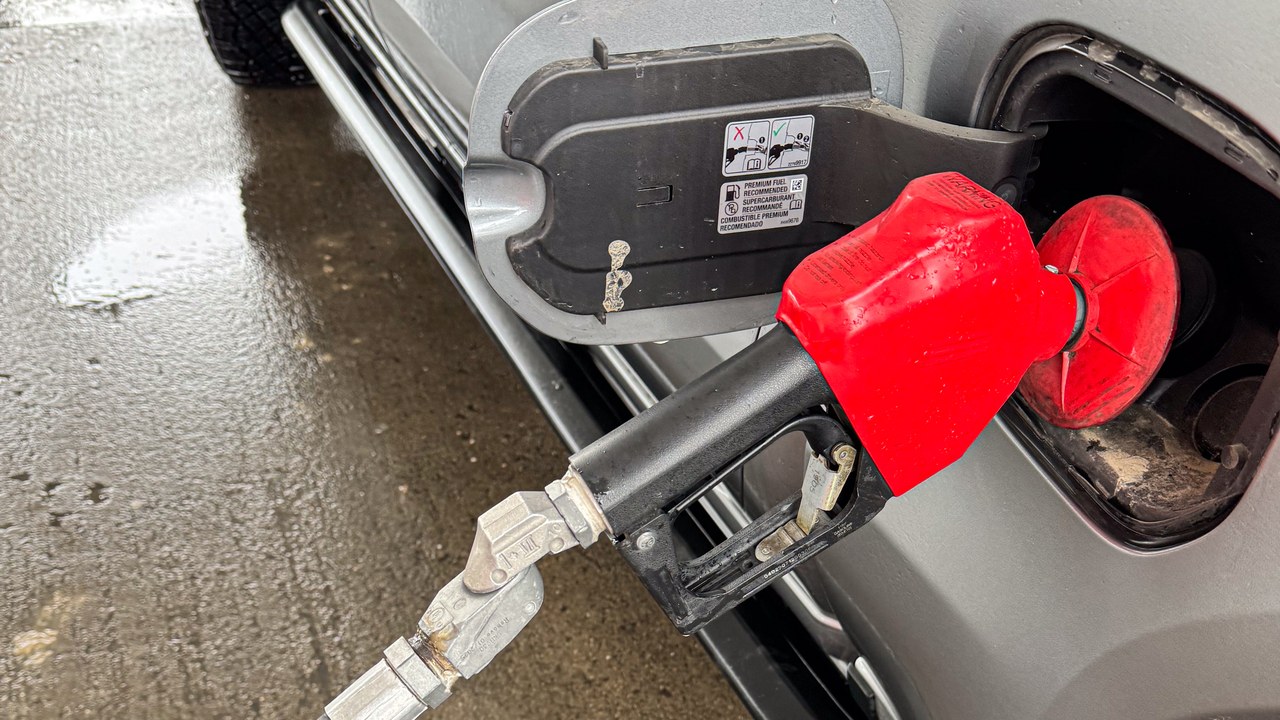
Drivers on the West Coast are paying close to a dollar sixty more per gallon than drivers on the Gulf Coast, according to the U.S. Energy Information Administration’s latest weekly survey. The gap isn’t a fluke of one bad week; it’s the widest split of any two regions EIA tracks, and it actually grew last week even as the national average slipped. For a household budgeting gas money, which region a driver lives in matters far more than whatever the national average is doing.
The West Coast Climbed While Nearly Everyone Else Was Falling
EIA’s Gasoline and Diesel Fuel Update, covering the week ended August 31, put the West Coast average at $5.206 a gallon, up 5.9 cents from the week before. That region moved in the opposite direction of the national number, which fell 1.4 cents to $4.071 over the same week.
The increase pushed the West Coast further from the rest of the country rather than closer to it. A year ago the region’s premium over the national average was smaller than it is today, even after twelve months of price swings everywhere else. The West Coast figure also blends together several very different local markets, from Alaska and Hawaii’s isolated supply chains to the mainland corridor running from Washington through California, which is part of why the region’s average can move so differently from the rest of the country in a single week.
Free retirement updates: Keep more of your Social Security and savings with plain-English updates on the changes, deadlines, and costly mistakes retirees miss. Subscribe free.
California and Washington Anchor the Nation’s Priciest Market
California alone averaged $5.520 a gallon, up 7 cents on the week and $1.123 higher than a year ago, according to EIA’s state data. Washington wasn’t far behind at $5.259, up 4.5 cents on the week. Together, the two states pull the entire West Coast average well above every other region EIA tracks.
Even the “West Coast less California” figure EIA publishes separately, meant to show the region without its largest state pulling the number up, still came in at $4.823 a gallon last week, more than 75 cents above the Gulf Coast average. California’s size in the survey matters, but it isn’t the entire story.
The pattern shows up at the city level too. Los Angeles averaged $5.532 and San Francisco $5.552 in EIA’s city breakdown, while Seattle came in at $5.412, every one of them among the highest anywhere in the country and nowhere close to what drivers pay a few states inland, where the Rocky Mountain region averaged $4.266 the same week.
The Gulf Coast Is Sitting Near the Bottom of the National List
On the other end, the Gulf Coast averaged $3.618 a gallon, down 2 cents on the week, among the lowest of the eight regions EIA breaks out. Texas alone averaged $3.577, one of the cheapest state figures in the entire survey.
Houston came in even lower than the regional average, at $3.522 a gallon, while the broader Lower Atlantic region, covering much of Florida and the Southeast, averaged $3.783. Both have sat near the bottom of EIA’s list for most of the year.
A $1.59 Gap Between Two Coasts
Put the two regions side by side and the spread comes to roughly $1.59 a gallon, more than a third of what a Gulf Coast driver is paying in total. On a 15-gallon fill-up, that difference works out to about $23.85, once a week, month after month, just for living in one coastal region instead of the other.
Why Location Determines Price More Than National News Does
The gap isn’t random. The West Coast, and California in particular, uses its own specially formulated gasoline blend to meet state air-quality rules, has fewer refineries able to produce it, and sits farther from the pipeline network that moves fuel cheaply around the rest of the country. The Gulf Coast, by contrast, sits next to the country’s largest concentration of refineries, which keeps supply close and transportation costs low.
That’s why a national average can fall even as a West Coast driver’s bill keeps climbing: the two regions aren’t drawing from the same supply pool, and a move in crude oil prices affects them differently depending on how far the fuel has to travel and how many nearby refineries can produce the blend required by law.
A refinery outage or maintenance slowdown on the West Coast tends to show up in local prices faster than the same event would elsewhere, simply because there are fewer plants nearby that can make up the difference. The Gulf Coast’s dense refinery cluster works the opposite way: even if one plant scales back, several others sit close enough to cover the shortfall without prices moving much.
The Gap Isn’t New, and It Isn’t Closing
A year ago, the same regional gap was about $1.38 a gallon, calculated from EIA’s own year-over-year figures for each region; today it’s $1.59. The distance between the two coasts hasn’t just persisted, it’s grown by roughly 20 cents over twelve months, even as last week’s national average moved the other way. EIA’s next weekly release is scheduled for September 9, and its full regional price history is public, so anyone comparing what they pay against a neighbor three states over can check the actual numbers rather than guess.
This article was produced with AI assistance and reviewed by a human editor. Figures are linked to their primary sources; where a claim could not be verified from the public record, we say so.
More Financial Reading