A former telephone banking consultant at Banco Popular de Puerto Rico in San Juan has been permanently barred from ever working in banking again, under a Federal Reserve Board order naming Gadiel J. Rosario-Alvarado. The Board’s own order says Rosario-Alvarado misappropriated roughly $65,747 from bank customers between 2023 and 2025 by debiting money directly from their accounts and applying it toward his own and a relative’s credit card balances. The bank fired him in June 2025 after he admitted to some of the unauthorized transactions, and the Fed’s prohibition order took effect on August 24, 2026.
How Rosario-Alvarado Moved Money Out of Customer Accounts
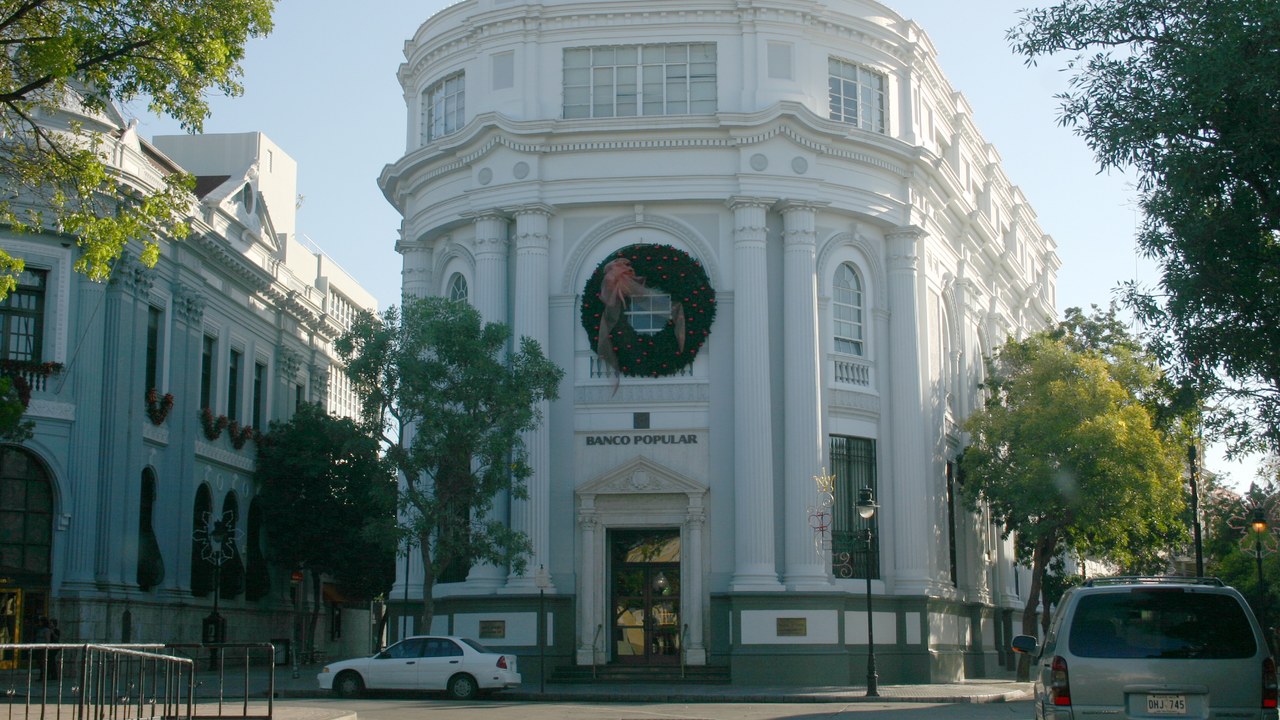
According to the order, Rosario-Alvarado worked as a Telephone Banking Consultant at Banco Popular de Puerto Rico, a state member bank headquartered on Muñoz Rivera Avenue in San Juan. Federal regulatory records list it as Puerto Rico’s largest bank and the principal subsidiary of Popular, Inc., the island’s largest locally based financial institution; as a state member bank, its primary federal regulator is the Federal Reserve rather than the FDIC or the Comptroller of the Currency, which is why this month’s action came directly from the Fed’s own Board of Governors. Over roughly two years, Rosario-Alvarado carried out at least fifty separate transactions that debited funds directly from customer accounts and applied the money toward paying down credit card balances belonging to himself and a relative.
The order doesn’t name the affected customers, disclose how the transactions went unnoticed for as long as they did, or say whether the bank has made those customers whole. It states only that the bank terminated Rosario-Alvarado on June 11, 2025, after he admitted to conducting some of the unauthorized debits, and that the Fed’s own order followed roughly fourteen months later. A telephone banking consultant’s job typically includes the ability to view and move money within customer accounts over the phone, which is the kind of routine account access the order says he used for his own benefit instead. Federal regulatory records for the bank itself confirm both its state-member charter and its regulator.
Free retirement updates: Keep more of your Social Security and savings with plain-English updates on the changes, deadlines, and costly mistakes retirees miss. Subscribe free.
A Consent Prohibition Order Is a Lifetime, Nationwide Ban
The Fed issued this as an order of prohibition, a specific tool created under Section 8(e) of the Federal Deposit Insurance Act for people who worked inside an insured bank and abused that access. It bars Rosario-Alvarado, without the Fed’s written approval, from participating in any way in the affairs of any FDIC-insured depository institution or its holding company, from soliciting or voting proxies tied to any such institution, and from ever again serving as an officer, director, or employee of one. The ban isn’t limited to Banco Popular or to Puerto Rico; as written, it follows him to any insured bank in the country, and a violation would separately expose him to civil or criminal penalties under the same law. Anyone can look up whether a current or prospective bank employee, officer, or director has this kind of order on file using the Fed’s own searchable enforcement-action database, which lists prohibition orders by name alongside the institution involved.
The Order Is Final, Even Though He Didn’t Admit Wrongdoing
This is a consent order, meaning Rosario-Alvarado agreed to it and gave up his right to a hearing, to a formal notice of charges, and to judicial review, all without admitting or denying the Fed’s specific allegations. That distinction matters for how the record should be read: a consent order is a completed, signed, and enforceable action, not a pending accusation still working through a contested process. The “without admitting or denying” language is standard in these settlements and doesn’t make the underlying findings, or the ban itself, any less final or any less permanent.
What the Public Record Doesn’t Say
The order is also notably narrow in what it discloses. It doesn’t state whether Banco Popular has reimbursed the customers whose accounts were debited, whether prosecutors have filed separate criminal charges tied to the same conduct, or what role, if any, the unnamed relative played beyond receiving credit card payments. None of that is confirmed anywhere in the Fed’s own filing, so it should be treated as unresolved rather than assumed in either direction. What the order does confirm is the mechanism: real debits against real customer accounts, not a fabricated statement or a phantom transaction dressed up to look legitimate after the fact.
Why This Looks Different From a Typical Banking Scam
Most fraud warnings aimed at households describe outside criminals: someone posing as a bank representative on the phone, a counterfeit check, a romance scam that talks a victim into wiring money out voluntarily. This case runs the opposite direction, an employee with legitimate system access using it to debit real customer accounts without their knowledge. The account-monitoring and internal-reporting requirements built into federal banking law exist precisely to catch this kind of insider activity, and in this instance that process, plus the employee’s own admission, appears to be what ended it within about two years of when it started. For a household reviewing its own statements, the practical lesson isn’t a promise that this can’t happen at another bank; it’s that unexplained small debits are worth flagging to a bank’s fraud line the same day they’re noticed, whether the cause turns out to be an outside scammer or, as in this case, someone on the inside.
This article was produced with AI assistance and reviewed by a human editor. Figures are linked to their primary sources; where a claim could not be verified from the public record, we say so.
More Financial Reading