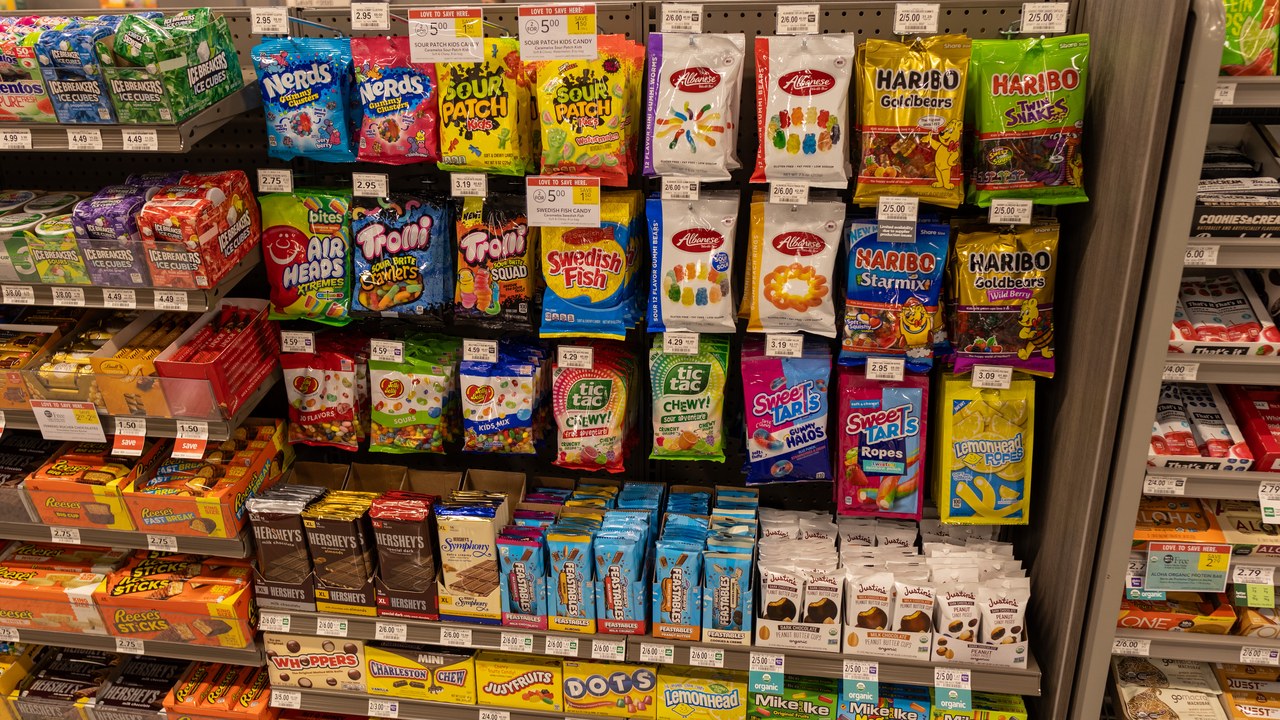
Chocolate bars, bagged candy, and gum are getting measurably more expensive this year, and the increase shows no sign of leveling off before Halloween. The U.S. Department of Agriculture’s latest grocery price forecast puts sugar and sweets on track for one of the steepest increases of any food category tracked in 2026, trailing only beef and veal. For households buying candy for trick-or-treaters, baking, or their own kitchen, the run-up has been building for months and is now locked into the government’s full-year outlook rather than a single bad month at the store.
Candy and Chewing Gum Are Driving the Whole Sweets Category
The U.S. Department of Agriculture’s Economic Research Service updated its Food Price Outlook on August 25, 2026, and sugar and sweets stands out among the 15 grocery categories it tracks. The agency forecasts retail prices for sugar and sweets to rise 7.1 percent for full-year 2026, with a range of 6.0 to 8.2 percent depending on how prices move over the rest of the year. ERS attributes most of the increase to candy and chewing gum, the government’s pricing subcategory that covers most types of chocolate candy sold in grocery stores. The number is not built on a guess about the future: prices for sugar and sweets were already 7.4 percent higher in July 2026 than in July 2025, even though the increase from June to July alone was a modest 0.1 percent. Much of the annual increase, in other words, had already happened before the Halloween candy displays went up. USDA tracks the category in finer detail through a separate Sugar and Sweeteners Outlook, updated August 18, 2026, which follows the domestic sugar crop prices and supply data that eventually show up at the candy aisle.
Free retirement updates: Want plain-English help keeping more of your money in retirement? The free Retirement Shield newsletter covers the benefits, deadlines, and money mistakes that cost retirees, a couple times a week. Subscribe free.
Only Beef and Veal Is Climbing Faster at the Grocery Store
Beef and veal remains the single fastest-moving category in the ERS forecast, projected to rise 9.8 percent in 2026 as tight cattle supplies keep wholesale beef prices elevated. That surge traces to the cattle cycle: ERS notes that federally inspected beef production fell almost 5 percent in July 2026 alone, and it expects tight cattle supplies to keep year-over-year beef production lower through the second half of the year, which is why beef and veal sits well above every other category, including candy. Sugar and sweets, at 7.1 percent, is the next-largest increase among the categories ERS assigns a specific 2026 figure to, ahead of fresh vegetables at 5.9 percent, nonalcoholic beverages at 4.3 percent, and fresh fruits at 2.9 percent. Pork and poultry are both forecast to rise less than 1 percent, and egg prices are projected to fall more than 30 percent as flocks recover from avian flu losses. ERS also flags fish and seafood, and processed fruits and vegetables, as two more categories growing faster than their own 20-year historical average pace, but its August update does not attach a specific 2026 percentage to either one, so it is not possible to say with certainty how they compare to candy. Among the categories the agency did put a number on, though, sugar and sweets is outrunning everything in the store except beef.
Why Chocolate Absorbs More of This Increase Than Other Candy
ERS is specific about where the sugar and sweets increase is concentrated: candy and chewing gum, a subcomponent the agency says includes most types of chocolate candy. That distinction matters for Halloween shoppers because chocolate bars, bags of miniatures, and boxed assortments sit inside the exact slice of the category that is rising fastest, rather than in a slower-moving corner like table sugar or baking sweeteners. The same government data show prices for sugar and sweets increased just 0.1 percent from June to July, a small monthly move that still added to an already-elevated year-over-year total. That pattern — small monthly increases compounding on top of a higher starting point from earlier in the year — is what pushes the full-year forecast to 7.1 percent even without a single dramatic price jump in any one month.
The Broader Grocery Tab Sugar and Sweets Is Outrunning
The Bureau of Labor Statistics, whose monthly Consumer Price Index numbers feed directly into the ERS forecast, reported that its food-at-home index was 2.7 percent higher in July 2026 than in July 2025, while the broader food index, including restaurant meals, was up 3.0 percent over the same period. Measured against that backdrop, sugar and sweets is climbing at close to two-and-a-half times the pace of the average grocery bill. The same BLS data show the nonalcoholic beverages index up 4.1 percent and the fruits-and-vegetables index up 5.1 percent over the 12 months ending in July, both slower than sugar and sweets over the same stretch. Food-at-home prices rose just 1.2 percent in 2024 and 2.3 percent in 2025, according to the same ERS overview, and grocery inflation overall has cooled sharply from the 11.4 percent spike in 2022 — which is exactly the calm backdrop this year’s sugar and sweets forecast is now pulling away from.
Halloween Shopping Won’t Catch a Price Dip
Halloween falls on October 31, about eight weeks from this USDA update, and nothing in the agency’s forecast points to relief before then. The 7.1 percent full-year figure is a midpoint built from data through July, and ERS’s own forecast interval, 6.0 to 8.2 percent, treats a further acceleration as roughly as likely as a pullback. Because the increase is concentrated in a specific subcategory, candy and chewing gum, rather than a temporary swing in one raw ingredient, it is showing up broadly across the chocolate and candy aisle rather than in a single brand or package size. Shoppers who wait until October to buy Halloween candy are unlikely to find it cheaper than it is right now, based on the same USDA analysis behind the 7.1 percent number.
This article was produced with AI assistance and reviewed by a human editor. Figures are linked to their primary sources; where a claim could not be verified from the public record, we say so.
More Financial Reading