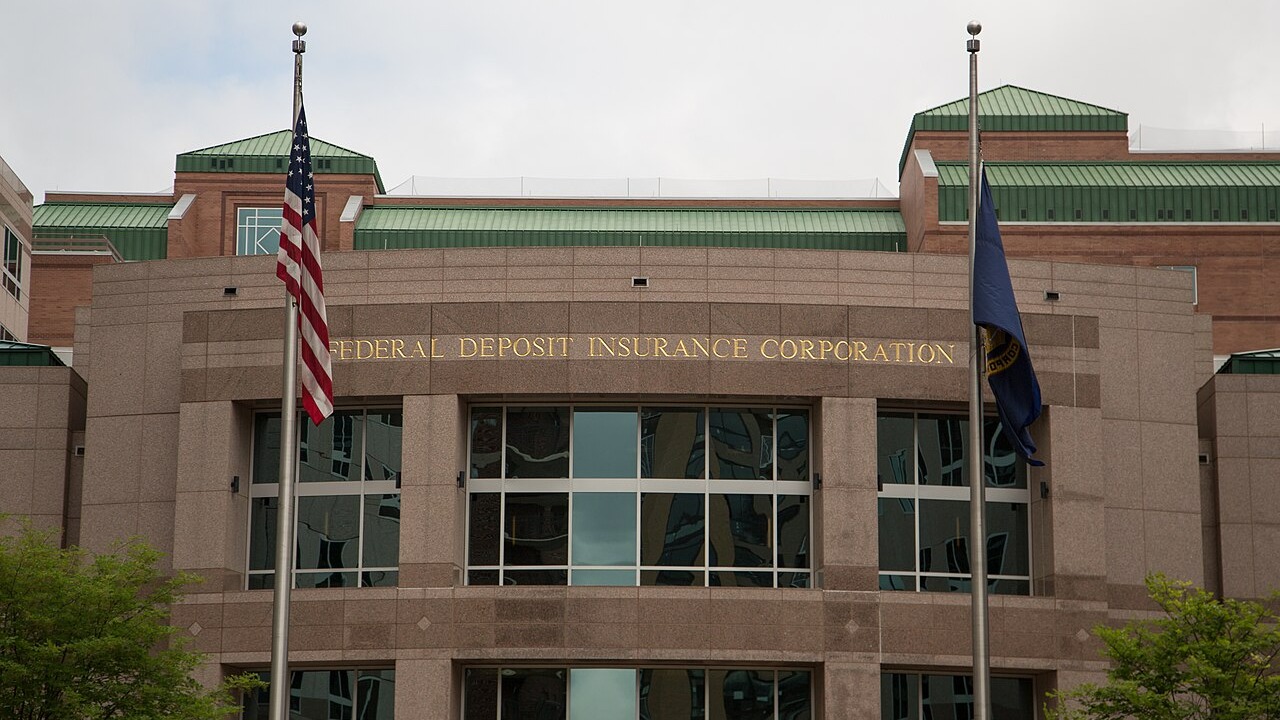
Banks had one of their most profitable quarters in years this spring, and they still finished it holding $326.7 billion in paper losses on securities they haven’t sold. The Federal Deposit Insurance Corporation’s Quarterly Banking Profile for the second quarter of 2026, released August 25, shows that the exposure driving those losses hasn’t disappeared since the regional bank failures of 2023 — it has simply become less visible as the industry’s overall earnings have improved.
The Same Exposure That Broke Silicon Valley Bank
Unrealized losses accumulate when a bank buys long-term bonds while interest rates are low, then rates rise and those same bonds become worth less on paper than the bank paid for them. As long as the bank never has to sell, the loss stays theoretical. That’s precisely the mechanism that took down Silicon Valley Bank in March 2023: depositors withdrew money faster than the bank could cover from cash on hand, forcing it to sell bonds it had planned to hold to maturity, converting a paper loss into a real one overnight. The FDIC’s new report puts total unrealized losses on securities at $326.7 billion, or 5.5 percent of amortized cost, split between $216.9 billion held in accounts banks intend to keep until maturity and $109.8 billion in securities available for sale.
Free retirement updates: Want plain-English help keeping more of your money in retirement? The free Retirement Shield newsletter covers the benefits, deadlines, and money mistakes that cost retirees, a couple times a week. Subscribe free.
Down From a Year Ago, but Still the Second-Largest Line on the Books
The number isn’t getting worse in any dramatic sense. It rose just $1.6 billion, or 0.5 percent, from the first quarter of 2026, and it’s actually down $68.6 billion, or 17.4 percent, from the second quarter of 2025, as older, lower-yielding bonds have matured and rolled into new holdings purchased at today’s higher rates. The FDIC’s own quarterly series shows this figure has been easing gradually for roughly two years without ever coming close to zero. It remains one of the largest line items examiners track industrywide, a reminder that the interest-rate shock of 2022 and 2023 is still working its way through bank balance sheets even as the acute phase of the crisis has faded from the headlines.
The split between the two accounting categories matters more than the headline total suggests. The larger piece, $216.9 billion, sits in held-to-maturity securities — bonds a bank has formally committed to keep on the books rather than trade, which under standard accounting rules means the loss never has to be recognized unless the bank is forced to sell. The smaller piece, $109.8 billion, sits in available-for-sale securities, which already flow through a bank’s reported capital even without a sale. It was the held-to-maturity bucket that proved most dangerous in 2023, precisely because banks that assumed they’d never need to touch those bonds found themselves selling them anyway once depositors started pulling money out faster than expected.
Record Earnings, Modest Payouts to Savers
The same report shows the industry earned $90.1 billion in net income for the quarter, up $9.7 billion, or 12 percent, from the first quarter, producing a 1.37 percent return on assets — among the strongest profitability readings the industry has posted in decades. None of that strength is showing up in what ordinary savers earn on their deposits. The FDIC’s own national rate data, updated the same month, puts the average standard savings account at just 0.38 percent. Banks are borrowing money from their own depositors at a fraction of a percent while investing it, lending it out and posting some of their best profitability numbers in a generation — a gap that widens every quarter it persists. That gap is also a choice, not a law of nature: a bank paying 0.38 percent on savings and a bank paying several times that are both operating under the same federal rules, and both are equally covered by federal deposit insurance up to the standard limits, so the lower-paying option isn’t buying a depositor any additional safety in exchange for the lower return.
Why “Unrealized” Doesn’t Mean “Meaningless” for a Depositor
None of this changes what federal deposit insurance covers. A depositor’s money remains protected up to $250,000 per owner, per bank, per account ownership category, regardless of what a bank’s securities portfolio is worth on paper on any given day; anyone unsure exactly how their own accounts are covered can check with the FDIC’s own Electronic Deposit Insurance Estimator. What the unrealized-loss figure actually measures is systemic exposure — how much trouble a bank, or a cluster of banks, could be in if depositors moved money out fast enough to force asset sales at a loss, the exact chain of events that ended three regional banks in the space of a few weeks in 2023. Regulators watch the number for that reason, not because it represents money that has already been lost.
What the Next Quarterly Profile Will Watch
The FDIC’s Quarterly Banking Profile comes out roughly six to eight weeks after each quarter closes, meaning the next reading, covering the third quarter of 2026, is expected sometime in November. Whether unrealized losses keep shrinking will depend largely on where long-term interest rates sit through the fall and how much of the industry’s older, low-yield bond portfolio has finished rolling into new holdings. Until that trend runs its course, the FDIC’s own numbers show a banking system that is simultaneously posting some of its strongest profits in years and still carrying a nine-figure paper wound from the rate shock of a few years ago — a combination that isn’t a crisis on its own, but is exactly the kind of gap regulators keep on their watch list.
This article was produced with AI assistance and reviewed by a human editor. Figures are linked to their primary sources; where a claim could not be verified from the public record, we say so.
More Financial Reading