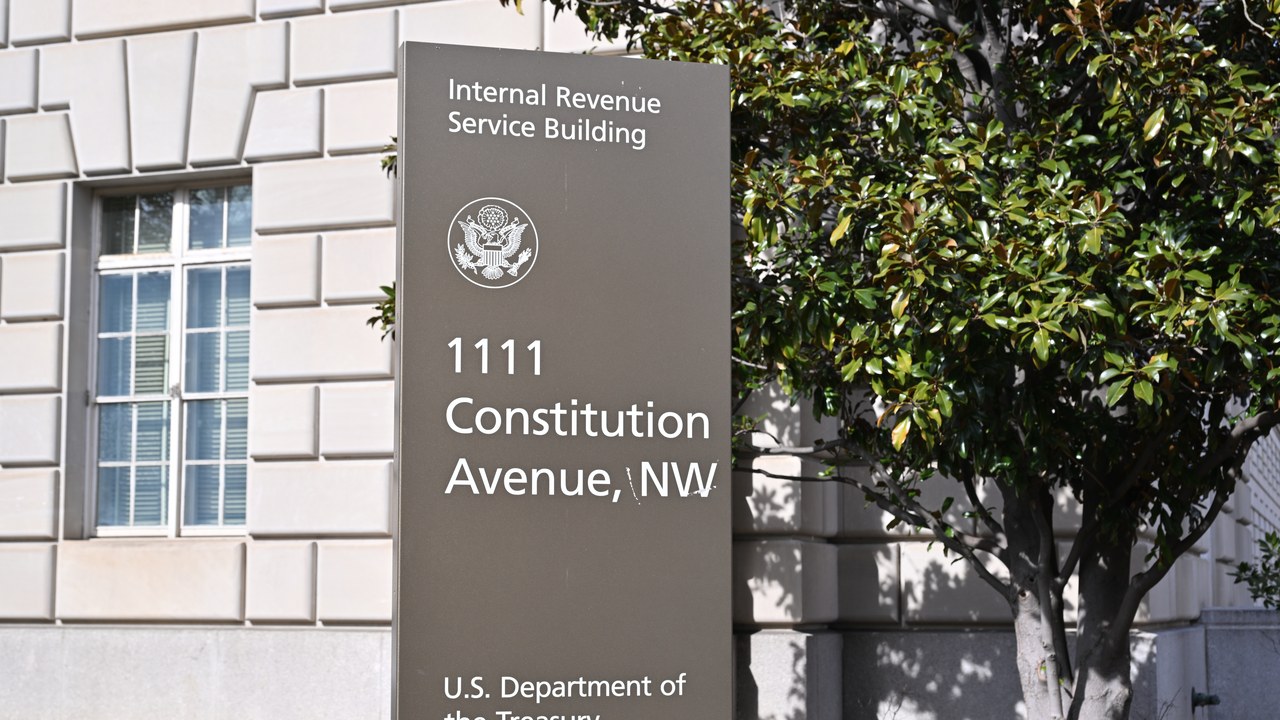
Think of the list your employer hands you at open enrollment. Health plan, dental, vision, the 401(k) match, maybe a dependent care account and a commuter benefit. Treasury and the IRS have put out proposed regulations that would add another optional line to that menu: a contribution of up to $2,500 a year, excluded from your taxable income, into a Trump Account belonging to your child. Nothing about it is settled, nothing is in effect, and no employer would be required to offer it.
What a Trump Account contribution program would be
The underlying account already exists. A Trump Account is a form of traditional IRA created under section 530A of the tax code, open to any U.S. child under 18 with a Social Security number, held in the child’s name with a parent or guardian as custodian until the child turns 18. Investments in it are currently limited to low-cost mutual funds or exchange-traded funds tracking broad U.S. equity indexes, and there is an annual cap on contributions that adjusts for inflation.
What the proposal would add is a workplace pipe into that account. In the release accompanying the proposed rules, IRS Chief Executive Officer Frank J. Bisignano described the guidance as helping “employers that want to make a tax-free contribution of up to $2,500 per year to the Trump Account of an employee or their dependents.” The word doing the work in that sentence is “want.” This would be a benefit an employer could choose to build, not one it would owe you.
Free retirement updates: Keep more of your Social Security and savings with plain-English updates on the changes, deadlines, and costly mistakes retirees miss. Subscribe free.
The $2,500 would be per worker, not per child
The arithmetic in the proposal is stricter than the headline number suggests, and it closes the two loopholes a reader would think of first. The proposed rules would apply the $2,500 ceiling to each employee no matter how many employers that employee has, and no matter how many dependents. A parent with three children with Trump Accounts would not get three caps. A worker holding two jobs would not get two.
The exclusion amount itself is written into section 128 of the code at $2,500 for 2026 and 2027, with inflation adjustments after that. A program could allow the money to be split among several children’s accounts, so long as the total for that employee stayed inside the annual limit. Anything an employer put in above the line would not be excludable: it would be treated as ordinary wages, includible in the worker’s gross income and subject to employment tax withholding. These contributions would also count toward the overall $5,000 annual limit on money going into a Trump Account, so a generous employer could crowd out what a parent or grandparent was planning to add.
A separate written plan and a nondiscrimination test would be required
An employer could not simply wire money and call it a benefit. The proposal would require a Trump account contribution program to be a separate written plan maintained for the exclusive benefit of employees, spelling out which classes of workers are eligible, the rules for contributions, how an employee designates the account to receive them, the plan year, and the procedures for fixing administrative mistakes. Eligible employees would have to be given reasonable notice that the program exists and how it works.
The other requirement is the one that decides who actually benefits. Eligibility, contributions and benefits could not discriminate in favor of highly compensated employees or their dependents. If a program failed that test, the proposal would not blow it up for everyone: the benefit would stop being excludable for the highly compensated group while remaining excludable for everyone else. There is also a reporting step, satisfied by putting the year’s contribution amount on the worker’s Form W-2 in box 12 under code TA. And an employer could not steer the money to a preferred financial firm, because the proposed rules would forbid a program from restricting contributions to a particular trustee.
Pre-tax payroll money, but only into a child’s account
One provision would reach workers whose employers put in nothing at all. The proposal would let a program allow an employee to fund contributions through salary reduction under a section 125 cafeteria plan, which is the mechanism that already lets people pay for health premiums and dependent care with pre-tax dollars. Commenters on the earlier guidance called this the feature most likely to drive employers to adopt a program, because it is the only route by which a parent could get pre-tax money into a Trump Account.
The catch is directional. Salary reduction would be permitted only for a contribution to a dependent’s Trump Account, not to the employee’s own, because money routed to your own account would be deferred compensation that cafeteria plan rules do not allow. Elections would have to be prospective, and a plan would have to let participants change or revoke them at least monthly, before the salary becomes available. Self-employed people would be outside all of this. The proposal defines an employee under the common-law standard, which excludes partners, sole proprietors and 2% shareholders of an S corporation, though a self-employed owner could still sponsor a program for actual employees.
This is a different thing from the $1,000 the government deposits
Two Trump Account items are circulating at once, and they should not be run together. The pilot program contribution is a one-time $1,000 payment from the federal government for a U.S. citizen child born from January 1, 2025 through December 31, 2028, claimed through an election on a tax form. That is a separate provision with its own rules, its own eligibility window and its own funding source.
The $2,500 discussed here is money from a private employer, capped annually rather than paid once, available only to workers whose employer decides to build a qualifying program, and governed by regulations that have not been finalized. The Securities and Exchange Commission’s investor education site describes the account itself and the pilot payment; neither that page nor the IRS release treats the employer benefit as something a worker can sign up for today.
Comments close September 25 and the hearing is October 15
The document that governs all of this is a notice of proposed rulemaking, REG-101355-26, published in the Federal Register on August 11, 2026. It carries the standard rulemaking calendar: written or electronic comments must be received by September 25, 2026, and a public hearing is scheduled for October 15, 2026.
On timing, the proposal speaks for itself. The proposed regulations state that they would apply to plan years beginning on or after the date final regulations are published in the Federal Register, and that taxpayers could rely on the proposed version for plan years beginning before that date. Until a final rule issues, what exists is a framework open for comment, and the only honest answer to whether your employer will offer this is that it has not had to decide yet.
This article was produced with AI assistance and reviewed by a human editor. Figures are linked to their primary sources; where a claim could not be verified from the public record, we say so.
More Financial Reading