
If you sell on eBay, Etsy, Facebook Marketplace, or get paid through PayPal or Venmo for side work, you have lived through several years of whiplash about a single tax form. First the reporting threshold for Form 1099-K was set to drop to $600, then the IRS delayed it, then phased it, and sellers spent every January wondering what would show up in the mail. The 2025 tax law finally settled it, and in the direction sellers hoped.

Here is where things stand for 2026: the law restored the original federal threshold, so payment platforms are required to send a 1099-K only if your payments for goods and services exceed $20,000 and 200 transactions in a year. The confusion, though, has left behind a dangerous myth: that staying under the form’s threshold means the income is tax-free. It does not, and never did. The form and the tax are two different things.
What a 1099-K is, and is not
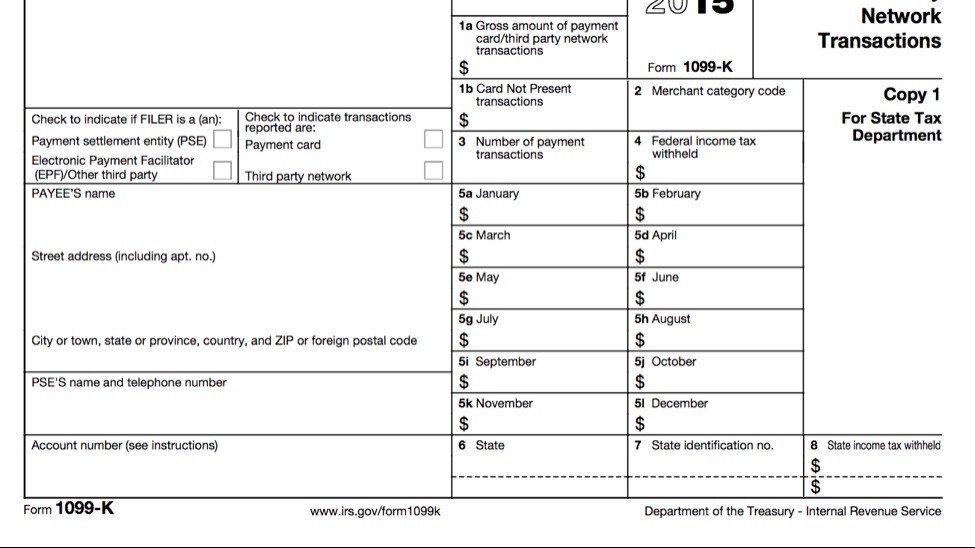
Form 1099-K is an information report, sent by payment apps, marketplaces, and card processors to you and to the IRS, showing the gross payments you received for goods and services. The IRS’s 1099-K guide spells out the two facts every seller should internalize. First, the form reports gross amounts: no fees, refunds, shipping costs, or the price you originally paid for items are subtracted. It is a starting point, not a tax bill. Second, taxability does not depend on receiving the form: income from selling goods or services is reportable whether you got a 1099-K, a different form, or nothing at all.
One more piece of good news baked into the rules: personal transfers were never supposed to be reported. Splitting dinner, rent money from a roommate, or birthday cash sent through a payment app is not “goods and services” income, though mislabeled payments can generate forms by mistake, which is one reason to keep personal and selling accounts separate.
The question that decides your taxes: what kind of seller are you?
The tax treatment turns on what you sold and why, and it sorts into three buckets.
Selling your own used stuff at a loss, the garage-sale-online case, generally creates no taxable income: you bought the exercise bike for $600 and sold it for $150. You cannot deduct the loss on personal items either. But if a 1099-K arrives anyway, do not ignore it; the IRS’s instructions show how to report the proceeds and back them out so the form does not read as untaxed profit.
Selling occasional items at a gain, the collectibles and attic-treasure case, produces taxable gain: sell Grandma’s watch for more than its cost basis and the profit is capital gain, reportable in the year of sale.
Selling regularly to make money, whether crafts, flips, or freelancing paid through an app, is business or self-employment income. That means reporting on Schedule C, deducting real expenses like fees, shipping, and cost of goods, and, once net earnings pass $400, self-employment tax and possibly quarterly estimated payments. The IRS’s Gig Economy Tax Center gathers the rules for this bucket in one place.
Records beat thresholds, every year
The threshold settles who mails you paperwork; it does nothing to change what you owe, and the platforms are reporting to the IRS whenever they do send a form, so mismatches get noticed. The seller’s real protection is records: what each item cost, what it sold for, what the platform took in fees, what shipping cost. For casual sellers, a simple spreadsheet turns a scary 1099-K into a five-minute filing exercise. For business sellers, those records are the difference between paying tax on gross receipts and paying tax on actual profit, which can be a difference of thousands.
Two cautions to round it out. Several states set their own, much lower 1099-K thresholds, so a form can still arrive for modest sales depending on where you live; the arrival of a state-triggered form changes nothing about the federal rules above. And if a 1099-K ever reports amounts that are not yours, personal transfers, duplicated totals, or someone else’s sales on your Social Security number, the IRS guide linked above explains how to request a corrected form from the issuer and how to report in the meantime.
Sellers in the business bucket have one more calendar item: estimated taxes. Income tax and self-employment tax on your selling profit are due as the money comes in, through quarterly payments, not just at filing time, and a profitable year with no payments along the way can add a penalty on top of the bill. The quarterly amounts do not need to be perfect; the IRS’s safe-harbor rules protect you if you pay in enough relative to last year’s tax. If your side selling has grown into four figures of profit, an hour setting up quarterly payments now is cheaper than the April alternative.
The era of threshold whiplash is over for now. What remains is the boring, stable truth underneath it: profit from selling is income, losses on your old couch are nobody’s business, and the seller with receipts wins every version of this rulebook.
This article was produced with AI assistance and reviewed by a human editor. Figures are linked to their primary sources; where a claim could not be verified from the public record, we say so.