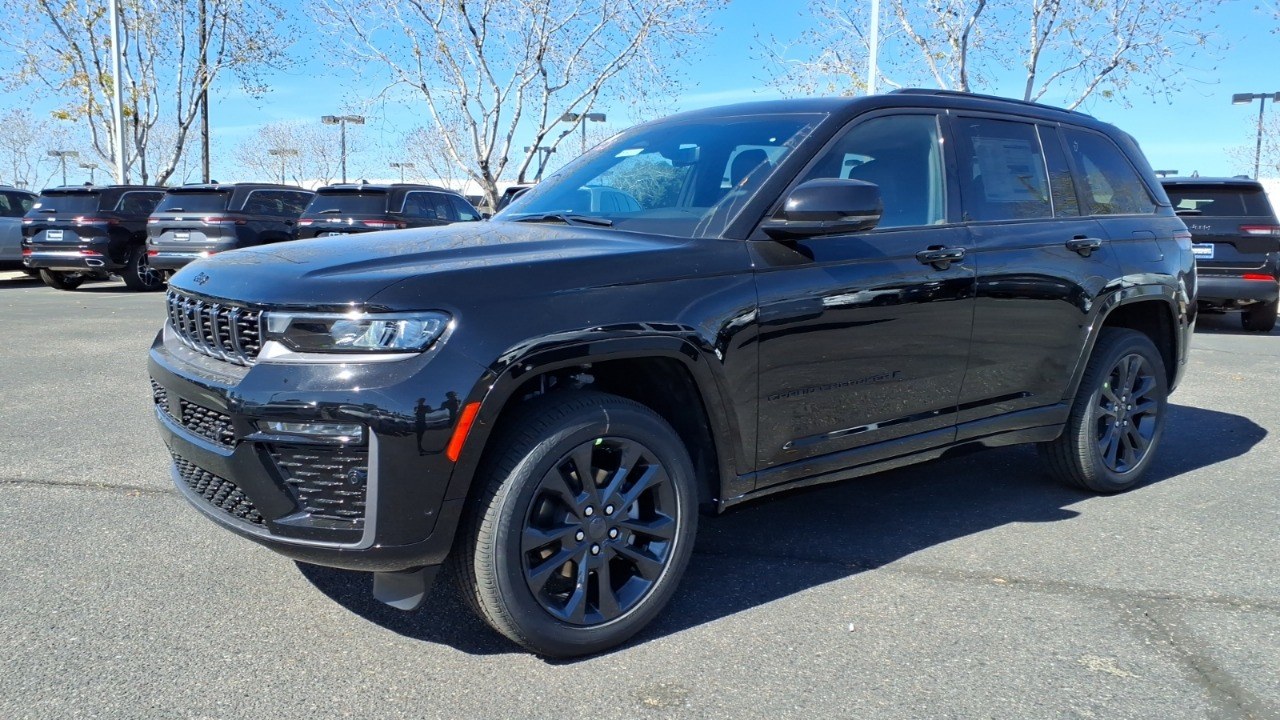
Jeep owners with certain Grand Cherokee, Wagoneer and Cherokee SUVs can get a tire-pressure software fix at no cost. FCA, the company behind Jeep, is recalling 201,975 vehicles because a software error may stop the tire pressure monitoring system from detecting low pressure or lighting its warning light. Dealers do the repair.
The National Highway Traffic Safety Administration (NHTSA) lists the problem in its record for recall 26V559. FCA’s own number for the same recall is 54D, and owner letters began going out on September 17, 2026.
The 201,975 figure is NHTSA’s count of potential units affected. It counts vehicles that may have the software error, not SUVs where a warning light has been confirmed to fail, and any single Jeep on the list may or may not show the problem.
Which Jeeps are included
NHTSA’s record covers 14 combinations of model and year, all sold as Jeeps. Anyone with one of these should treat the recall as open until a dealer confirms the repair was done:
- 2024: Grand Cherokee, Grand Cherokee L, Wagoneer and Grand Wagoneer
- 2025: Grand Cherokee, Grand Cherokee L, Wagoneer, Wagoneer L and Grand Wagoneer
- 2026: Cherokee, Grand Cherokee, Grand Cherokee L, Grand Wagoneer and Grand Wagoneer L
NHTSA’s vehicle lookup confirms the entries from both ends of that range. It lists the recall for a 2026 Jeep Cherokee and for a 2025 Grand Cherokee, each with the same free software update.
The Cherokee is the newest name on the list, and only 2026 models are included. The larger Grand Cherokee and Wagoneer families reach back to 2024, so owners of a 2024 or 2025 model should not assume a Cherokee-only notice leaves them out.
The question for most owners is simple: does the SUV in the driveway match one of those model years, and has anyone checked its identification number? A Jeep that fits the list should be checked even if no letter has arrived, because the letters began mailing only in mid-September.
Retirement deadlines, in your inbox: Miss an enrollment or claim deadline and the money can be gone. The Retirement Money Brief keeps you ahead of the ones that matter, every weekday.
Get the Retirement Money Brief →
We may earn a commission from links on this page.
What can go wrong with the warning light
A tire pressure monitoring system is meant to tell the driver when one or more tires are low. NHTSA says a software error in these Jeeps may keep the system from detecting low tire pressure or from lighting the warning light, so the vehicles do not meet Federal Motor Vehicle Safety Standard 138.
Standard 138 is the federal rule for tire pressure monitoring, and NHTSA’s summary says these SUVs fall short of it because of the software error. The agency’s stated consequence is blunt. A warning light that fails to alert the driver to low tire pressure raises the risk of a crash. NHTSA’s record carries no do-not-drive or park-outside warning for these SUVs, so the immediate step is to get the software updated.
What the repair involves and how to check a VIN
The remedy is a software update to the radio frequency hub, and NHTSA’s record says dealers will do it at no cost. The record does not list an over-the-air update, so a trip to a dealer is the route.
FCA customer service can be reached at 1-800-853-1403, according to NHTSA’s record, and the recall number to give a dealer is 54D. Owners who have not received a letter can still call a Jeep dealer with the 17-character vehicle identification number, or VIN, and ask whether recall 54D is open on that SUV. After the software is updated, asking for a repair order that shows the recall closed gives the owner a record of the visit.
NHTSA runs a search tool at its recalls page. The VIN sits on the lower left of the windshield, and it also appears on the registration card and may be on an insurance card. The page says an open recall shows up as an unrepaired recall for that vehicle, and a clean result reads “0 unrepaired recalls associated with this VIN.”
The agency adds two cautions. The search will not show recalls that were already repaired, and some recent recalls may not yet have every VIN listed, so owners are told to check again periodically. A recall repair at a dealer is free, according to the same page.
One of many recalls this autumn
This Jeep software recall is not the only large one in the news. A monthly roundup in Work Truck lists about 21 recalls with owner letters in September and October 2026. Among them are 328,381 Jeep Grand Cherokees from 2021 to 2023 with rear coil springs that may be installed wrong, 239,130 Ram 1500 pickups whose rearview camera image may not display, and 223,472 Ford F-150 pickups with a fuel tank that may not be secured.
For a household on a fixed income, a recall repair that costs nothing is worth the phone call. Whether a particular Jeep is on the list comes down to the model year and the VIN, and only NHTSA’s search or a dealer can answer that for a specific SUV.
Is the Jeep in the driveway one of the 201,975?
A free recall repair saves one bill, but older households carry many others, from prescriptions to heating to property taxes. Several programs that help with those costs have to be applied for, and they carry income limits that change every year.
The Benefits Checklist scans 11 benefit programs retirees most often miss, including Medicare Savings Programs, Extra Help for prescriptions, SNAP at 60 and older, heating help and property tax breaks. It comes with the 2026 income limits and a 50-state phone directory, so each program can be checked against the household’s own numbers.
Get the 11-program benefits scan with the 2026 income limits from the Benefits Checklist →
More Financial Reading
- 21 Ways to Stretch a $2,087 Social Security Check
- 15 Places to Find Your Share of the $4.25 Billion States Give Back
- 15 Ways Out of 22% Credit Card Interest
This article was produced with AI assistance and edited for accuracy against the sources linked above.