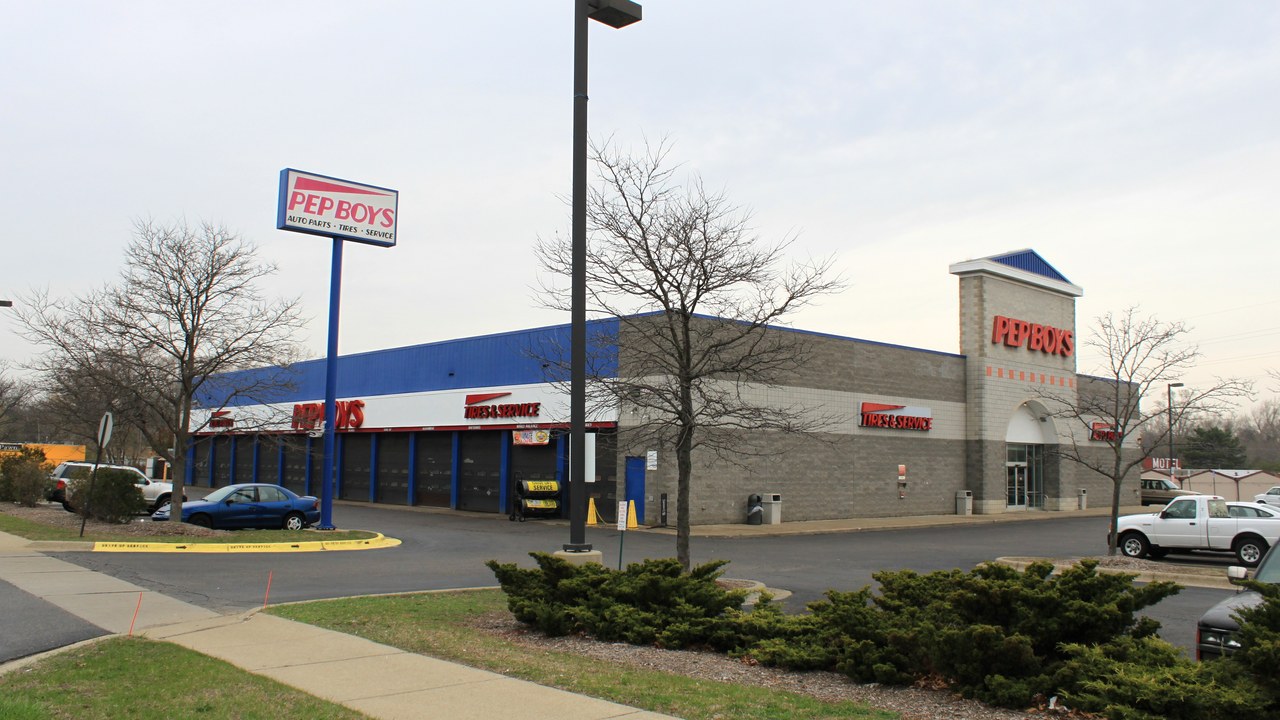
The clock behind a corporate layoff is measured in weeks, and the weeks are already running at Pep Boys. The auto-care chain has told Pennsylvania that 169 workers at its Bala Cynwyd corporate site will be separated, with the first separations falling on December 31, 2026, which is New Year’s Eve. The last falls on February 19, 2027. For the households attached to those 169 paychecks, the state’s unemployment system, rather than the notice itself, decides what income arrives next.
What the Pennsylvania WARN listing says about Pep Boys
The Pennsylvania Department of Labor & Industry keeps a running list of the layoff and closure notices it receives, and the entry for Pep Boys Manny Moe & Jack, LLC sits in the September 2026 section. It gives the site as 1 Presidential Boulevard, Suite 400, Bala Cynwyd, Pennsylvania 19004, in Montgomery County. It lists 169 affected workers, the type as “Layoff” and the effective date as “12/31/26-2/19/27”.
Three details limit what the record proves. The listing is a layoff, not a closure, so nothing in it says a business is shutting. The count belongs to the Bala Cynwyd office, not to the company’s stores, so no store-level job loss is recorded here. And the portal groups notices by month with no notice-received date, so the day workers were told is not public. That Bala Cynwyd address is the company’s headquarters, according to Wikipedia’s entry on Pep Boys.
What the 60-day WARN rule gives a worker, and what it does not
Pennsylvania’s own summary of the Worker Adjustment and Retraining Notification rules describes a 60-day notice before plant closings or mass layoffs, aimed at employers with 100 or more employees. The notice has to reach the affected workers or their representatives, the state’s dislocated worker unit and the chief elected official of the local government.
The federal regulation behind it, 20 CFR Part 639, says the notice must be given “at least 60 calendar days” ahead and must carry the site name, whether the action is permanent or temporary, and the expected separation dates and schedule. Its stated purpose is to give workers “transition time to adjust to the prospective loss of employment” so they can look for new jobs or training. That is the entitlement: time and information. The text read for this article says nothing about guaranteed pay during the notice period, so the notice itself does not replace a paycheck.
The arithmetic is simple. A separation on December 31 needs notice no later than November 1. Reduced notice is allowed only in narrow cases the regulation names, such as a faltering company seeking capital, unforeseeable business circumstances or a natural disaster, and even then the employer must give as much notice as is practicable.
A seven-week separation window inside one headquarters
The effective-date range, December 31 to February 19, spans about seven weeks, and the listing does not say how the 169 are divided across it. In a headquarters layoff that matters to a household, because a worker told of a late-December end date and a worker told of a mid-February date face different gaps before the first benefit payment.
The people in a corporate-office layoff are also not store employees paid by the hour. The listing does not say which roles are affected or whether severance is offered, and neither question can be answered from the state record. Pennsylvania’s unemployment application, however, asks about it directly, which is where the household effect shows up.
Filing a Pennsylvania unemployment claim is free and goes straight to the state
Pennsylvania says its unemployment compensation program is provided at no charge to applicants. The state calls online filing “the best and fastest way,” available around the clock through its secure UC system, with a phone route at 1-888-313-7284, Monday to Friday, 8 a.m. to 4 p.m. A claim is effective on the Sunday of the week it is submitted. No paid intermediary is part of the process.
The state lists what to have ready: the last employer’s name, address and phone, and the dates of employment. Its filing guide adds the first and last day worked, the reason for leaving, bank details for direct deposit if wanted, and “pension or severance package information (if applicable)”. The Pep Boys listing sets the first and last day worked as a range, not a date, so the exact last day will come from the employer.
The waiting week and the weekly certifications
Filing is the first step; payment follows weekly certification. The state’s guide says a claimant must file a certification for each week of total or partial unemployment. The first week of the benefit year in which the claimant is unemployed and otherwise eligible is the “waiting week”, for which benefits are not payable, though a weekly certification is still required for it.
That sequence means the first week after a separation date produces no benefit payment. For a worker whose last day is December 31, the paycheck gap therefore starts before any state money does, and the claim is effective on the Sunday of the week it is filed, which the pages read for this article tie to the submission week rather than to the layoff notice.
Where Pennsylvania sends workers for help beyond the claim
The state’s WARN page lists a Rapid Response contact, [email protected], and refers workers to the PA CareerLink network for added support; the federal Department of Labor’s line is 1-877-872-5627. The listing itself carries only the figures the department recorded on its WARN notices page: 169 affected, a layoff, and a window from December 31, 2026 to February 19, 2027.
When regular deposits stop on a known date
A separation date inside the December 31, 2026 to February 19, 2027 window marks the day regular deposits end while bills, card payments and collection calls do not stop. The state listing records the headcount and dates, not what a stopped paycheck does to a bank account or a debt.
The Bank Account & Debt Protection Kit includes the debt-validation steps and a protected-funds and dispute log, so a collector’s contact can be answered in writing and each dispute recorded in one place.
Line up the debt-validation steps before the last paycheck →
This piece was drafted with AI assistance; the figures were checked against the Pennsylvania Department of Labor & Industry WARN listing, its WARN and unemployment pages, and 20 CFR Part 639.