
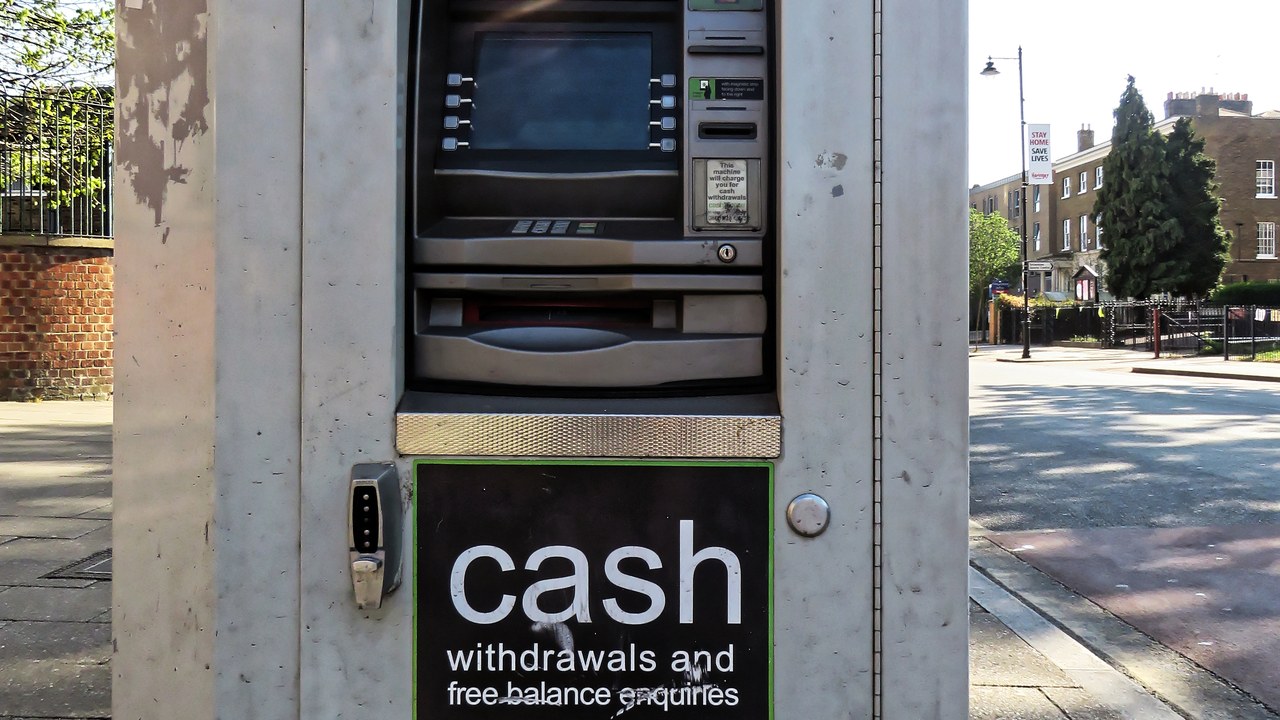
Household checking accounts absorbed an estimated $12.4 billion in overdraft and bounced-payment fees in 2025, according to a new tally from the National Consumer Law Center. That figure covers every bank and credit union nationwide, not just the largest players, and it lands a year after Congress voted to kill a federal rule that would have capped most of those fees at $5. For a family living paycheck to paycheck, the gap between what that rule promised and what actually happened this year is measured in dollars pulled straight out of checking accounts.
Call Reports Put a Number on a Fee Nobody Budgets For
The $12.4 billion figure is an estimate, and the National Consumer Law Center says so plainly. Credit unions no longer have to report overdraft revenue as a separate line item after the National Credit Union Administration stopped requiring the disclosure, so no single dataset captures a complete national count. Instead, the center built its number from bank call reports filed with the Federal Financial Institutions Examination Council, starting with the twenty largest consumer banks and extrapolating from there.
Those twenty banks alone collected $4 billion in overdraft fees in 2025, a 6.2 percent increase over 2023, the last year the Consumer Financial Protection Bureau published comparable figures, according to the National Consumer Law Center’s issue brief. JPMorgan Chase led with $1.1 billion, Wells Fargo followed at $924 million, and PNC Bank, a much smaller institution, took in $279 million, up 8 percent from two years earlier.
To turn that top-twenty trend into an industrywide figure, the center applied the same 6.2 percent growth rate to a separate 2024 baseline of $12.1 billion in overdraft and non-sufficient-funds fees, a number the Financial Health Network calculated after new credit union call-report requirements showed that earlier industry estimates had undercounted fee revenue by billions. The center is explicit that the resulting $12.4 billion could run higher or lower depending on how smaller banks and credit unions actually behaved.
Free account checkup: Social Security and VA deposits have protections from garnishment, but accounts still get frozen by mistake. Get the free protected-benefits checkup.
Free download from RetireShield. Getting it also signs you up for the free Retirement Money Brief, a weekday email. Unsubscribe anytime.
A $5 Cap That Never Took Effect
The rule the National Consumer Law Center measured against was finalized by the Consumer Financial Protection Bureau on December 12, 2024. It applied only to banks and credit unions holding more than $10 billion in assets, and it gave those institutions three paths: cap the overdraft fee at $5, price the fee to cover actual costs and losses, or keep charging a profit-driven fee as long as it came with the same disclosures required of any other loan, including a stated interest rate.
The bureau projected the rule would save consumers up to $5 billion a year, or about $225 annually for a household that regularly pays overdraft fees, according to the CFPB’s December 2024 announcement. It was scheduled to take effect on October 1, 2025.
It never got there. Congress passed a resolution under the Congressional Review Act to overturn the rule before that deadline, and the president signed it in 2025, voiding the $5 cap and barring the agency from issuing a substantially similar rule in the future without new legislation.
Regulators Loosened Their Grip at the Same Time
The overturned rule was not the only lever federal regulators let go of. The CFPB rescinded a consent order against Navy Federal Credit Union that had penalized the lender for charging surprise overdraft fees on transactions that appeared to have sufficient funds at the time of purchase, and it withdrew guidance documents warning banks against similar surprise-fee and debit-card overdraft practices.
The Federal Deposit Insurance Corporation separately dropped supervisory guidance that had told the banks it oversees not to charge more than one non-sufficient-funds fee on the same bounced transaction, a practice known as re-presentment. The National Credit Union Administration stopped requiring credit unions to report overdraft and NSF revenue as its own line item, which is part of why recent credit union totals are missing from the National Consumer Law Center’s count.
Some of the voluntary fee cuts banks made while the rule was pending have already reversed course. BMO Bank cut its overdraft fee from $36 to $15 in 2025, then raised it back to $20 in 2026 and shrank the account cushion that avoids triggering a fee from $50 to $20.
Which Banks Are Raising Fees, and Which Charge None
Not every bank moved in the same direction. USAA Federal Savings Bank posted the largest percentage increase in overdraft revenue in the National Consumer Law Center’s count, mainly because it only began charging overdraft fees in late 2023. Huntington Bank’s overdraft revenue rose 40 percent over the same two-year span, followed by M&T Bank at 36 percent, Citizens Bank at 24 percent, First Citizens at 23 percent, and TD Bank at 22 percent.
On a per-account basis, Regions Bank charged the most among large banks, averaging $30 a year in overdraft fees per account, followed by Citizens Bank at $19, TD Bank at $18, and Fifth Third Bank and Huntington National Bank at $17 each.
A smaller group of banks charge nothing at all. Capital One, Citibank, American Express and Ally Bank have no overdraft fee, and none of the twenty largest consumer banks now charges a separate non-sufficient-funds fee, even at institutions that still charge for overdrafts.
States Are Being Asked to Fill the Gap
With federal pressure eased, the National Consumer Law Center is directing its recommendations toward state legislatures and state-chartered institutions, which are not shielded by the same federal preemption that limits state authority over nationally chartered banks.
The center’s recommended state limits include capping overdraft fees at $5, barring non-sufficient-funds fees outright, and restricting banks and credit unions to no more than six overdraft fees or $200 total per account each year. It frames state-chartered banks and credit unions as the most realistic near-term target, since Congress has already shown it will undo a comparable federal cap.
For now, the trend line the center is tracking keeps moving in one direction. Two years without an enforceable federal cap, paired with rising per-account fees at more than half a dozen major banks, is what turned a $12.1 billion industry estimate for 2024 into a projected $12.4 billion figure for 2025 — a gap the National Consumer Law Center attributes directly to the absence of the rule Congress voted to undo.
When an Overdraft Balance Turns Into a Collections Notice
An overdraft balance that goes unpaid rarely stays a simple bank fee for long. Many institutions refer it to a collections agency within weeks, and once a debt collector is involved, the rules around notice, validation and account freezes shift away from the bank’s own fee schedule. The same checking account that generated the overdraft charge can also be the one a creditor tries to reach next.
The Bank Account & Debt Protection Kit lays out the debt-validation steps for responding to a collector and the frozen-account response for a checking account that gets locked without warning.
See the debt-validation steps and frozen-account response in The Bank Account & Debt Protection Kit.
AI-assisted research and drafting; reviewed by an editor.


