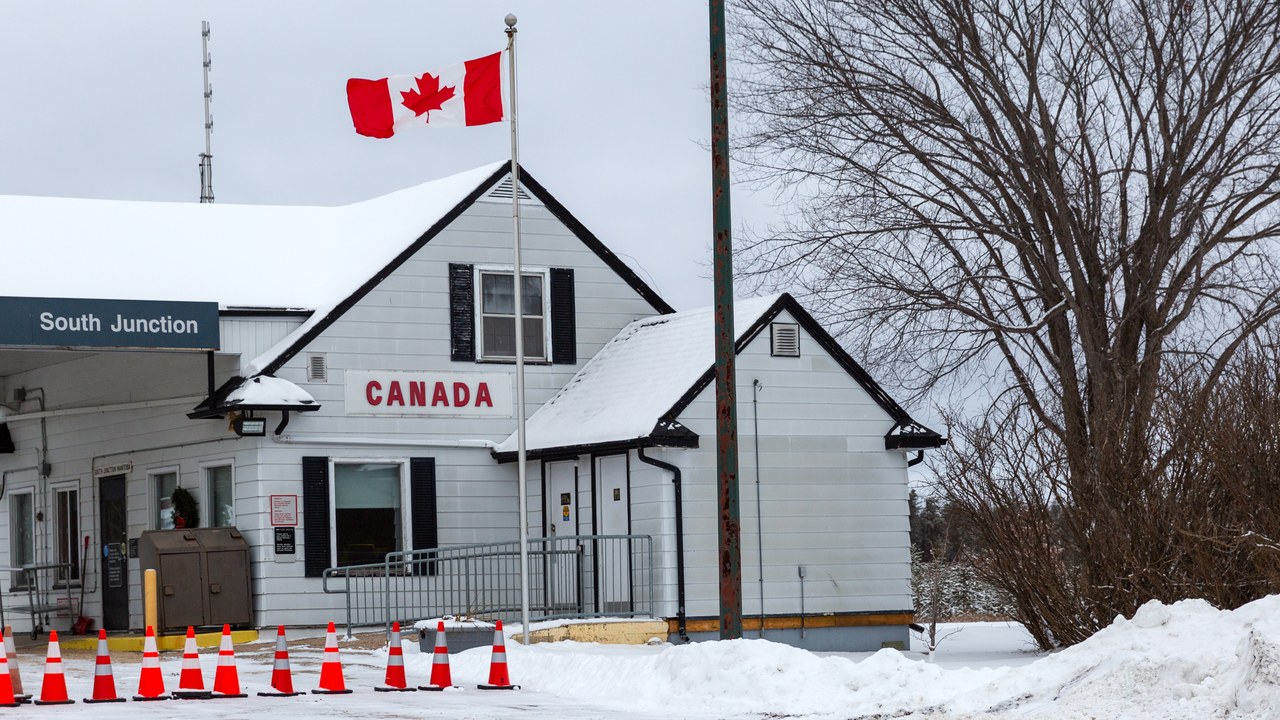
Canada’s counter-tariffs on American goods took effect this month, and the list reads like a cross-section of everyday manufacturing and grocery-aisle staples. The Canadian government says the new tariffs mirror, dollar for dollar, a tariff the United States imposed on Canadian goods weeks earlier. For businesses on both sides of the border that sell into the other country, the fight over rates is no longer theoretical — it is now showing up on shipping invoices.
Which Everyday Products Are on Canada’s List
Canada’s Department of Finance says the countermeasures focus on steel, dairy, appliances, agricultural equipment, pulp and paper, and electronics — sectors it describes as most affected by U.S. tariffs. The published list runs to hundreds of individual tariff items, covering everything from powdered milk and cheese to plastic tableware, wood products, and cosmetics, each assigned its own rate depending on which U.S. tariff it is designed to match. Milk and cream concentrates, whey protein, and casein sit at the top rate of 50 percent, while a long roster of cheese types — cheddar, mozzarella, parmesan, gruyère, and more — carries a 25 percent rate. Coniferous lumber, including pine, fir, spruce, and hemlock, is taxed at 25 percent, and consumer goods like perfumes, makeup, and plastic tableware and kitchenware sit at 50 percent.
Free retirement updates: A quiet rule change can shrink your Social Security or Medicare check, and no one warns you. The free Retirement Shield newsletter catches these early and tells you what to do. Get it free.
The Size of the Tariffs: 15, 25 and 50 Percent on $27.6 Billion
Per the Department of Finance’s own backgrounder, Canada is charging 15, 25, or 50 percent on products covering $27.6 billion of imports from the United States, with the exact rate on each item set to match the U.S. tariff on the equivalent Canadian good. Dairy products like milk powder, whey, and casein derivatives sit at the top of the scale at 50 percent, while many cheeses and some steel and aluminum derivatives are taxed at 25 percent.
Why Canada Calls This a Dollar-for-Dollar Match
Canada’s government frames the new tariffs as a direct response: the United States applied a 50 percent Section 338 tariff to $27.6 billion of Canadian goods effective August 22, and Canada’s countermeasure — drawn from products already targeted by the U.S.’s own Section 338 and Section 232 tariff actions — is built to match that figure exactly rather than escalate past it. That symmetry is deliberate — Ottawa has repeatedly said its retaliation is proportional, sized to mirror what it says it is absorbing rather than to punish beyond it.
How the Tariffs Get Administered at the Border
The new rates took effect at 12:01 a.m. on September 8, 2026, and do not apply to U.S. goods that were already in transit to Canada when the tariffs came into force. Canada’s list has to be read alongside the tariff item numbers in the country’s own Customs Tariff schedule, and the Canada Border Services Agency is handling day-to-day administration through its own customs notices, which importers are expected to check for updates as the list is revised. Canada’s own posting notes the list was last updated August 26, 2026, a reminder that the item-level detail can still shift even after the tariffs themselves are in force.
The Exemptions, the Remission Process, and Who Actually Pays
Canada’s border agency administers each of its retaliatory tariffs under a standing framework, laid out in a companion customs notice written for the original 2025 U.S. surtax order — since repealed and replaced by the current measure, but run out of the same CBSA office under the same rules. That framework spells out narrow exemptions: goods already under a carrier’s control and provably in transit to Canada when a tariff takes effect, shown through a bill of lading or cargo control documents; goods that were previously duty-paid in Canada and are simply returning with a traveler; items repaired or altered across the border; and a short list of other categories such as temporarily imported baggage. Importers who argue a tariff has created genuine hardship can also apply through a separate federal remission process for case-by-case relief, administered by the Department of Finance rather than the CBSA itself. Underneath all of that sits one more mechanical detail with a real cost: Canada calculates its 5 percent federal sales tax on a shipment’s value after the tariff has already been added, not before, so the tariff and the sales tax compound on each other — a $150 shipment carrying a 25 percent surtax adds $37.50 in tariff, then sales tax charged on that $37.50 too, not just on the original $150. Both the tariff and the compounded sales tax are collected from the Canadian company bringing the goods across the border, not the American company that sold them, so the immediate cash cost lands on Canadian importers first, regardless of which government’s numbers the fight is over.
What It Could Mean for American Exporters and Consumers
For U.S. companies that sell dairy, appliances, or electronics into Canada, a 15-to-50-percent tariff makes their products meaningfully more expensive than Canadian or third-country alternatives overnight, which typically means lost orders before it means absorbed cost. Dairy cooperatives, appliance makers, and steel producers concentrated in tariff-exposed states are the ones most likely to feel it first, through smaller export orders rather than a line item on a household bill. Because these tariffs apply to U.S. goods entering Canada, American shoppers won’t see them added directly to a receipt the way tariffs on imported goods raise shelf prices at home; the exposure for U.S. households runs mostly through export sales, farm income, and jobs in the affected industries, not through checkout prices. If the two countries keep matching each other’s tariffs rather than negotiating them down, the practical effect compounds over time in the form of fewer export orders, and eventually softer prices paid to American producers for the same goods.
Relief that waits to be asked for
Property-tax freezes, exemptions and utility help are rarely applied automatically, and each has its own filing window.
The Senior Property Tax & Home-Cost Relief Kit includes an 11-page kit, the 5 kinds of property-tax relief and the circuit-breaker credit that includes renters.
See the five kinds of relief in The Senior Property Tax & Home-Cost Relief Kit.
This article was produced with AI assistance and reviewed by a human editor. Figures are linked to their primary sources; where a claim could not be verified from the public record, we say so.