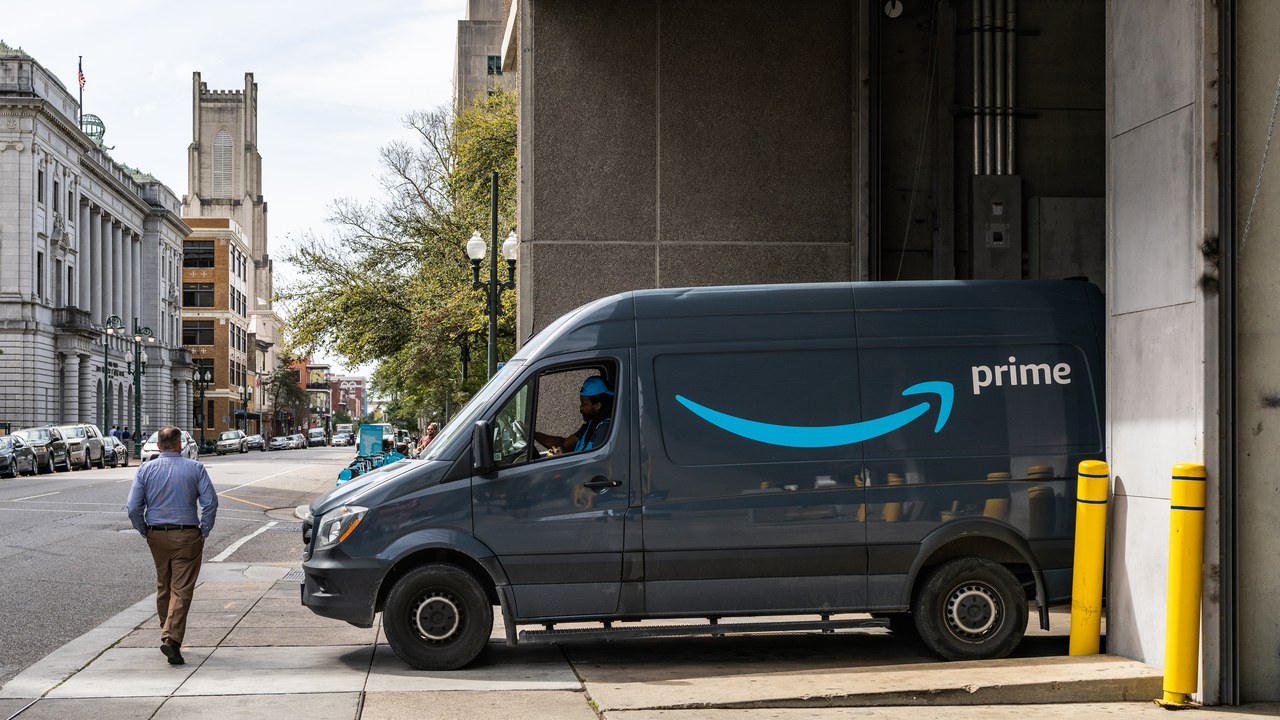
Amazon Shipping, the company’s parcel delivery service for businesses, adds a temporary surcharge on top of its regular rates every autumn, and the 2026 version costs more than last year’s did. The steepest stretch of the year falls in a five-week window between November 22 and December 26, exactly when U.S. households do most of their holiday buying and small sellers ship the most packages. For a family running an online shop out of a garage or a spare bedroom, that pricing window can turn the busiest sales weeks of the year into the most expensive ones to fulfill.
Amazon’s Three Pricing Windows for the 2026 Holiday Season
Amazon split its 2026 peak season into three separate pricing periods rather than one flat holiday rate. The first runs October 25 through November 21, the second and most expensive covers November 22 through December 26, and the third runs from December 27 through January 16, 2027. Each period carries its own surcharge amounts, and businesses that ship through Amazon Shipping are billed automatically once a package falls inside the applicable window, with no separate sign-up or notice required.
The per-package demand surcharge climbs to $0.75 during the November 22 to December 26 window, up from $0.50 in the two shoulder periods on either side of it, according to Amazon’s own 2026 peak season announcement. The same middle window carries the highest add-on fees across the board: an $11.90 additional-handling fee instead of $8.75, a $117.50 large-package fee instead of $96.25, and a $590 extra-heavy-package fee instead of $530. Amazon says the surcharges apply on top of a shipper’s existing contracted rate, not in place of it.
Free retirement updates: Want plain-English help keeping more of your money in retirement? The free Retirement Shield newsletter covers the benefits, deadlines, and money mistakes that cost retirees, a couple times a week. Subscribe free.
The Extra Quarter That Adds Up for Small Shippers
A quarter a package sounds small until it is multiplied by real holiday volume. A home-based seller shipping 400 packages during the five-week peak window pays roughly $100 more in demand surcharges alone than the same 400 packages would have cost in early October, and that is before a single package qualifies as oversized or heavy enough to trigger the bigger add-on fees. Amazon does not carve out an exemption for small accounts; the surcharge applies the same way whether the shipper is a national retailer or one person packing orders at a kitchen table.
The timing is the part that stings. The five weeks with the highest per-package cost are also the five weeks with the highest order volume for anyone selling gifts, décor or seasonal goods, so the surcharge lands exactly when shipping volume, and shipping bills, are already at their yearly peak.
The Math for a Shipper Sending Oversized Packages
The demand surcharge is not the only line that jumps during the peak window. A package that meets Amazon’s threshold for a large package costs $117.50 in surcharge during November 22 through December 26, compared with $96.25 the rest of peak season, a $21.25 jump on that single package alone. An extra-heavy package rises from $530 to $590, a $60 increase. A seller who typically ships a handful of bulky items each week, patio furniture parts, framed art, holiday décor boxed for shipping, can see the combined effect of the higher per-package surcharge and the higher size-based fees add real dollars to an order that already carried thin margins before the holiday markup on materials and labor is factored in.
None of these size-based charges are new categories; Amazon has billed for additional handling, large packages and extra-heavy packages year-round. What changes during the five-week peak window is only the dollar amount attached to each one, which is precisely why a shipper who checks Amazon’s regular rate card in October and assumes it still applies in late November can be caught off guard by an invoice that looks nothing like it did a month earlier.
USPS, UPS and FedEx Are Also Charging More This Year
Amazon is not raising holiday shipping costs in isolation. The U.S. Postal Service filed a temporary price change that raises rates on Priority Mail, Priority Mail Express, USPS Ground Advantage and Parcel Select by an average of 6% during its own peak window, running from October 4, 2026 through January 17, 2027, according to the Postal Service’s own announcement. That average increase is higher than the 4.9% to 5.8% range USPS applied for the 2025 holiday season. UPS and FedEx have likewise confirmed higher peak-season fee schedules of their own for this year, so a household or small seller comparing carriers this fall will find that every major option costs more than it did in 2025.
What Stays the Same, and What the Fine Print Actually Covers
Amazon says several things remain unchanged through peak season regardless of the surcharge: no added residential-delivery fee, no weekend-delivery charge, and the same seven-day delivery window, tracking and claims process shippers use the rest of the year. The bigger add-on charges apply only to packages that meet specific size or weight criteria spelled out in Amazon’s shipping service guide, which defines what counts as an additional-handling, large, or extra-heavy package. A shipper who never sends anything oversized feels only the flat per-package increase; one who regularly ships bulky items, like furniture parts or heavy holiday décor, absorbs the bigger fees on top of it.
Why the Highest Rate Lands on This Exact Five-Week Window
Amazon frames the entire structure around one goal: keeping its delivery network fast enough to handle the heaviest shipping weeks of the year without falling behind. The company built the surcharge to rise and fall with demand rather than charge one flat rate across the whole season, which is why the November 22 to December 26 window, the same stretch that covers Black Friday, Cyber Monday and the final pre-Christmas shipping cutoffs, carries the highest number on every line of its published fee table. For any business budgeting holiday fulfillment costs, that table, published and updated directly by Amazon, is the number to check before the volume arrives.
Inside the kit
The 5 kinds of property-tax relief, the circuit-breaker credit that includes renters, help with heating, cooling and home repairs, and an application log and renewal calendar.
The Senior Property Tax & Home-Cost Relief Kit includes an 11-page kit, the 5 kinds of property-tax relief and the circuit-breaker credit that includes renters.
Open The Senior Property Tax & Home-Cost Relief Kit.
This article was produced with AI assistance and reviewed by a human editor. Figures are linked to their primary sources; where a claim could not be verified from the public record, we say so.