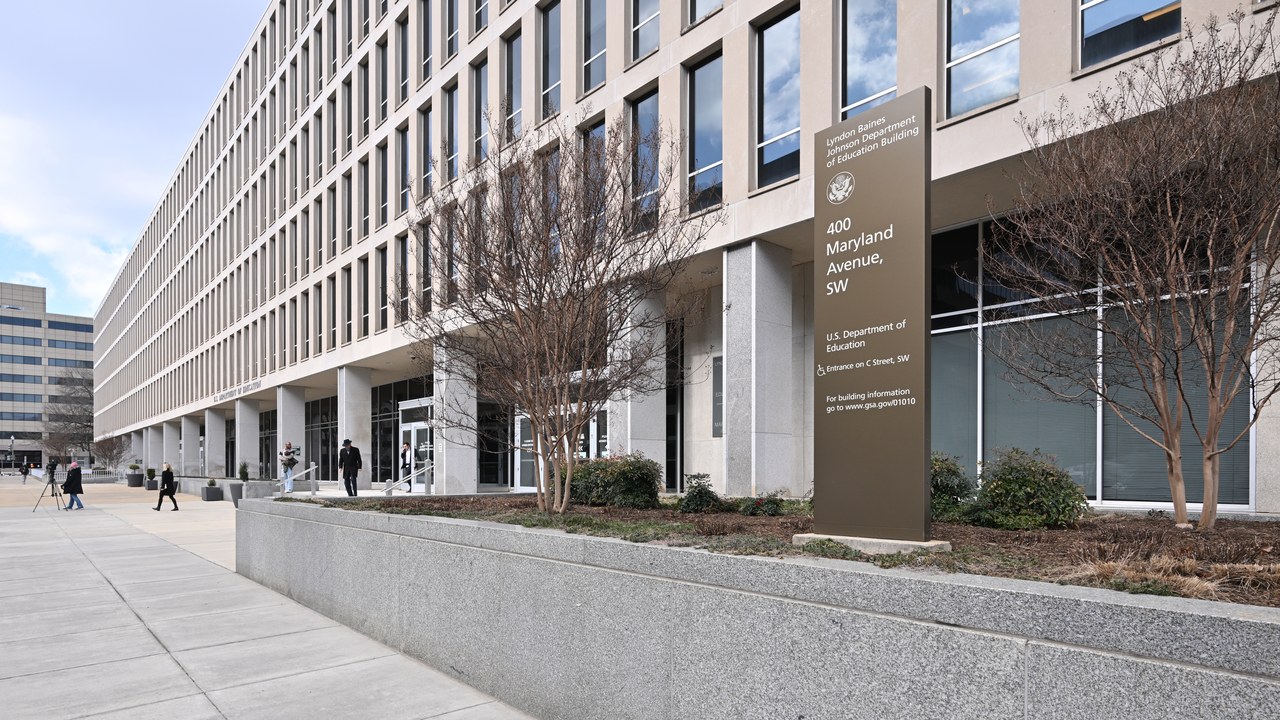
The Consumer Financial Protection Bureau’s public list of enforcement actions has not gained a new entry since August 21, 2025, when the agency sued a failed fintech company called Synapse Financial Technologies. More than a year has now passed without a fresh case appearing on that list, an unusually quiet stretch for the federal regulator that polices banks, debt collectors, credit bureaus and money-transfer services on behalf of ordinary households. Those enforcement cases are often the mechanism that turns a systemic banking failure into an actual refund check for the people who lost money, so a long pause in new filings changes what recourse looks like for a household stuck with an overdraft dispute or a fraudulent Zelle transfer. Households counting on the agency to force that kind of refund are, for the moment, watching a case count that simply is not moving.
Synapse Financial Technologies Remains the Newest Case on the Docket
The Bureau’s own enforcement-actions database, which can be sorted by filing date, still opens with Synapse Financial Technologies, Inc., filed August 21, 2025 in the U.S. Bankruptcy Court for the Central District of California under docket number 1:25-ap-01052. The case record describes Synapse as a since-bankrupt technology firm that acted as the connective layer between fintech apps and the banks actually holding customers’ cash, and accuses it of failing to keep records that matched what its partner banks reported. Those partner banks eventually turned up a shortfall of between $60 million and $90 million, leaving depositors locked out of checking and savings balances for weeks or months while the numbers were reconciled. The stipulated judgment, entered September 12, 2025, carried only a $1 civil penalty, a structure that let the Bureau draw on its civil penalty fund to repay affected consumers directly rather than collect a fine for the Treasury. The Bureau categorizes the matter as Pending Litigation, the same status assigned to a case still working through the courts rather than one that has been fully resolved and closed, and the case sits in bankruptcy court rather than a standard federal district court because Synapse itself had already filed for Chapter 11 protection back in April 2024. Filtered by date, the register lists 386 total actions, and none carries a filing date newer than that one.
Free retirement updates: Enrollment and claim windows come and go, and missing one can cost you real money. The free Retirement Shield newsletter keeps you ahead of the deadlines that matter. Sign up free.
A Sharp Slowdown From the Pace Set in Late 2024
The register tells a very different story for the twelve months before that filing. Between late August 2024 and the Synapse case, the Bureau brought roughly twenty separate actions, close to two new cases a month. Equifax, Inc. and Equifax Information Services LLC were ordered to answer for consumer-reporting failures on January 17, 2025, the same week the agency sued Draper & Kramer Mortgage Corporation and ordered American Honda Finance Corporation to address inaccurate credit furnishing. Days earlier, Block, Inc., the operator of Cash App, faced a Bureau order, and Capital One, National Association and Capital One Financial Corporation were sued over how the bank marketed its savings accounts. Experian Information Solutions, Inc. and Vanderbilt Mortgage & Finance, Inc. were each sued in the first week of January 2025. The month before that brought a joint complaint against Walmart Inc. and Branch Messenger, Inc., a separate lawsuit naming Rocket Homes and the Jason Mitchell Group, and a case against Early Warning Services, LLC together with Bank of America, JPMorgan Chase and Wells Fargo over fraud losses on the Zelle payment network. The months before that carried still more filings: TD Bank, N.A. was ordered to answer for inaccurate credit furnishing on September 11, 2024, New Day Financial, LLC faced an order eight days earlier over its marketing of VA-guaranteed refinance loans, and Comerica Bank, Global Tel Link Corporation and Performant Recovery, Inc. were each named in separate actions between September and December of 2024. The last order before the year-plus gap went to Wise US Inc., a nonbank remittance company, on January 30, 2025.
What Keeps Operating While the Filing Count Sits Still
None of this means every piece of enforcement work has stopped. Orders already on the books, including the Synapse judgment, the Navy Federal Credit Union overdraft order from November 7, 2024, and the Goldman Sachs Bank USA and Apple Inc. actions both filed October 23, 2024, remain in force and continue moving through their payment and compliance phases regardless of whether a new case gets added to the list. Anyone affected by an existing order, including the roughly $60 million to $90 million in frozen Synapse funds, can still track distribution status through the case docket rather than waiting on a new filing. State attorneys general, who can bring their own cases under many of the same consumer-protection statutes, keep operating independently of the federal filing count, and the Bureau’s complaint-intake process has not been suspended; it funnels new individual disputes into supervision and investigation queues that can eventually produce a fresh docket entry of their own, even during a stretch when no new case has been filed. What the gap changes is the flow of new federal cases that typically end in the kind of consumer relief the agency tracks separately. As of its own January 30, 2025 tally, the Bureau’s public enforcement actions had produced $19.7 billion in consumer relief and $5 billion in civil money penalties since the agency’s founding, covering an estimated 195 million eligible consumers or accounts. Whether that running total grows again depends on whether a new name appears above Synapse Financial Technologies on a register that, as of this week, still has not moved.
Where Older Households Leave Benefits Unclaimed
Federal enforcement is what turns a banking failure into a refund, and that machinery moves on its own schedule. A separate set of benefit programs never depends on a case being filed at all: Extra Help lowers what Medicare Part D charges for prescriptions, state drug assistance programs cover costs Part D leaves behind, and SSI pays a monthly benefit to people over 65 with little income or savings. Each is administered by a state or federal office and runs entirely on applications, which is why so much of it goes unclaimed.
The guide covers 11 programs in 63 pages, each with its 2026 income limits and the state office that processes the paperwork.
See where Extra Help and state drug assistance overlap in The Benefits Checklist.
This article was produced with AI assistance and reviewed by a human editor. Figures are linked to their primary sources; where a claim could not be verified from the public record, we say so.