President Trump signed an executive order on September 4, 2026, giving the U.S. Department of Agriculture three months to figure out whether it can legally force grocery stores to disclose where beef comes from. The instruction sits inside a broader ranchers’ order that also touches grazing land and predator control, but for household grocery budgets, the labeling piece is the part that could eventually change what shoppers read on a package of ground beef or steak. Ranchers, packers and grocery chains have fought over that exact question for more than two decades, and the order does not settle it. Nothing changes at the meat counter today — the order sets up a review, not a rule.
A 90-Day Review, Not A New Label Requirement
Section 4 of the order, titled “Supporting America’s Ranchers,” directs the Secretary of Agriculture to work with the U.S. Trade Representative on a review of every statutory and regulatory authority that could allow mandatory country-of-origin labeling for beef, along with an updated economic analysis of what such a label would cost. That work is due within 90 days of the September 4 signing, putting the deadline around early December 2026. Only after that report is delivered can the Secretary choose to issue or amend regulations, or instead ask the White House legislative affairs office to draft a bill for Congress. Neither outcome is guaranteed by the order itself. The order also calls for an economic analysis “that reflects current conditions and modernized practices,” a nod to how much cattle markets have shifted since the last country-of-origin fight played out more than a decade ago.
The order also spells out why the administration is asking now: it says the national cattle herd is at its smallest size in 75 years, even as beef demand has grown almost 10 percent over the past decade — a supply-and-demand gap the White House frames as squeezing ranchers and shoppers alike.
Free retirement updates: A quiet rule change can shrink your Social Security or Medicare check, and no one warns you. The free Retirement Shield newsletter catches these early and tells you what to do. Get it free.
Why Beef Lost Its Country-Of-Origin Label In 2015
Country-of-origin labeling on beef is not new. A 2009 USDA rule required retailers to disclose where an animal was born, raised and slaughtered, but Canada and Mexico challenged it at the World Trade Organization, arguing the rule discriminated against imported cattle. The WTO’s Appellate Body agreed, and once the two countries won approval to impose more than a billion dollars combined in retaliatory tariffs on U.S. goods, Congress stripped beef and pork out of the labeling law in the Consolidated Appropriations Act of 2016. USDA confirmed it would stop enforcing the beef and pork labeling requirement immediately. The labeling law itself never disappeared — it still covers lamb, chicken, goat meat, wild and farm-raised fish, and a list of produce items. Beef and pork have simply been carved out for a decade.
The Voluntary Label Already On Some Beef Today
While a mandatory beef label has been off the books since 2015, a narrower voluntary claim already governs how “Product of USA” can appear on packages. Under a rule USDA finalized in March 2024, a meat, poultry or egg product can only carry a “Product of USA” or “Made in the USA” claim if the animal was born, raised, slaughtered and processed entirely inside the United States — a stricter bar than the general “Made in USA” standard used for other consumer goods. Compliance became mandatory for companies using the claim as of January 1, 2026, so it is already shaping some beef labels on shelves right now. What the new order is exploring is different and bigger: a required disclosure on all beef, not a voluntary claim a company can choose to make or skip.
What Origin Labeling Would Mean For A Grocery Bill Already Under Pressure
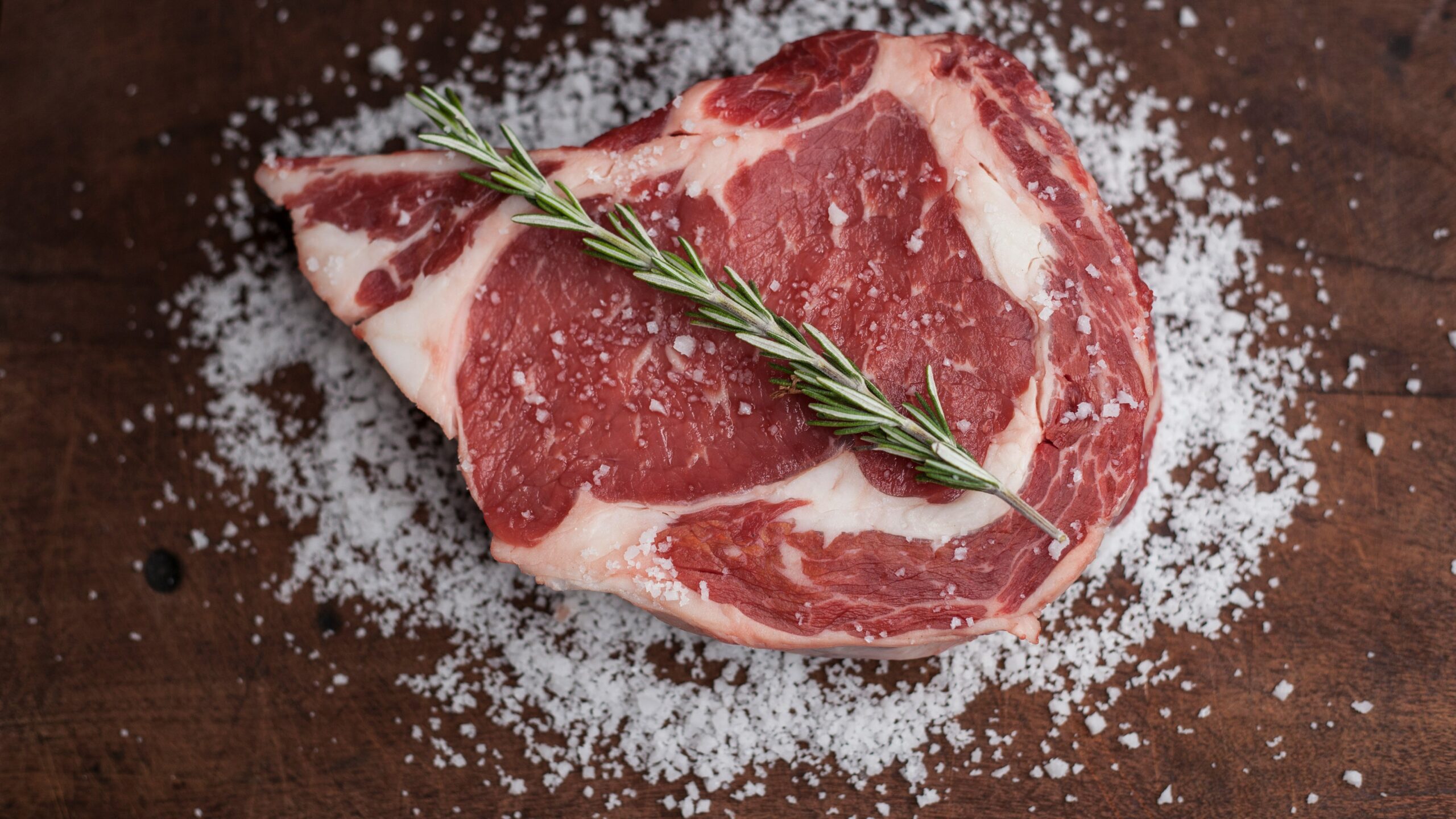
Whatever USDA decides, it lands on a market where beef is already expensive. The average U.S. price for a pound of ground beef was $6.885 in July 2026, according to Bureau of Labor Statistics data, after hovering between roughly $6.70 and $6.90 for most of the spring and summer. Ranchers and groups such as R-CALF USA have pushed for years to bring back mandatory country-of-origin labeling, arguing it would let shoppers pay for verified American beef and support domestic herd rebuilding. Meatpackers and grocers have countered in past debates that separating imported and domestic cattle for labeling adds processing and recordkeeping costs that eventually show up at the register — the same cost argument that helped sink the 2009 version at the WTO. The order gestures at that tradeoff directly: a separate section directs every federal agency involved to take steps “to ensure that the measures directed in this order…benefit American consumers in the form of lower prices to the maximum extent possible,” without specifying how a beef label would accomplish that. The new order does not resolve the underlying fight; it just orders the paperwork that would inform it.
The Two Paths USDA Can Take In December
If the 90-day review finds solid legal footing for a mandatory label, USDA can move toward rulemaking, a process that typically adds its own months of public comment before any label requirement would actually take effect. If the review finds the legal authority is shakier, the more likely next step is a legislative recommendation sent to Congress, where similar country-of-origin bills for beef have been introduced in recent sessions without passing. Congress has already tried that route once this decade: in 2024, Senator Mike Rounds of South Dakota led a group of senators asking the Senate Agriculture Committee to add mandatory beef labeling to that year’s farm bill, and it did not make the final legislation. Either way, the order sets a specific clock: a report and economic analysis due to the Assistant to the President for Economic Policy within 90 days of September 4, 2026. That internal deadline, spelled out in the order’s own text, is the actual news this week — not a new sticker on a package of beef.
This article was produced with AI assistance and reviewed by a human editor. Figures are linked to their primary sources; where a claim could not be verified from the public record, we say so.
More Financial Reading