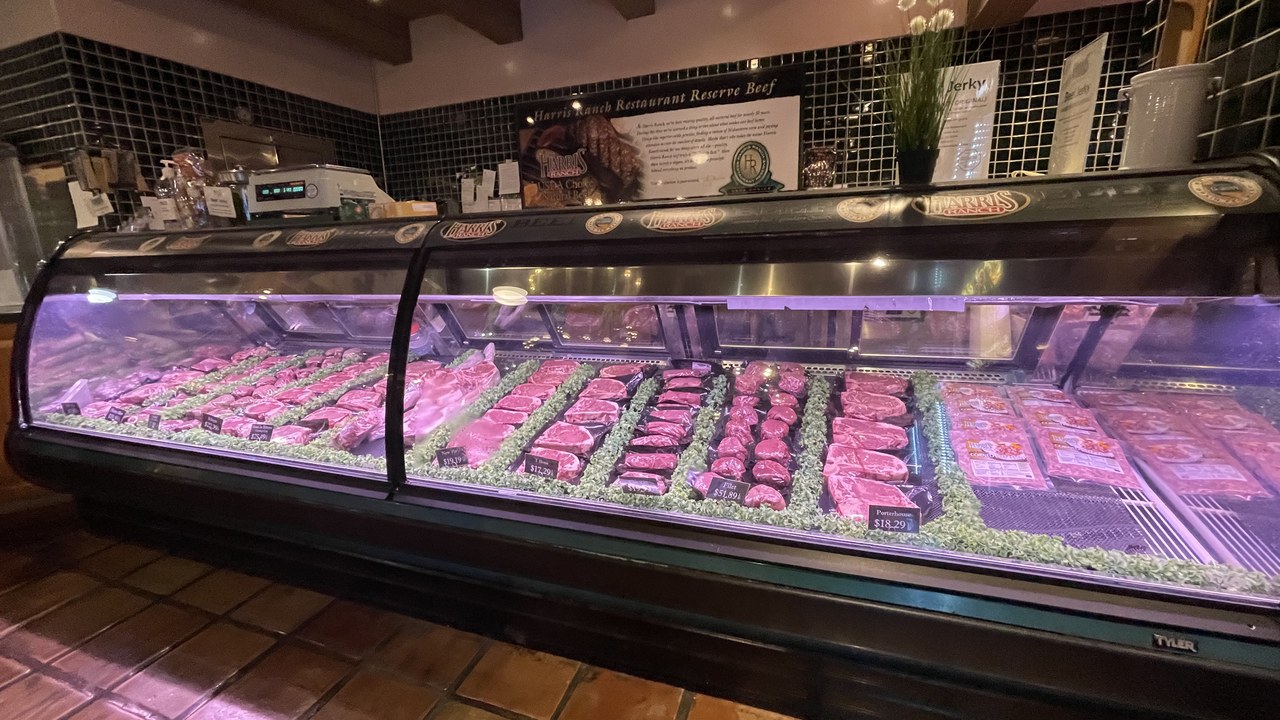
American shoppers reaching for ground beef, steak or a roast this year are absorbing one of the steepest single-category price increases in the supermarket. The U.S. Department of Agriculture’s Economic Research Service now forecasts that beef and veal prices will climb 9.8 percent over the course of 2026, the fastest rise among the fifteen food-at-home categories the agency tracks every month. For a household that spends a few hundred dollars a month at the grocery store, that is not an abstract statistic; it shows up directly in the price of dinner.
Beef Prices Are on Pace for a 9.8 Percent Increase in 2026
In its August 2026 Food Price Outlook, ERS forecasts that beef and veal prices will rise 9.8 percent for full-year 2026, with a 95-percent forecast interval running from 7.0 to 12.6 percent. That range already lines up with what shoppers are seeing at the register: beef and veal prices were 9.4 percent higher in July 2026 than they were in July 2025, after ticking up another 0.2 percent from June to July alone.
ERS builds this forecast by comparing the average retail price across all twelve months of a year to the average across all twelve months of the prior year, so the 9.8 percent figure describes the shape of the full 2026 trend rather than one month’s spike. Beef and veal is now growing well past its own 20-year historical average pace, one of only seven of the fifteen tracked grocery categories doing so this year.
Free retirement updates: Enrollment and claim windows come and go, and missing one can cost you real money. The free Retirement Shield newsletter keeps you ahead of the deadlines that matter. Sign up free.
A Shrinking Cattle Supply Is Driving the Increase
The root cause sits upstream of the meat counter. According to the USDA’s Livestock, Dairy, and Poultry Outlook for August 2026, federally inspected beef production fell almost 5 percent in July compared with the year before, and wholesale beef prices have been sitting at or above record levels for this point in the year. Ranchers have been working through years of drought and high feed costs that shrank the national cattle herd, and rebuilding a herd takes years rather than months because it depends on calves being born, raised and eventually finished for slaughter.
That supply squeeze is also visible further back in the chain. Farm-level cattle prices, the price ranchers receive before an animal is processed, are forecast to increase 9.9 percent for 2026, with wholesale beef prices forecast to rise 9.4 percent over the same period. Both numbers move in the same direction as the retail forecast because tight cattle supply raises the price at every stage between the ranch and the shelf. That kind of contraction is unusual outside of major disease outbreaks or severe drought years, and it explains why beef has pulled away from every other category in this year’s outlook, including other proteins like pork and poultry that are seeing only modest price movement.
How Beef’s Increase Stacks Up Against Other Groceries
Beef and veal’s 9.8 percent forecast stands out even next to other categories that are also running hot this year. Sugar and sweets prices are forecast to rise 7.1 percent in 2026, driven largely by candy and chewing gum. Fresh vegetables are forecast to increase 5.9 percent, with fresh tomatoes running 12.8 percent higher and fresh lettuce 7.5 percent higher in July 2026 than a year earlier. Nonalcoholic beverages are forecast to rise 4.3 percent and fresh fruits 2.9 percent. On the other end of the scale, egg prices are forecast to fall 30.8 percent in 2026 as flocks recover from avian influenza, and poultry and pork are each forecast to rise less than 1 percent. Beef and veal is the only category with a forecast increase in the high single digits, which is why ERS singles it out as the fastest-moving grocery category this year.
That single-category number also sits well above where overall grocery inflation is running. ERS forecasts that food-at-home prices, meaning what people spend in grocery stores and supermarkets, will rise 2.5 percent in 2026, while food away from home is forecast to rise 3.6 percent. Beef and veal’s forecast is roughly four times the overall grocery inflation rate, which is part of why USDA flags it as the standout mover among the fifteen tracked categories. Over the past 20 years, beef and veal prices have historically risen more slowly than they are now, which is part of why ERS flags this year’s pace as unusual.
What the Squeeze Means for a Household Grocery Bill
A household that spends roughly $60 a month on beef and veal, a reasonable estimate for a family that eats ground beef or steak a few times a week, would see that spending climb by about $6 a month, or roughly $70 over the year, if the price of what they buy tracks the 9.8 percent forecast. That math is only an illustration built on the published rate, not a figure USDA itself calculates, and actual grocery bills vary by cut, region and how often a household substitutes chicken or pork.
The bigger takeaway from USDA’s own reporting is that this is not a temporary blip. ERS expects beef production to keep falling on a year-over-year basis through the second half of 2026 because the national cattle herd is still working through a multiyear rebuilding cycle. USDA’s Food Price Outlook is revised on the 25th of most months using the latest Bureau of Labor Statistics inflation data, with the next update due September 25, 2026, and nothing in the current release suggests the upward pressure on beef eases before then.
This article was produced with AI assistance and reviewed by a human editor. Figures are linked to their primary sources; where a claim could not be verified from the public record, we say so.
More Financial Reading