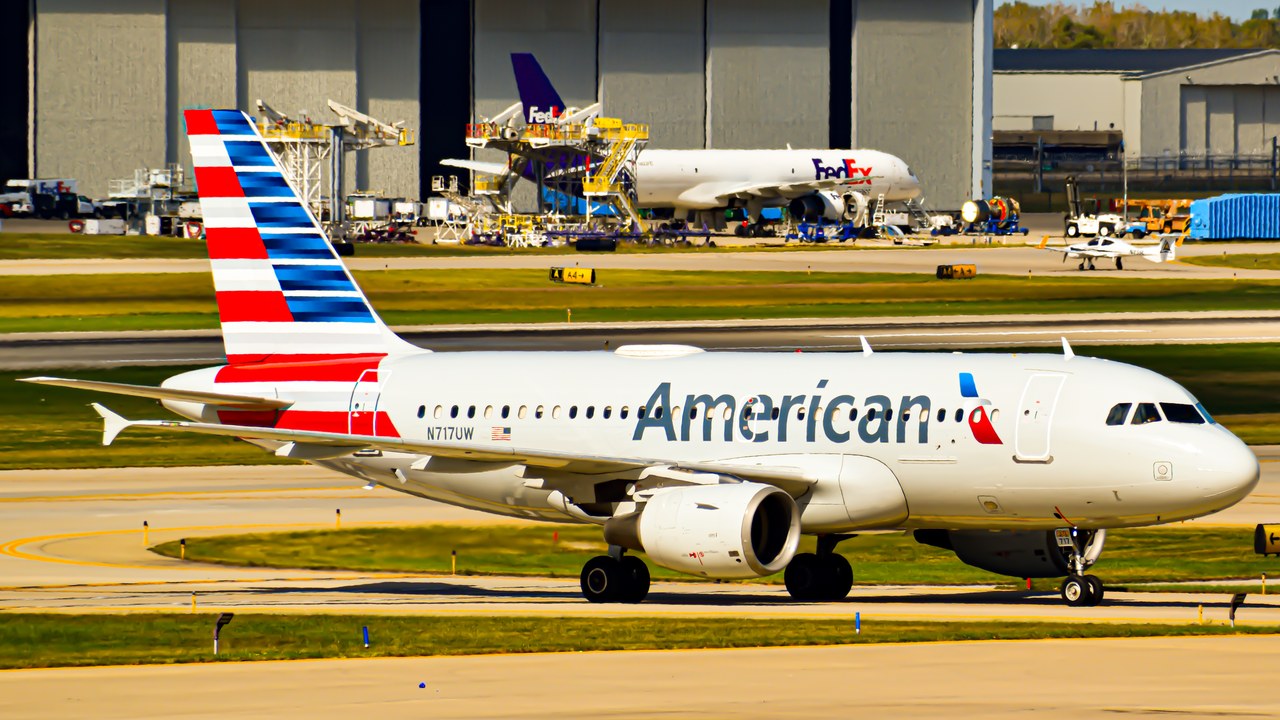
American Airlines will pay $200,000 to settle a federal lawsuit accusing the carrier of refusing to help a Fort Worth reservations employee keep working after she lost her sight. According to the U.S. Equal Employment Opportunity Commission, the airline kept the worker on unpaid, involuntary leave for almost four years after she developed cortical blindness and asked to use screen-reader software, then fired her without ever putting an accommodation in place. The two-year consent decree that resolves the case turns on a single, narrow accommodation question: what an employer owes an employee whose disability shows up after she is already doing the job, not before she is hired.
A worker who lost her sight while already on the job
The employee worked as a reservations representative for American at its Fort Worth home base when she developed cortical blindness, a loss of vision caused by damage to the brain’s visual processing centers rather than to the eyes themselves. Her job required constant reading of internal booking and ticketing screens, so the loss of eyesight threatened her career even though her knowledge of the job itself hadn’t changed. She asked American for screen-reader software that converts on-screen text into synthesized speech, and said she would also accept a transfer to a different role if the software wasn’t feasible.
Instead of testing the software or looking for another position, American put her on unpaid, involuntary leave, according to the EEOC’s original complaint. The agency’s Dallas office filed suit in September 2025 in the U.S. District Court for the Northern District of Texas, Fort Worth Division (Case No. 4:25-cv-01056-P), alleging that American left the accommodation request unresolved for close to four years and then fired her once it became clear she would not simply return to her old workflow without the software or a different job.
Free retirement updates: Enrollment and claim windows come and go, and missing one can cost you real money. The free Retirement Shield newsletter keeps you ahead of the deadlines that matter. Sign up free.
Screen readers are an established accommodation, and the law expects an actual conversation
Software that reads a screen aloud, such as JAWS (Job Access With Speech), has been used in offices for decades, and EEOC officials said that history matters. Travis Nicholson, director of the EEOC’s Dallas District Office, said in the announcement of the original lawsuit that when an employee requests that kind of accommodation, “the employer is expected to engage in an interactive process to determine how the tools available can be integrated into the employer’s workplace and applied to the performance of essential job functions.”
Options for that kind of accommodation are not obscure or exotic. The EEOC pointed employers and workers alike toward the Job Accommodation Network, a federally funded clearinghouse that has cataloged workplace fixes, including screen-reader setups for this exact kind of vision loss, for more than three decades. None of that requires an employer to grant the exact accommodation a worker first names. It requires the employer to look, in good faith, for one that actually removes the barrier — whether that is the software the employee requested or, as she also proposed, a different role she could still perform.
The accommodation duty doesn’t reset because someone got hired healthy
Federal disability law does not ask when an employee’s condition began, only whether the employer knew about it and could reasonably act on it. Under 42 U.S.C. § 12112, the section of the Americans with Disabilities Act that defines unlawful discrimination, a covered employer violates the law by not making reasonable accommodations to the known limitations of a qualified employee, unless doing so would impose an undue hardship on the business — language that draws no distinction between a condition present at hiring and one that develops on the job.
That distinction is the heart of this case. The employee was not a new hire being screened for fitness; she was an experienced reservations agent whose job requirements had not changed, only her ability to read a screen the way she always had. The EEOC’s complaint treated nearly four years of unpaid leave, with no attempt at the software and no serious search for another role, as the opposite of that duty — an employer letting an employment relationship lapse slowly rather than doing the work the ADA requires the moment a known limitation and a request land on a manager’s desk.
What the settlement requires, and what it doesn’t admit
The case ended in a two-year consent decree rather than a trial, the standard mechanism the EEOC uses to close a lawsuit while the employer admits no wrongdoing. Under its terms, American Airlines will pay $200,000 to the former employee and has agreed to build accessibility into the next reservation system it develops for its own staff.
That commitment is specific and dated: American must incorporate the Web Content Accessibility Guidelines into the new reservation software it is projecting to launch in 2027, then have a trained specialist audit the finished product and dedicate up to 120 hours of labor to fix any remaining barriers for blind and visually impaired employees who use it. The audit and accessibility requirements apply to that future system, not to whatever software the airline runs today, so a current employee who hits the same screen-reading barrier would not get an automatic fix from this settlement alone — only whatever accommodation her own manager works out under the ADA’s existing duty to try.
American also has to train the human-resources staff who field accommodation requests, post a workplace notice about the case, and send the EEOC periodic reports on how it handles future requests. The consent decree resolves the lawsuit; it does not include an admission that American Airlines broke the law, and the $200,000 and the software commitments are the terms both sides accepted instead of taking the case to trial.
This article was produced with AI assistance and reviewed by a human editor. Figures are linked to their primary sources; where a claim could not be verified from the public record, we say so.
More Financial Reading