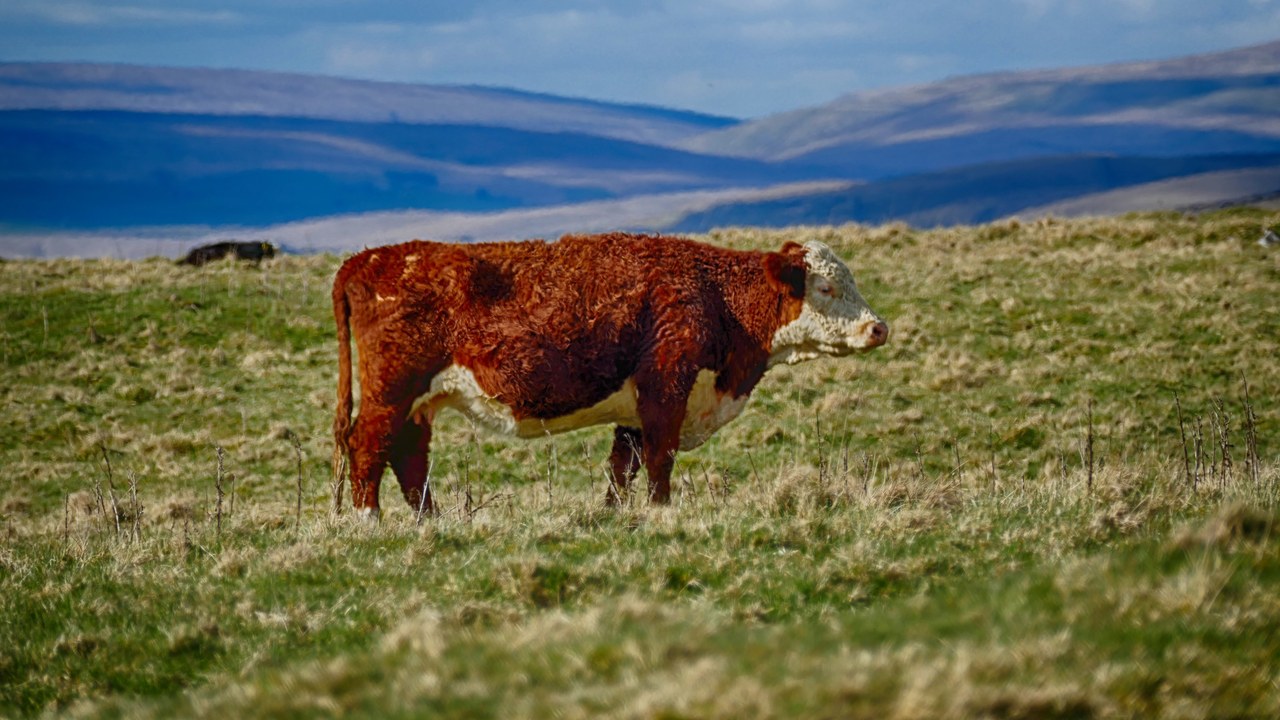
Beef and veal cost 11.8 percent more in June 2026 than in June 2025. Over the same twelve months, retail egg prices fell 27.9 percent and poultry finished 0.1 percent lower than where it started. Those numbers come out of the same USDA report, on the same page, measured the same way, and the distance between them is the clearest available picture of where grocery inflation is actually concentrated right now.
The 11.8 percent is measured, not predicted
This distinction decides whether a number is worth planning around. The 11.8 percent figure describes a period that has already closed. It compares the Consumer Price Index for beef and veal in June 2026 against the same index in June 2025, using data the Bureau of Labor Statistics has already published. Nothing about it is a projection, and it will not be revised upward or downward by a change in expectations.
The month-over-month movement points the same direction. Beef and veal rose 1.4 percent from May 2026 to June 2026, one of the larger one-month swings among the fifteen grocery categories the Agriculture Department tracks. For context, prices for all food were 3.0 percent higher in June 2026 than a year earlier. Beef, in other words, ran at close to four times the pace of the overall food basket.
Free retirement updates: One number can cost or save hundreds a month in retirement. The free Retirement Shield newsletter surfaces the ones worth knowing. Sign up free.
The separate 10.7 percent figure is a forecast for the full year
Alongside the measured June change, the Economic Research Service publishes a prediction for the calendar year. It expects beef and veal prices to increase 10.7 percent across 2026, with a prediction interval running from 7.2 percent to 14.6 percent. That is a genuinely wide band, and the agency intends it to be read that way: the interval is built so that, based on past data, the true annual figure lands inside it nineteen times out of twenty.
The two numbers also answer different questions. The annual forecast averages every month of 2026 against every month of 2025. It is not a prediction that beef will be 10.7 percent more expensive in December than it was last December. The agency states this directly in its Food Price Outlook summary, which notes that it does not forecast the twelve-month change from the month of the forecast.
A cattle herd at its lowest level in 75 years
Behind the beef line is a supply story that took years to build and will take years to unwind. The Livestock, Dairy, and Poultry Outlook reports the U.S. cattle herd at its lowest level in 75 years, and notes that wholesale beef prices are at all-time highs for this point in the calendar. The same reporting describes consumer demand as remaining strong in the face of those higher prices, which is why the increases have stuck rather than being discounted away.
Cattle supply is slow to respond by biology rather than by policy. Rebuilding a herd means holding back heifers that would otherwise be sold for slaughter, which tightens supply further in the short run before it loosens it years later. That is why a herd figure describing 75 years is a more useful signal for a household grocery budget than any single month’s price print.
Wholesale and farm-level prices moved before the shelf price did
The Agriculture Department also tracks what processors and ranchers are paid, and those series move earlier and harder than retail. Wholesale beef prices were 12.7 percent higher in June 2026 than in June 2025, and are forecast to rise 10.6 percent across the year, with an interval stretching from 1.6 percent to 21.5 percent. Farm-level cattle prices were 7.5 percent higher year over year in June, and are forecast up 11.6 percent for 2026.
Those upstream series are volatile in ways the checkout price is not. Farm-level cattle prices actually fell 2.6 percent from May to June even while running well above last year. Producer prices sit further up the supply chain than consumer prices, so they swing more, and the retail index typically lags behind them. A household watching for relief at the meat counter would see it in these numbers first.
What changes when the next edition lands
The edition carrying all of these figures is stamped July 24, 2026, and it incorporates the June 2026 Consumer Price Index and Producer Price Index. Each new release folds in another month of actual data, and the prediction intervals narrow as the year fills in. The agency documents every revision and the reasoning behind its statistical forecasting method, which is fitted to recent trends rather than to expert judgment about where prices ought to go.
Not every category is moving against households. On the same page, egg prices are forecast to fall 30.7 percent in 2026 and fats and oils are also predicted to decline. Beef is the outlier, and USDA has named the reason: a herd that has not been this small in three-quarters of a century.
This article was produced with AI assistance and reviewed by a human editor. Figures are linked to their primary sources; where a claim could not be verified from the public record, we say so.
More Financial Reading