Each month, a homeowner with an escrow arrangement pays more than principal and interest. A slice of the payment goes into a separate account the lender controls, where it accumulates until the property tax bill and the homeowners insurance premium come due once or twice a year. The money is the borrower’s, collected in advance, and it sits in the lender’s hands for months at a time. Whether the borrower earns anything on that balance is now the subject of a federal lawsuit.
The pot of money between the mortgage payment and the tax bill
Escrow requirements are not new. Since the 1930s, mortgage lenders, banks and nonbanks alike, have generally required borrowers to make monthly payments into escrow accounts to cover annual or semiannual property taxes and insurance premiums. The lender’s interest in the arrangement is straightforward: a tax lien or a lapsed policy threatens the collateral.
The complaint filed this month describes what went wrong with the arrangement in practice. Lenders, it says, “often required significantly larger deposits than necessary, inflating the interest-free loans lenders received from their borrowers through the use of escrow accounts.” That framing is the heart of the dispute. A cushion held beyond what the bills require functions as a no-cost loan running in the opposite direction from the mortgage, and the money earns something for whoever holds it.
Free retirement updates: Enrollment and claim windows come and go, and missing one can cost you real money. The free Retirement Shield newsletter keeps you ahead of the deadlines that matter. Sign up free.
Why states started requiring interest in the 1970s
The state response arrived roughly fifty years ago. Since at least the 1970s, according to the states’ complaint, the plaintiff states have enacted and enforced laws requiring lenders to pay borrowers modest amounts of interest on funds held in escrow. The complaint calls them interest-on-escrow laws, and it presents them as a remedy for the inflated-deposit problem rather than as a general consumer subsidy.
Oregon’s version, enacted in 1975, requires lenders to pay borrowers interest on escrowed funds at a rate not less than the discount rate, currently 2.61 percent, under ORS 86.245(2). A companion provision, ORS 86.250, prohibits lenders from imposing service charges on escrow accounts. The rates vary by state: Minnesota requires at least 3 percent on loans made before July 1, 1996, under Minn. Stat. section 47.20 subdivision 9(a). No household-level dollar figure appears in either the complaint or the state’s announcement, and the amount plainly depends on the balance and the state.
Two OCC rules took effect on June 18
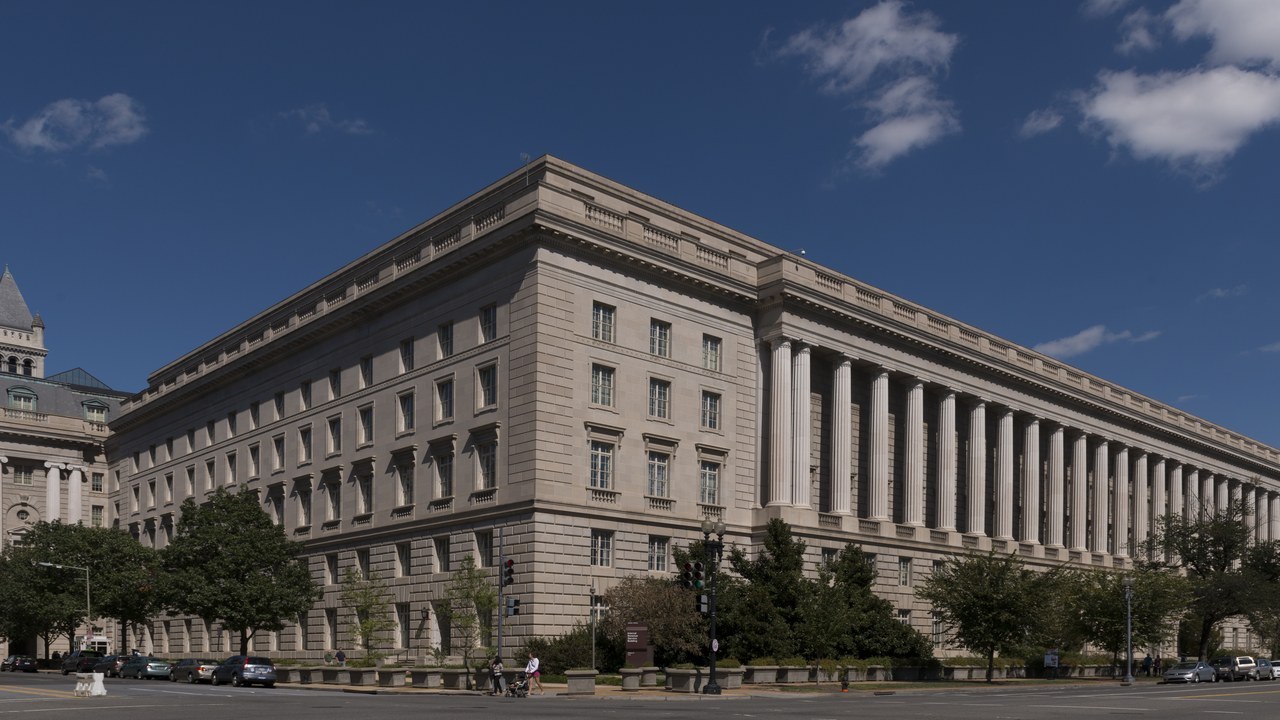
On May 15, 2026, the Office of the Comptroller of the Currency issued two final rules that together, in the complaint’s words, “purport to preempt state interest-on-escrow laws across the board as applied to national banks and federal savings associations.” They are the Preemption Rule, published at 91 Fed. Reg. 29350, and the Escrow Powers Rule, at 91 Fed. Reg. 29340. Both were published in the Federal Register on May 19 and took effect on June 18, 2026.
Those rules are operative right now. That is the fact a homeowner should hold onto before reading any coverage of the lawsuit: this is not a proposal awaiting approval, and the litigation is an attempt to undo something already in force. The OCC and Comptroller Jonathan V. Gould are named as defendants.
Fourteen jurisdictions have these laws, and four are not suing
The complaint identifies the jurisdictions whose laws are affected: California, Connecticut, Guam, Maine, Maryland, Massachusetts, Minnesota, Oregon, Rhode Island, the U.S. Virgin Islands, Utah, Vermont and Wisconsin, in addition to New York’s law. That is fourteen.
The coalition that filed suit is smaller. It is led by Oregon Attorney General Dan Rayfield and New York Attorney General Letitia James and joined by California, Connecticut, Maine, Maryland, Massachusetts, Minnesota, Rhode Island and Vermont: ten states. Guam, the U.S. Virgin Islands, Utah and Wisconsin have laws in the same category and are not plaintiffs, which means the outcome of the case reaches statutes whose governments are not in the courtroom.
The relief the attorneys general are asking for
The case was filed on August 11, 2026 in the U.S. District Court for the District of Oregon, Portland Division, as Case No. 3:26-cv-01672-SI. The request is direct: the plaintiffs assert they “are entitled to a judgment that declares unlawful and vacates the Escrow Power Rule and the Preemption Rule.” Vacating a rule is the remedy that would restore the prior state of affairs; nothing about the filing itself changes what banks are doing today.
Oregon’s announcement of the filing characterizes the rulemaking as a response to a request from banking lobbyists and describes the OCC as a little-known but powerful federal agency whose decision invalidated Oregon’s law. The complaint also points to prior court treatment of the question: the Ninth Circuit upheld California’s interest-on-escrow law in Lusnak v. Bank of America in 2018, and the Supreme Court in Cantero v. Bank of America in 2024 rejected a categorical approach to preemption in this area.
Community banks sit outside the preemption
An under-discussed consequence appears in Oregon’s own release. Because the preemption reaches only national banks and federal savings associations, smaller state-chartered banks are left at a competitive disadvantage. A community bank in one of the fourteen jurisdictions still owes interest on escrow under state law while a national bank operating on the same street does not, which is an operating-cost difference that has nothing to do with how either institution is run.
For a borrower trying to work out what applies, the practical question is therefore not only which state the property is in but which regulator charters the servicer. The states’ filing asks a federal judge in Portland to erase that split by vacating both rules; until a court rules, the Preemption Rule and the Escrow Powers Rule published on May 19 remain in effect as of their June 18, 2026 effective date.
This article was produced with AI assistance and reviewed by a human editor. Figures are linked to their primary sources; where a claim could not be verified from the public record, we say so.
More Financial Reading