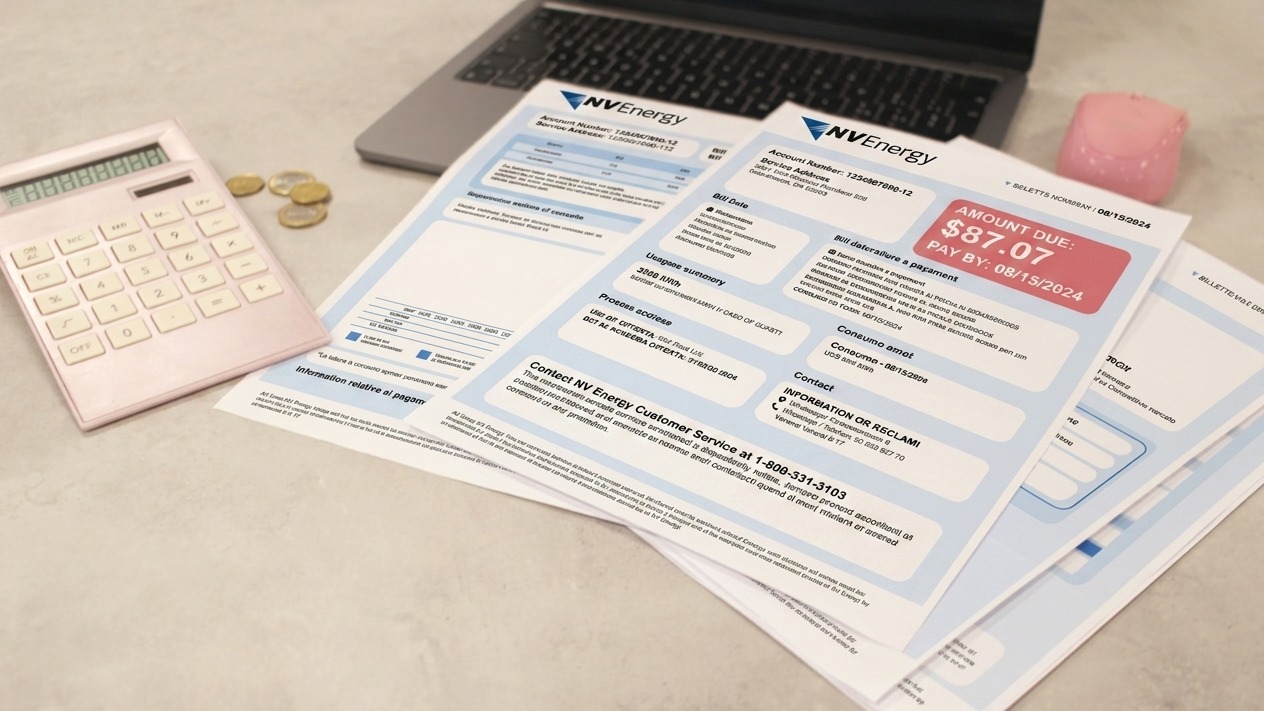
The mistake happened the day the power was switched on. When service was first set up at thousands of Nevada apartments, duplexes, townhomes and condos, the accounts were tagged with the wrong rate class — billed as single-family houses instead of multifamily homes — and every bill after that quietly charged the higher rate. Now the money is going back where it came from: NV Energy is in the middle of paying out more than $63 million, interest included, to the customers who overpaid.
How Apartments Ended Up on a Single-Family Price Tag
Nevada bills multifamily and single-family homes on different residential rate schedules, and the label gets attached when an account is opened. NV Energy has acknowledged that a number of multifamily premises were assigned the wrong classification at that first step, which meant renters and condo owners paid the single-family rate for as long as the label stuck. The company maintains the error changed how costs were spread among customer groups rather than increasing what it was allowed to collect overall — but for the households involved, the overcharge was real money, month after month.
The scale is worth pausing on. NV Energy’s current billing-misclassification fact sheet says most affected customers lived in multifamily homes but had been classified as single-family, and that the company is working to refund those households with interest. In a service territory that covers most of Nevada, from Las Vegas to Reno, that was not a one-off typo — it was a systemic filing error that took a regulatory proceeding to unwind.
Free retirement updates: Every year, billions in settlements and unclaimed money go unclaimed. Our free Retirement Shield newsletter sends the real ones — with deadlines — a couple times a week. Get the free newsletter.
The $63 Million Resolution — and the Money Set Aside Before It
The refunds flow from a formal resolution reached earlier this year with the Public Utilities Commission of Nevada and the Nevada Attorney General’s Bureau of Consumer Protection. The total being returned — more than $63 million — includes interest on the overcharges, not just the raw difference between the two rates.
The paper trail runs through the utilities’ own securities filings. In the Form 10-Q filed with the SEC for the quarter ended March 31, 2026, Nevada Power — NV Energy’s southern utility — reported a $46 million accrual for customer refunds tied to the regulatory proceeding, and Sierra Pacific, its northern counterpart, reported another $14 million. Both filings state that the companies submitted an Offer of Compromise to the PUCN in January 2026, that the commission accepted it in February 2026, and that refunds were anticipated to reach customers in mid-2026. That is exactly what happened: distribution started in July, on schedule.
Bill Credits for Current Customers, Mailed Checks for Former Ones
NV Energy began issuing the refunds the week of July 15, according to Fox5 Las Vegas, ahead of a September deadline the PUCN set for getting the money out. How yours arrives depends on whether you still have an account. Current customers receive a refund credit applied to the next bill; if the refund is bigger than the bill, the remainder rolls forward to future bills. Former customers — including anyone who moved away years ago — receive a check mailed to their last known address. Every affected customer is also supposed to receive a letter explaining the refund, so an unexplained credit on a summer bill likely has a paper companion on the way.
That “last known address” detail deserves attention if you have moved. A check chasing an old apartment address is exactly the kind of money that goes unclaimed, so former NV Energy customers should make sure the utility has a current address on file. The company is fielding refund questions at (775) 834-4444 in northern Nevada and (702) 402-5555 in the south, and its representatives can check whether a specific account was among those misclassified.
Notably, the payout schedule is running ahead of the paperwork. The company says individual account reviews are still continuing even as credits and checks go out, and that any additional issues those reviews identify will be corrected. “Accurate billing is one of our most important responsibilities,” NV Energy president and CEO Brandon Barkhuff said in the announcement. “While this affected a small percentage of our customer base, we take any error involving our customers seriously.”
There is also an outside check on whether the cleanup worked. NV Energy engaged CBIZ, an independent advisory firm, to review how it identified and corrected the misclassified accounts. Working from statistically valid samples drawn across more than 1.9 million records, CBIZ concluded the single-family classifications in the billing system are now reliable, and described the company’s fix as a structured, multi-step process to identify, correct and reduce the risk of misclassifying residential accounts again.
If Your Bill Never Shows the Credit
Refunds here are automatic — there is no claim form and no application — but automatic systems miss people, especially movers. If you lived in a multifamily home in NV Energy territory and see nothing by fall, call the utility first and ask directly whether your account was classified as single-family. Keep a record of who you spoke with and when.
If that conversation goes nowhere, Nevada gives you a formal next step. The PUCN’s Consumer Complaint Resolution Division takes informal complaints by phone — (775) 684-6100 in the north, (702) 486-2600 in the south — and handles most of them within 3 to 5 business days. A customer still unsatisfied can escalate to a written complaint, which the division must acknowledge within five days and forward to the utility, which then has ten days to respond. The commission that ordered these refunds and set the September completion deadline is the same body that investigates when a customer says one never arrived — which is precisely the leverage that turned a wrong label on an account into a $63 million payback.
This article was produced with AI assistance and reviewed by a human editor. Figures are linked to their primary sources; where a claim could not be verified from the public record, we say so.
More Financial Reading