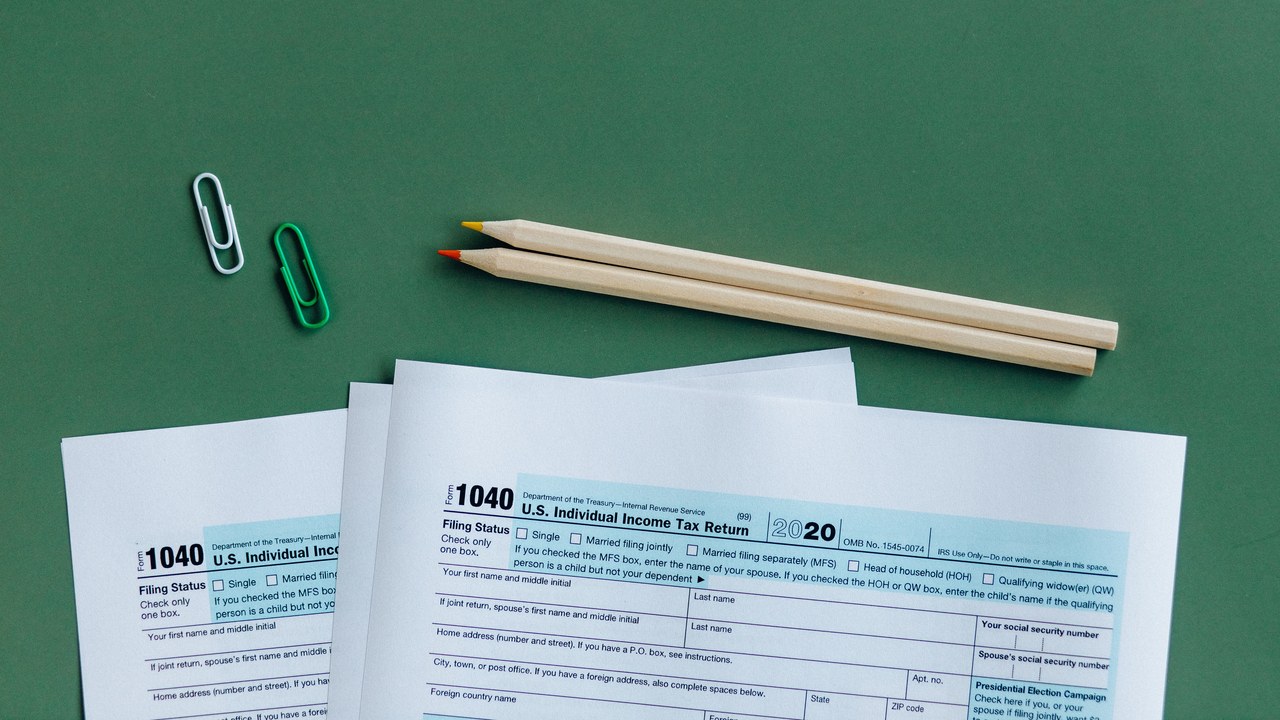
The IRS says the 12% federal income tax bracket for 2027 will start above $12,800 of taxable income for single filers and $25,600 for married couples filing jointly. The top 37% rate will apply to taxable income over $661,375 for single filers and $793,650 for joint filers. The agency released the 2027 brackets Nov. 5 as part of its yearly inflation adjustments.
Between those two lines sit the 22% bracket, which starts over $52,025 for single filers and $104,050 for couples, and four others. The IRS says the 2027 adjustments generally apply to tax returns filed in 2028, so the figures set the tax on income earned during 2027.
For retirees and people close to retirement, the lines matter because they sit on taxable income, which is what remains after deductions, not on the full amount that reaches a bank account. Anyone who draws from an IRA, sells investments or is deciding whether to convert part of an IRA to a Roth next year can check which band the last dollars of 2027 income will land in. The first step is finding taxable income on the last filed return, then holding it against the 2027 table.
Retirement deadlines, in your inbox: Miss an enrollment or claim deadline and the money can be gone. Join the Retirement Money Brief and we’ll send you our 2026 Retirement Tax, RMD & Medicare Deadline Calendar as a welcome gift.
Get the Brief + the deadline calendar →
We may earn a commission from links on this page.
Every 2027 bracket, line by line
The IRS published the thresholds in its news release on the tax year 2027 inflation adjustments. For single filers, the rates break at these points of taxable income:
- 10% up to $12,800
- 12% over $12,800
- 22% over $52,025
- 24% over $109,125
- 32% over $208,325
- 35% over $264,550
- 37% over $661,375
For married couples filing jointly, the breaks are 10% up to $25,600, 12% over $25,600, 22% over $104,050, 24% over $218,250, 32% over $416,650, 35% over $529,100 and 37% over $793,650. Through the 35% bracket, each joint threshold is exactly double the single one. The 37% line is not: $793,650 is only about $132,000 above the single threshold.
How the rates work on a real income
The IRS explains on its federal income tax rates and brackets page that tax is charged in layers. The page says the higher rate applies only to the part of income that falls in the new bracket. Moving into the 22% bracket does not make the whole income taxable at 22%.
As an illustration of the layering, take a single filer with $60,000 of taxable income in 2027. The first $12,800 is taxed at 10%, or $1,280. The $39,225 between $12,800 and $52,025 is taxed at 12%, or $4,707. The last $7,975 is taxed at 22%, or $1,754.50. The total is $7,741.50. That is a sketch of how the bands stack, not a tax return.
The width of the 12% band shows how much room a household has before the rate jumps. It runs $39,225 for a single filer, from $12,800 to $52,025, and $78,450 for a couple, from $25,600 to $104,050. Income that stays in that band is taxed at no more than 12% on its way through. The 22% band is wider still: $57,100 for a single filer, from $52,025 to $109,125, and $114,200 for a couple, from $104,050 to $218,250.
How 2027 compares with 2025
The IRS rates page, last updated in July, still shows the 2025 tables. For single filers, the 12% bracket in 2025 starts above $11,925 and the 22% bracket above $48,475. For joint filers, 12% starts above $23,850 and 22% above $96,950. The 37% rate starts above $626,350 for single filers and $751,600 for joint filers.
Set against those, the 2027 lines sit higher everywhere the release shows them. The 12% bracket starts $875 higher for single filers and $1,750 higher for couples. The 22% bracket starts $3,550 higher for single filers and $7,100 higher for couples. The 37% rate starts $35,025 higher for single filers and $42,050 higher for couples.
What sets the starting point
Brackets apply after deductions. The same release raised the 2027 standard deduction to $33,200 for married couples filing jointly and $16,600 for single filers, and that amount comes off income before any of these rates apply. Head-of-household filers, who have their own thresholds, and married people filing separately should check Revenue Procedure 2026-35, the full IRS document behind the release.
The release also notes that personal exemptions stay at $0 for 2027, as in 2026, a result of the Working Families Tax Cuts law. The IRS adds that this does not include the new senior deduction for people 65 and older, which is a separate break from the standard deduction. A retiree’s taxable income can therefore sit well below the amount that left the accounts.
As an illustration, a married couple with $90,000 of income and no other adjustments would see the first $33,200 covered by the 2027 standard deduction. That leaves $56,800 to run through the brackets: $25,600 at 10% and $31,200 at 12%, all of it below the $104,050 line where 22% begins. Couples with a senior deduction would have less still.
The release does not say how much of any household’s income will be taxable in 2027. That depends on pensions, Social Security, IRA withdrawals and investment sales, all of which the household controls to some degree. The open question is where that income will sit against the 12% and 22% lines, because a $39,225 band for one person fills quickly once an IRA withdrawal is added to a pension.
Where will 2027 income land against the 12% and 22% lines?
A Roth conversion adds to taxable income, and a conversion cannot be undone. Convert too little and low-tax room goes unused. Convert too much and the extra dollars spill into the 22% band, or across the Medicare line two years later.
The Roth Conversion Window is a 16-page guide built around “filling the bracket, and stopping at the line.” It comes with a room finder and a multi-year planner worksheet for finding how much of an IRA could move to a Roth in the years before Social Security and required withdrawals start.
This article was produced with AI assistance and edited for accuracy against the sources linked above.