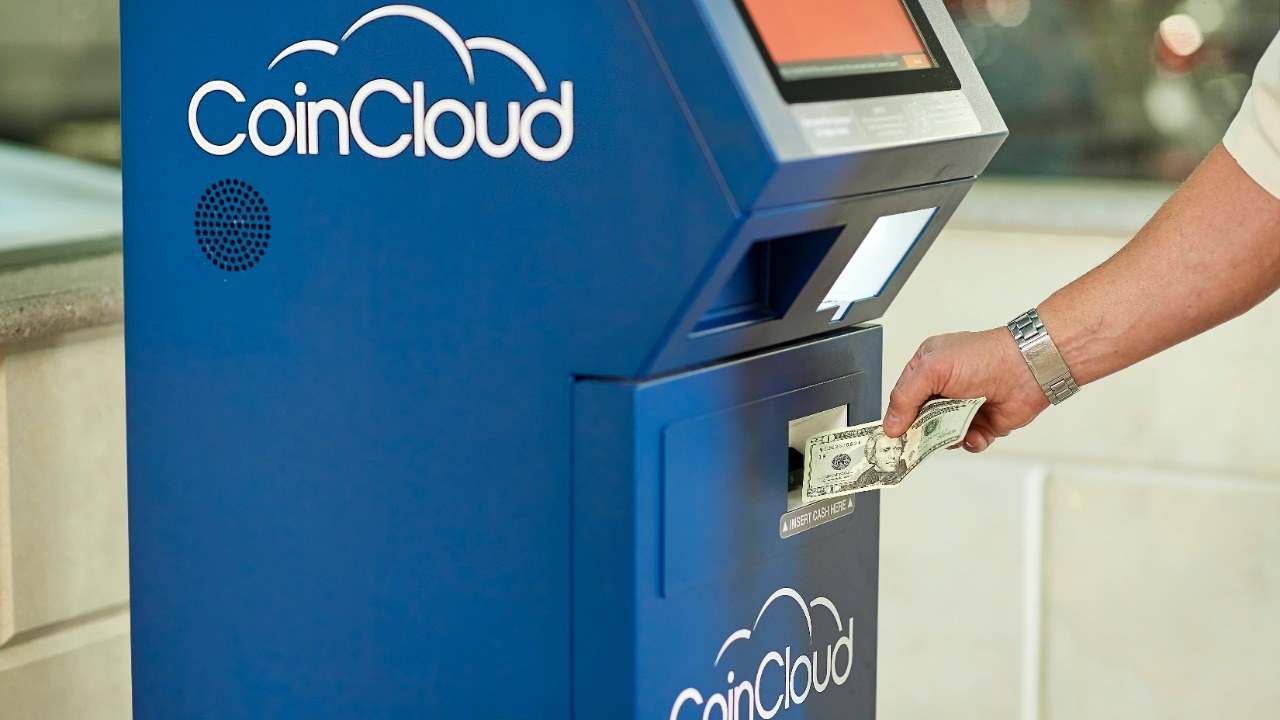
No one in their first 30 days at a North Carolina crypto kiosk will be able to put in more than $2,000 in a single day once a new state law starts on January 1, 2027. People with a longer history at the machines get a $5,000 daily ceiling. The same law gives a defrauded customer who reports within 30 days a path to a refund.
The limits are written into Session Law 2026-45, the Virtual Currency Kiosk Consumer Protection Act. The bill text sets $2,000 per day for a new virtual currency customer and $5,000 per day for an existing one, and it caps what a kiosk may charge.
For a North Carolina household the numbers matter in two ways. A new customer being walked through a scam by phone would hit a $2,000 wall each day instead of emptying a bank account in one trip. And a customer who has been defrauded has 30 days from the transmission to tell the state’s Commissioner of Banks, which is where a refund begins.
Retirement deadlines, in your inbox: Miss an enrollment or claim deadline and the money can be gone. The Retirement Money Brief keeps you ahead of the ones that matter, every weekday.
Get the Retirement Money Brief →
We may earn a commission from links on this page.
Where $2,000 and $5,000 come from
The law defines a “new” customer as someone with no earlier transactions with that operator, or whose first transaction came within the past 30 days. An “existing” customer is anyone whose first transaction was more than 30 days ago. The label follows a customer’s own history, so the $2,000 ceiling lifts to $5,000 on the 31st day.
A daily cap is not a total cap. Five straight days at the new-customer limit would still move $10,000, which is why the refund rules and fee ceiling sit beside the limits.
The 30-day report and who decides
A customer must report the fraud to the Commissioner within 30 days of the transmission. The Commissioner, not the customer or the kiosk company, decides whether the transaction was fraudulent, using a procedure the law orders adopted no later than January 1, 2027.
If fraud is found, the refund depends on the customer’s status when the money went in. A new customer gets back the full dollar amount deposited. An existing customer gets back the fees the operator charged, a much smaller sum.
What the difference looks like in dollars
Take a first-time customer who deposits $1,800 and is later found to have been defrauded: the operator refunds $1,800. The same deposit from someone who had used kiosks for a year would bring back the fees only. Because fees are capped, that amount could not exceed 12 percent, or $216 on $1,800.
The 12 percent fee ceiling
The bill text says aggregate fees and charges, including the spread between the kiosk’s price and the market price, “shall not exceed twelve percent (12%) of the dollar equivalent of the virtual currency involved in the transaction.” On a $2,000 purchase, the most a kiosk could take is $240.
Customers can also cancel before a transaction completes and receive a full, immediate refund. Each receipt must include the operator’s refund policy and the name and phone number of the Commissioner, the office that takes the 30-day report.
The cancellation right matters at the machine itself. A customer who stops before the transaction completes does not need the Commissioner at all, and the refund is immediate. The 30-day report is for money that has already been sent, which is why the first minutes after a suspicious call, not the first weeks, decide which route applies.
How fast will a determination come?
The statute fixes the reporting deadline and names the decision-maker, but the Commissioner’s fraud procedure is still to be adopted by January 1, 2027. How long a determination will take has not been published. For a North Carolina victim, the practical lesson is that the 30 days start at the transmission, not when the scam is discovered.
Lost money at a crypto kiosk and watching the 30-day clock?
A refund under the new law depends on a report to the Commissioner of Banks inside 30 days of the transmission, and the Commissioner decides whether the transaction was fraud. Receipts, wallet addresses, times and call records are what make that report easy to back up.
The Senior Fraud Defense & First-Hour Recovery Kit is built for the days right after a scam. It includes the first-hour recovery plan, a fraud evidence and report log for keeping those details in one place, and the free credit-freeze steps. Part 3 of the kit covers reporting and what each report does.
Start the fraud evidence and report log in the Senior Fraud Defense Kit →
More Financial Reading
- 21 Ways to Stretch a $2,087 Social Security Check
- 15 Places to Find Your Share of the $4.25 Billion States Give Back
- The New $6,000 Senior Deduction and 14 More Tax Moves for Retirees
This article was produced with AI assistance and edited for accuracy against the sources linked above.