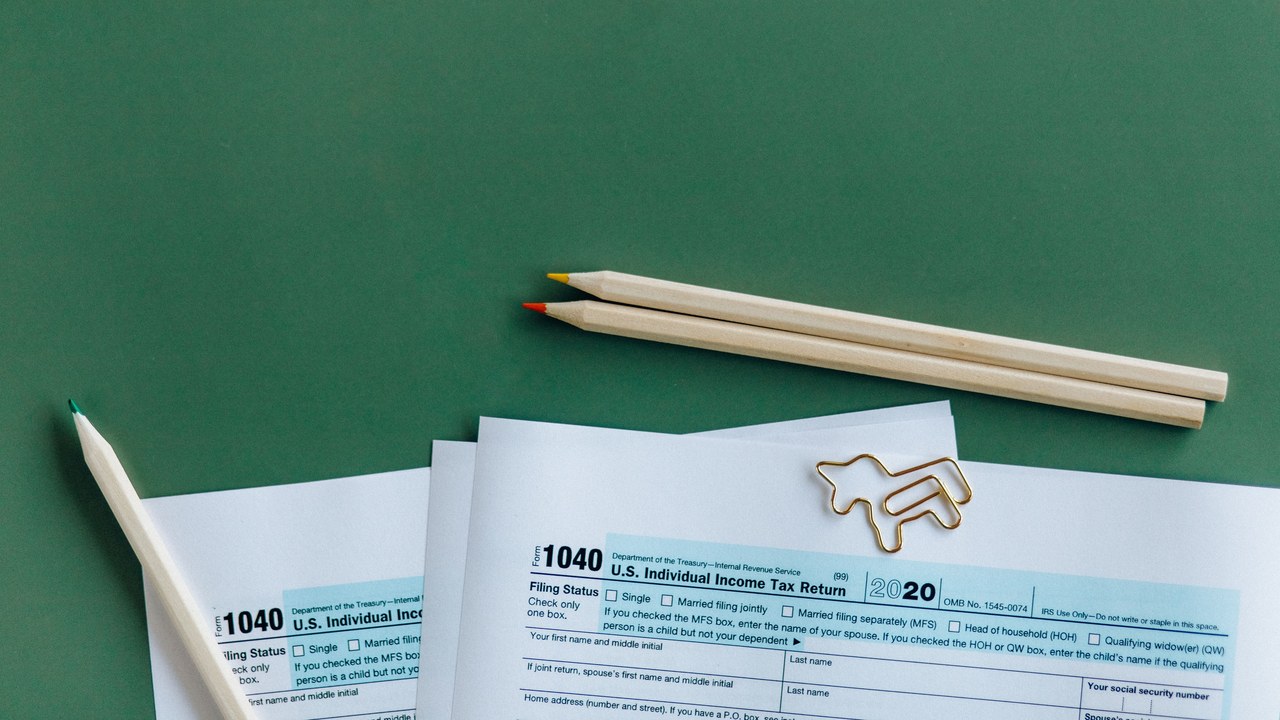
The White House headlines it “No Tax on Social Security,” but the 2025 budget law did not end the tax on benefits. What it added, the Internal Revenue Service says, is an extra $6,000 deduction for people 65 and older that applies for 2025 through 2028 and shrinks for higher earners.
The label appeared again in an October 20, 2026 White House release on North Carolina, which said about 1.9 million North Carolina seniors benefit from the new senior deduction. The IRS describes the same provision in plainer terms.
What the IRS says the deduction is
The IRS says that “effective 2025 through 2028, individuals age 65 and older may claim an additional $6,000 deduction,” in a page on eligibility last reviewed September 21, 2026. It sits on top of the regular standard deduction for seniors. It applies per person, or $12,000 for a married couple if both spouses qualify.
The deduction phases out for taxpayers whose modified adjusted gross income is over $75,000, or $150,000 for joint filers. The IRS page does not give a phase-out rate, so the exact deduction at, say, $85,000 of income cannot be read off it.
The question for a retiree is whether that deduction wipes out the tax on Social Security at their own income. It does not by itself: the deduction lowers taxable income, while the rules that decide how much of a benefit is taxable did not change. IRS Publication 554 still treats benefits as taxable once combined income passes $25,000 for single filers and $32,000 for joint filers, with up to 85% taxable above $34,000 and $44,000.
What changed this year: Social Security and Medicare change every year, and nobody sends you a memo. The Retirement Money Brief breaks down what changed and what to do. Bonus when you subscribe: our Will My Social Security Be Taxed? Worksheet.
Get the Brief and the tax worksheet →
We may earn a commission from links on this page.
Who can claim the $6,000 deduction
IRS Publication 6142, revised in October 2026, says the deduction is “available for both itemizing and non-itemizing taxpayers.” A married person has to file jointly to claim it, and the return must carry the Social Security number of each qualifying individual. Because itemizers and non-itemizers both qualify, a retiree who takes the standard deduction does not have to switch to itemizing to get the extra $6,000. The IRS page on who can claim the deduction repeats that the amount is per person.
For tax year 2025 the age test has a calendar quirk. Publication 554 says that “if you were born before January 2, 1961, you are considered to be age 65 or older at the end of 2025.” Someone born on January 1, 1961, who turns 65 on January 1, 2026, still counts as 65 for tax year 2025 under that rule.
Why a retiree can still owe tax on benefits
Take a couple filing jointly whose income is under the $150,000 line. They get the full $12,000 if both spouses qualify, but Social Security can still be taxable if their combined income is above $32,000, because the deduction and the benefit-tax thresholds work separately.
That is the gap between the slogan and the form. A retiree who qualifies gets lower taxable income, and the IRS confirms the numbers above. Nothing the IRS has published says the tax on benefits itself has been repealed.
The IRS keeps a page of provisions from the law, including the senior deduction, in its list of new tax law changes. It is the free route for checking the current rules before filing.
What ends in 2028
The deduction runs through 2028, according to the IRS, which means four tax years: 2025, 2026, 2027 and 2028. No page the IRS has published extends it past that. A retiree who plans withdrawals from an IRA or 401(k) has a limited window in which the extra deduction offsets some of that income.
Does the senior deduction cover the tax on your Social Security?
A retiree who assumes “no tax on Social Security” means a zero tax bill can be caught short at filing, especially one whose income sits near $75,000 or $150,000 where the deduction starts to shrink. The cost of the mistake is a bill that was never planned for.
The Retirement Tax & Withdrawal Planner covers the senior deduction and includes four calculators (provisional income, IRMAA tier, RMD schedule, Roth bracket fill), and its provisional-income calculator shows whether benefits are taxed at a given income before any money is withdrawn.
Run the senior-deduction numbers in the Retirement Tax & Withdrawal Planner →
More Financial Reading
- 21 Ways to Stretch a $2,087 Social Security Check
- 15 Places to Find Your Share of the $4.25 Billion States Give Back
- 15 Ways Retirees Are Tapping a Record $14.9 Trillion in Home Equity
This article was produced with AI assistance and edited for accuracy against the sources linked above.