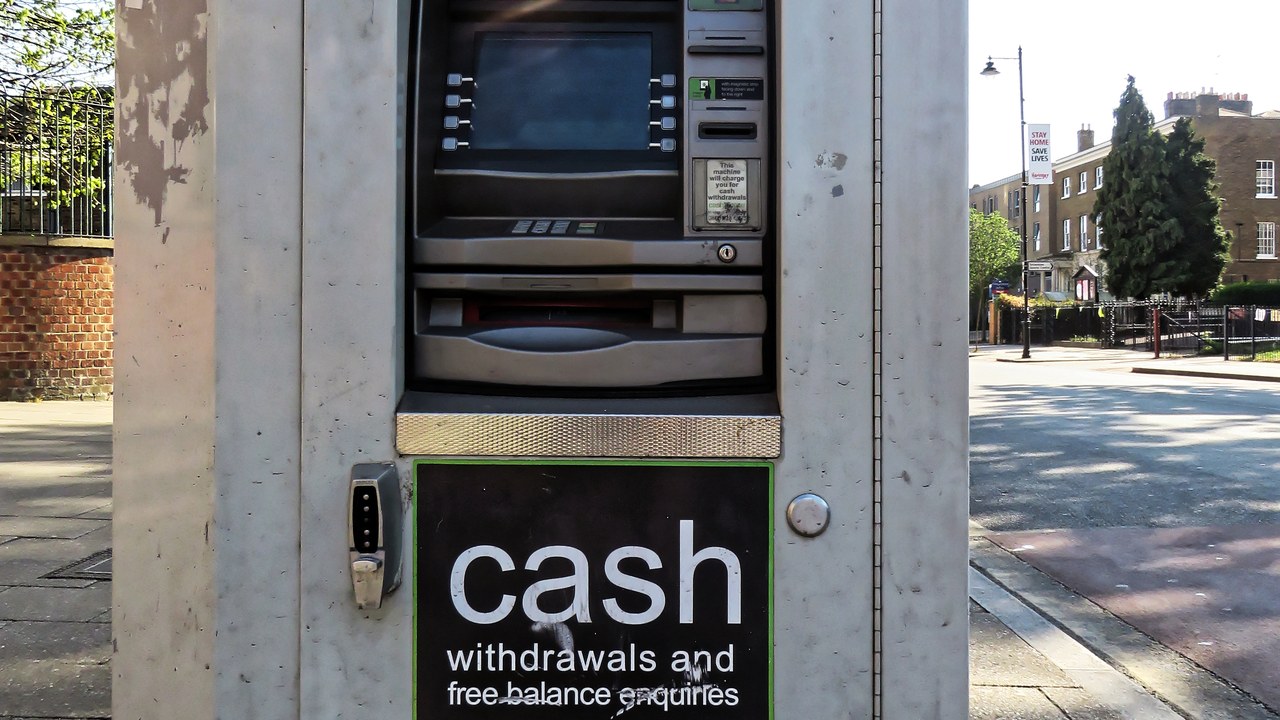
A $167.5 million settlement with Visa and Mastercard over fees at non-bank ATMs covers people who were not fully reimbursed by their own bank. Anyone whose bank already refunded the ATM surcharge in full falls outside the class, according to the settlement notice.
The nationwide class covers people in the United States who paid a surcharge, also called an access fee, to take cash from a deposit account at an independent ATM using an ATM or PIN-debit card between October 24, 2007 and August 14, 2026. The notice, issued by class counsel Finkelstein Thompson LLP and Lovell Stewart Halebian Jacobson LLP, says the person must have been “not fully reimbursed by your bank”.
What does the settlement pay, and who pays it?
Visa pays $88,775,000 and Mastercard pays $78,725,000. The case is Burke v. Visa Inc., No. 1:11-cv-01882, in the U.S. District Court for the District of Columbia, and related cases include Mackmin v. Visa Inc. and National ATM Council v. Visa Inc.
The defendants are Visa Inc., Visa U.S.A. Inc., Visa International Service Association and Plus System, Inc. on one side, and Mastercard Incorporated and Mastercard International Incorporated on the other. Both deny the claims. The settlement money is divided pro rata among valid claimants, after the court approves deductions for attorneys’ fees, litigation costs, notice and administration costs and service awards.
Am I in the class, or did my bank already pay me back?
The test is a plain one. A person who used an independent ATM in the class period, paid a surcharge, and never got that fee back from the bank belongs in the class. A person whose own bank refunded the surcharge in full does not, because the notice limits the class to people who were not fully reimbursed.
That matters for anyone whose bank offers ATM fee rebates on a checking account. The first thing to check is the statements: whether the rebate covered the whole surcharge or only part of it. A partial refund still leaves a person “not fully reimbursed.” The official settlement website carries the full class definition.
What changed this year: Social Security and Medicare change every year, and nobody sends you a memo. The Retirement Money Brief breaks down what changed and what to do. Bonus when you subscribe: our Open Settlements & Refund Tracker.
Get the Brief and the settlements tracker →
We may earn a commission from links on this page.
Which four states have classes of their own?
Separate statewide classes exist in California, Illinois, Massachusetts and Michigan. They sit alongside the nationwide class. The notice names the four states but does not set out their definitions, so the settlement website is where to read how each one works.
A resident of one of those states who used a non-bank ATM may therefore fall into both a statewide class and the nationwide one. The notice does not describe how the two interact, and a claimant who lives in one of the four states should read the website’s state information before filing.
What are the dates?
- December 11, 2026: deadline to opt out of the settlement or object to it
- February 10, 2027: claim form due, online or by mail postmarked by that date
- February 17, 2027: the court’s final approval hearing
At the final approval hearing, the court will consider the settlement, attorneys’ fees of up to 30 percent of the fund, cost reimbursement, and service awards of up to $17,500 for each class representative. The settlement line is 1-866-893-1052.
Opting out and filing a claim are mutually exclusive choices, and the December 11 date comes first. A person who wants a share of the fund should keep the opt-out date in mind and not send in an exclusion by accident.
What proof does a claim need?
The notice says valid claimants submit a claim form online or by mail and receive a pro rata share of the net fund. It does not list the documents a claim requires, and the amount each person receives depends on how many valid claims come in and what is left after fees and costs.
Since ATM surcharges appear on bank statements, the date, the machine’s operator and the fee amount are the details a claimant is likely to need handy. The website and the toll-free line are the places to confirm exactly what the claim form asks for.
Not sure whether the bank refunded the whole ATM fee?
The class draws its line at full reimbursement, and the claim window closes February 10, 2027, after an opt-out date of December 11, 2026 that arrives first. A claim sent on the wrong date, or one that treats a partial bank refund as a full one, is the kind of detail that costs a share of the $167.5 million.
The Settlement & Refund Recovery System includes the four-date rule for reading a settlement notice, a step-by-step filing walkthrough, and a claim log and payment tracker, with a 5-tab Excel tracker as the proof point. It is built for notices like this one, where several dates and a reimbursement test sit side by side.
Get the notice-dates rule and filing guide for the non-bank ATM fee claim →
More Financial Reading
- 21 Ways to Stretch a $2,087 Social Security Check
- 15 Places to Find Your Share of the $4.25 Billion States Give Back
- 17 Medicare Money Moves Now That Part D Caps at $2,400
This article was produced with AI assistance and edited for accuracy against the sources linked above.