A $167.5 million settlement over fees charged at independent ATMs is now taking claims, and the deadline is February 10, 2027. Visa and Mastercard are the two companies paying into it. The case, Burke v. Visa, covers people who paid a surcharge to withdraw cash at a non-bank ATM at any point from October 24, 2007, through August 14, 2026, and whose bank did not give the money back in full.
Who is in the class
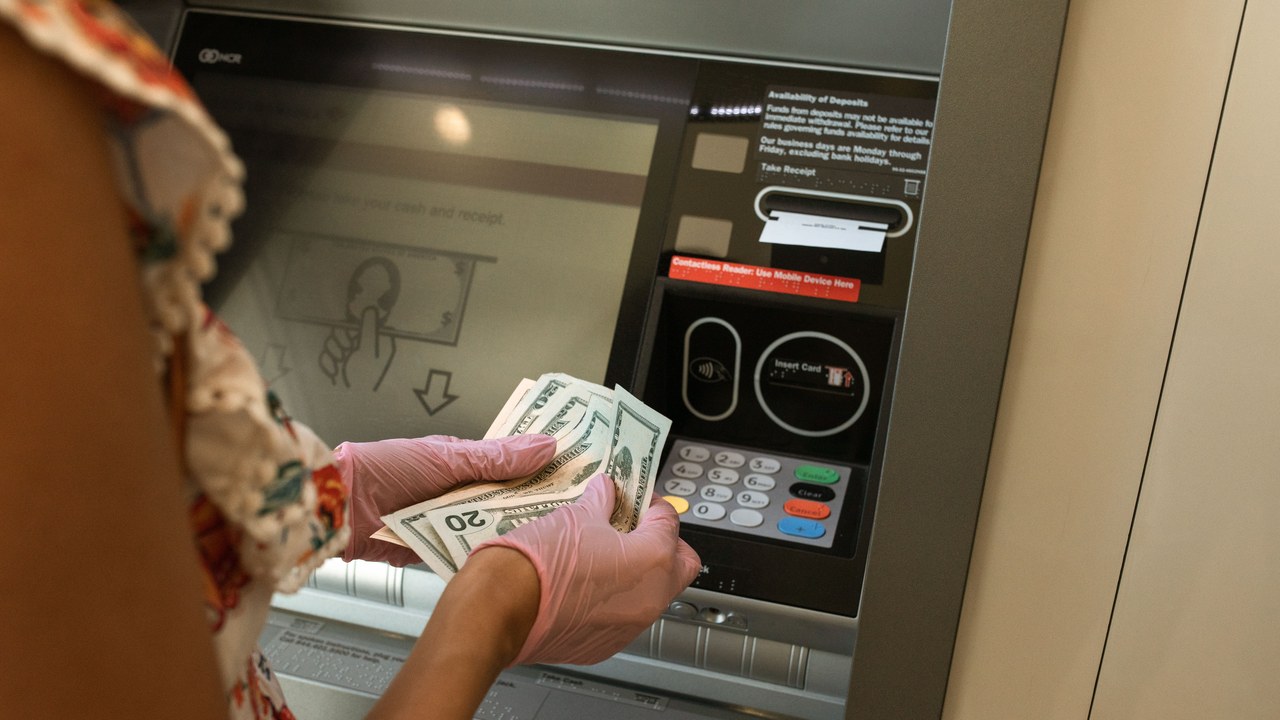
The court-approved long-form notice defines the Nationwide Class as people charged an access fee for a domestic cash withdrawal at an independent ATM in the United States during that period, who were not fully reimbursed by their bank. An independent ATM is the kind found in a gas station, convenience store or restaurant rather than one a bank runs. The start date of October 2007 matters: a surcharge paid at any such machine since then can count, not only recent ones.
The “not reimbursed” condition does the most work. A person whose bank refunded every surcharge was repaid in full and falls outside the class. A person whose bank refunded only part of it, or none, is inside it.
Credit card transactions, cash advances and prepaid cards do not count as domestic cash withdrawals under the notice. People who were in California, Illinois, Massachusetts or Michigan when they were charged may also belong to a separate Statewide Class for that state.
That leaves the practical question for anyone who has used an independent ATM since 2007: does the class include them, and what does a claim need? The class is anyone surcharged at such a machine and not fully repaid by their bank, so the first job is to work out whether the bank refunded the fees. Bank statements are the place that answer lives. The notice does not list specific documents, but it does say a claim is built on the number of surcharged transactions, so a count of dates and amounts is the useful thing to have in hand before filing.
Claims on this settlement are weighed by the number of surcharged withdrawals, and the window closes February 10, 2027. The Settlement & Refund Recovery System includes a step-by-step filing walkthrough and the four-date rule for reading a settlement notice, which is how the December 11 and February 10 dates on this one sort out.
Read the ATM surcharge notice with the four-date rule in the Settlement & Refund Recovery System →
Who pays and how much
The notice puts the total at $167,500,000. Visa pays $88,775,000 and Mastercard pays $78,725,000. Attorneys’ fees of up to 30 percent, litigation costs, taxes, up to $3 million for notice and administration, and service awards of up to $17,500 per class representative come out of the fund before payments go out.
What remains is the Net Settlement Fund, and each valid claim receives a pro rata share based on the number of surcharged transactions it lists. The notice states plainly that because the size of each payment depends on how many transactions are approved, nobody can know the amount in advance. No per-person figure has been published.
The dates on the notice
The notice sets four dates that people in the class will run into, and they fall in a particular order.
- December 11, 2026: the last day for the administrator to receive a request to be excluded, and the postmark deadline for an objection or a notice of intention to appear at the hearing.
- February 10, 2027: claims are due, either submitted online or postmarked by that day if mailed.
- February 17, 2027, at 4:00 p.m.: the final approval hearing in Courtroom 18 of the U.S. District Court for the District of Columbia, 333 Constitution Avenue N.W. in Washington.
The notice warns that the hearing may be moved to a different date or time without additional notice. Judge Richard J. Leon presides. The exclusion date comes first, so it is the one that forces a decision: an exclusion request has to be a mailed letter that reaches the administrator by then.
Who is left out
The class does not include Visa and Mastercard, their officers, directors and employees, or entities they control. Federal, state and local government entities are out, as are the presiding judge, the judge’s staff and immediate family, and jurors assigned to the case. Anyone who validly excludes themselves is out as well.
How a claim is filed and where the notice points
The notice says a claim is submitted on a Claim Form, online through the settlement website or by mail to Non-Bank ATM Surcharge Fee Settlement, c/o A.B. Data, Ltd., P.O. Box 173053, Milwaukee, WI 53217. The claims box is different from the box for exclusion letters, which is P.O. Box 173001, and a letter sent to the wrong one risks missing its purpose. Payments go out digitally by email, with a check available on request. The administrator’s phone line is 1-866-893-1052.
Pulling together the surcharge history before February 10
The settlement administrator’s own site, NonbankATMSurchargeSettlement.com, is where the Claim Form and the notice sit, and filing costs nothing. The administrator, A.B. Data, can also be reached at the phone number above for questions about a form already in hand.
Before sitting down to file, it helps to gather statements from every account used at independent ATMs and mark each surcharge, then note any refund the bank gave back. Because shares are proportional to transactions submitted, a complete list matters more than a single large one. Anyone who is unsure whether to stay in or ask out has until December 11, 2026 to decide, well ahead of the claim date.
The figures and dates above come straight from the court-approved long-form notice in Burke v. Visa, No. 1:11-cv-01882, in the U.S. District Court for the District of Columbia.
Four dates, one February 10 claim cutoff
A late claim on a $167.5 million settlement gets nothing, and the December 11 and February 10 dates sit close enough to blur together. The Settlement & Refund Recovery System walks through the four-date rule for reading a settlement notice and ends with a claim log and payment tracker, so each ATM surcharge claim is logged from filing to payment.
Track the ATM surcharge claim in a claim log and payment tracker →
This article was produced with AI assistance and edited for accuracy against the sources linked above.