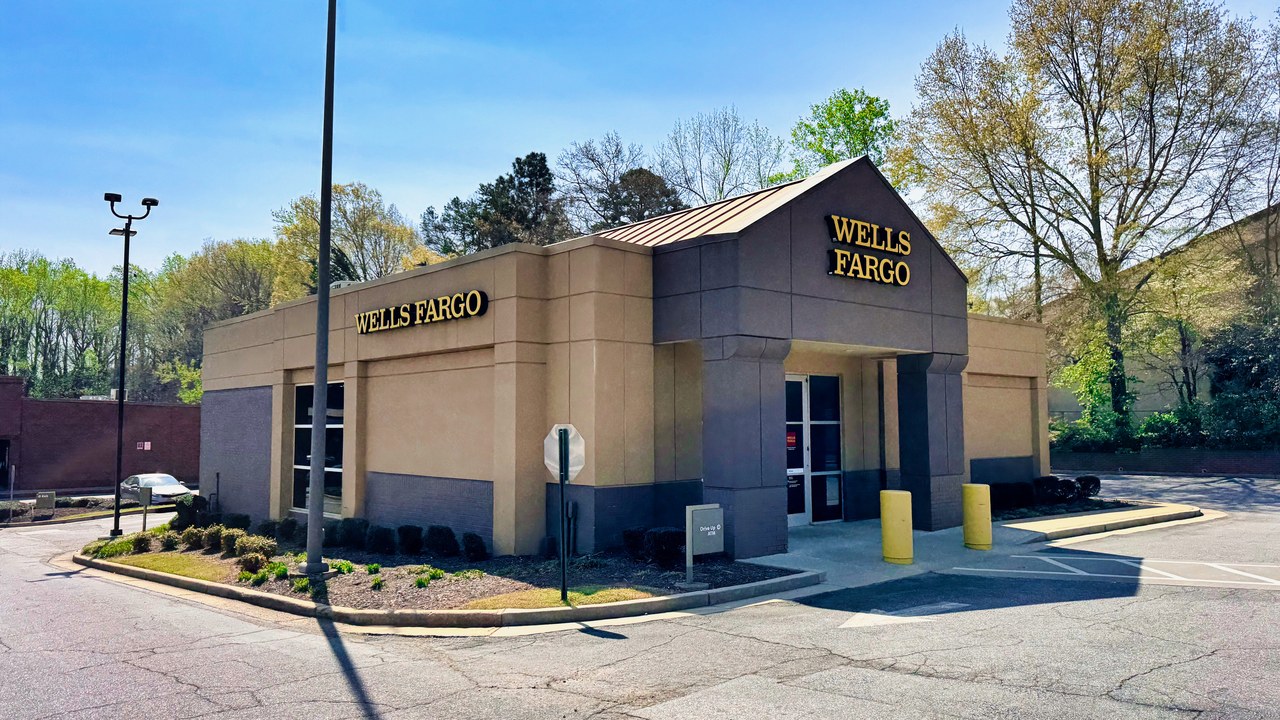
The federal housing department has opened an investigation into one of the biggest bank pledges ever made on Black homeownership. The Department of Housing and Urban Development said on Oct. 7, 2026, that it is looking at whether Wells Fargo’s program to add 250,000 Black homeowners by 2027, part of a $60 billion lending commitment, violated the Fair Housing Act. HUD has not made any finding, and it has not charged the bank with anything.
What HUD announced
HUD’s announcement says the department sent a letter to Wells Fargo chief executive Charlie Scharf. In 2017, the department says, the bank committed $60 billion in loans to help add at least 250,000 Black homeowners by 2027. HUD also says the bank helped refinance about 5,100 customers, with an average monthly payment savings of about $100.
The letter is signed by Craig Trainor, HUD’s assistant secretary for fair housing and equal opportunity, and its subject line reads “Secretary-Initiated Investigation of Wells Fargo.” It says the inquiry will determine whether the bank “has violated or intends to violate” section 3605 of the Fair Housing Act, the part of the law that covers residential real estate-related transactions.
Its reach is wider than the single pledge. The letter names Wells Fargo’s mortgage lending policies, practices and programs, including special purpose credit programs, a $150 million commitment to advance racial equity in homeownership, and a refinance product under which the bank would identify eligible Black homeowners who could benefit.
For the borrowers, the central question is whether anything changes for a loan they already hold or an application in progress. Neither HUD’s announcement nor the letter says it does. Wells Fargo customers, whatever their race, have nothing in these documents telling them to do anything.
HUD’s first requests for information to Wells Fargo are due within ten business days of its Oct. 7 letter, and that is the next step in the investigation.
Get the next update the morning it lands →
What happens first
The letter demands that the bank preserve all documents and communications about its mortgage lending policies and programs, effective immediately. That includes messages on personal devices, texts and encrypted messages. HUD’s fair housing office says it will issue its first requests for information within ten business days of the letter’s date.
If the office finds reasonable cause to believe a violation occurred, the letter says, HUD may file charges or refer the matter to the Justice Department. No such step has been announced.
Right now the matter is at the stage of records and questions.
What officials said
HUD Secretary Scott Turner called the bank’s practice of dividing Americans by race “immoral, unethical and un-American,” according to HousingWire. He said Wells Fargo employees who engaged in race-based decision-making “should be ashamed of themselves.” Trainor wrote that the Fair Housing Act forbids racial discrimination in housing and argued the law does not allow a practice just because it is labeled a special purpose credit program.
These are statements from the agency opening the inquiry, not findings. HousingWire reported that a Wells Fargo spokesperson did not immediately reply to its request for comment, and no statement from the bank is included in the report.
The bank’s history with the pledge
HousingWire’s account traces the commitments back to February 2017, when Wells Fargo pledged to lend $60 billion to qualified African American consumers for home purchases by 2027. In 2022, the bank announced $210 million to advance racial equity in homeownership and $150 million to lower mortgage rates and refinancing costs, following a Bloomberg investigation that found the bank approved fewer than half of Black refinance applicants in 2020. The bank’s 2023 report on diversity efforts, which HUD cites, said the bank exceeded its $150 million special purpose credit program commitment.
HUD’s letter links such programs to race-conscious lending and puts their legal footing at the center of the inquiry.
HousingWire also reported that Wells Fargo ranked as the 15th-largest mortgage lender from January to June 2026, with $15.3 billion in volume.
What an investigation means for applicants
An investigation is a request for facts. It is not a ruling, and the letter itself says the department will determine whether a violation occurred. Until HUD announces a result, HUD’s concerns and the bank’s answers are both unproven.
Homeowners and applicants with any mortgage lender can follow the process on HUD’s own pages. The department’s announcement and the letter are public, and any later step, such as a charge or a settlement, would appear there first. Borrowers who believe they were treated unfairly in a loan can keep the paperwork: the application, the loan estimate, the denial letter if there was one, and notes of conversations with the lender.
For people who hold a Wells Fargo mortgage or have applied for one, the next dated step is HUD’s information requests, due within ten business days of Oct. 7. Whether the bank answers publicly is for Wells Fargo to decide.
More Financial Reading
- 24 Ways to Stretch a $2,087 Social Security Check
- 17 Places to Find Your Share of the $4.25 Billion States Give Back
- 18 Ways Out of 22% Credit Card Interest
This article was produced with AI assistance and edited for accuracy against the sources linked above.