
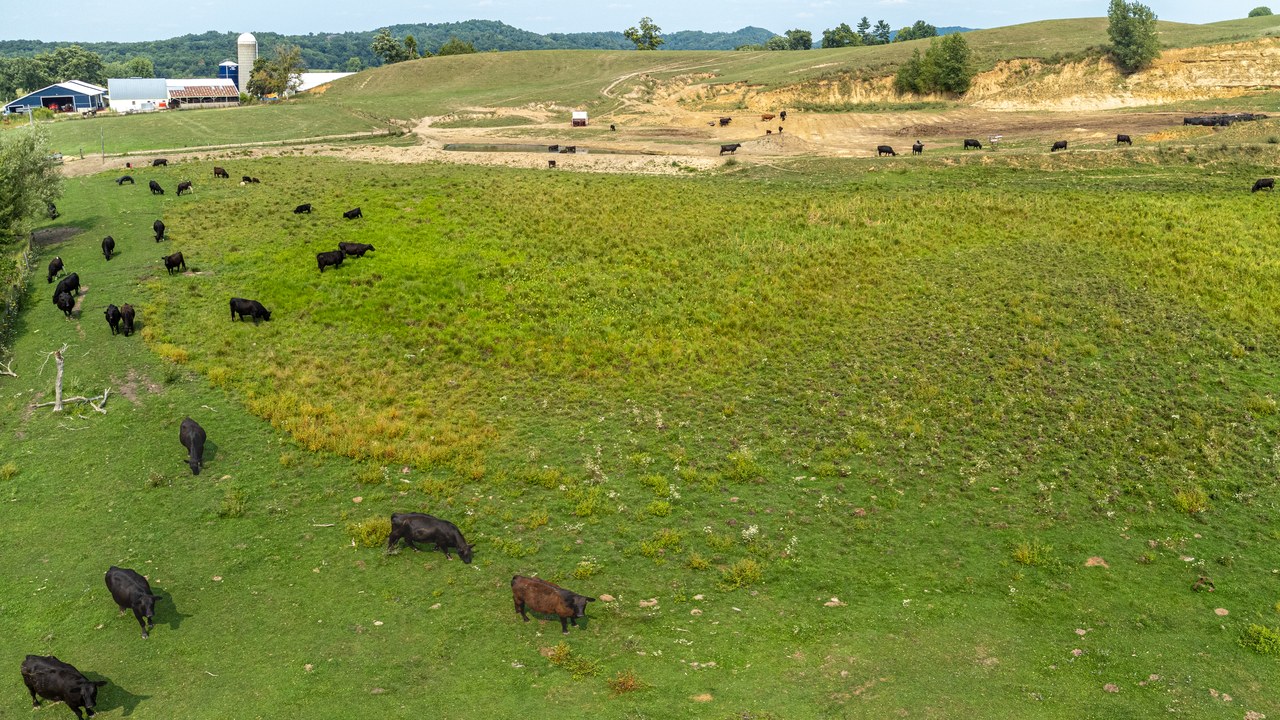
Ranchers who sold breeding cows, dairy animals or draft stock because of drought now have four years, not two, to buy replacements before the tax on the gain comes due. The Internal Revenue Service extended that relief to 49 states, the District of Columbia, Puerto Rico and other areas in Notice 2026-54. The change postpones a tax bill. It does not cancel one.
Notice 2026-54 and the drought map behind it
The IRS announced the extension on September 15 as release IR-2026-110, tied to Notice 2026-54. The agency counts 49 states in its description, plus the District of Columbia and Puerto Rico, with “other areas” also covered. The release does not name the state it leaves out of the 49, and the notice summary read for this article did not identify one either, so no state is singled out here.
The designation rests on weather data. Relief reaches regions with “exceptional, extreme or severe drought conditions during any week” between September 1, 2025, and August 31, 2026, according to the release. The 12-month period ending August 31, 2026 is the measuring window. A farm in a county that logged a qualifying week inside that window falls within the notice, while a farm in a county that never reached severe drought does not.
IRS Chief Executive Officer Frank J. Bisignano framed the move in one sentence: “By extending relief for those who sell or exchange livestock, the IRS is providing much needed support to those who feed our nation.”
How the two-year clock became a four-year clock
The underlying rule sits in section 1033 of the Internal Revenue Code. When a producer sells livestock the law treats the sale as an involuntary conversion if it happens “solely on account of drought, flood, or other weather-related conditions” and exceeds the number the producer would normally sell in the course of ordinary business. A producer in that position can postpone tax on the gain by buying replacement animals within a set period.
The standard period is two years after the close of the first tax year in which any part of the gain is realized. The statute lets the clock run four years instead of two when the weather event leads to a federal disaster designation. Notice 2026-54 applies that longer period to the areas it lists. A rancher who sold herd animals in a drought-stricken county during the 2026 tax year, for example, would count the four years from the end of that tax year rather than the end of the second.
A clock that can run past four years
The extension does not necessarily stop at four years. The IRS release says the replacement window can stretch to “the end of their first tax year after the first drought-free year after the four-year replacement period.” The notice defines that drought-free year as the first 12-month period ending August 31 that falls in or after the last year of the replacement period and contains no week with reported exceptional, extreme or severe drought.
In practice the end date can move with the weather. A region that stays in drought through the fourth year pushes the deadline out; a region that recovers earlier closes the window sooner. Notice 2026-54 was drafted in the IRS Office of Associate Chief Counsel (Income Tax and Accounting), and its text points to the U.S. Drought Monitor maps and an IRS county list as the references for checking whether a given area is covered.
Which animals count and which sales do not
The relief is narrow about what was sold. The release limits it to livestock held for draft, dairy or breeding purposes. Animals sold for slaughter or for sporting purposes do not qualify, and neither does poultry. A cattle operation that finishes steers for market therefore sits outside the rule for those animals, even in a covered county, while the same operation’s cow herd can qualify.
The sale must also be forced by the weather. The statute’s wording, “solely on account of drought,” and its comparison with “the number the taxpayer would sell if he followed his usual business practices” mean a normal culling of older cows does not count. Only the excess caused by drought is eligible, which makes herd records that show a typical year’s sales a practical necessity for anyone claiming the deferral.
Deferral is a postponed tax bill, not a forgiven one
The IRS describes the benefit as the ability to “defer tax on any gains from the forced sales or exchanges.” Nothing in the release or the statute erases the gain. A producer who never replaces the herd within the allowed window owes the tax on the original gain for the year it was realized.
That timing matters for a household budget. A ranch that sold a large share of its herd in a bad year can show a large one-time gain on paper even though the operation lost its income-producing animals. The extension gives that ranch breathing room to rebuild at a pace feed and pasture conditions allow, without a tax bill landing in the middle of the rebuilding.
What the IRS pages read do not settle
The notice summary read for this article did not describe a specific form or election for claiming the deferral, so no filing instruction is given here. Producers use the IRS September newsroom listing to find the release and its links to the notice and to Publication 225, the Farmer’s Tax Guide, which the release names as the reference. A tax professional or the IRS can confirm how a particular sale is reported.
The controlling record is Notice 2026-54 itself, which sets out the covered areas, the drought-free-year test and the extended replacement period as the IRS published them.
A separate tool for refunds that stall after a return is filed
Livestock deferral is a rule for sellers of breeding and dairy animals, and most households never meet it. A far more common federal tax problem is a refund that arrives late, arrives smaller than expected or does not arrive at all.
The IRS Refund Recovery Kit is a 13-page kit with a notice decoder, the refund-trace steps for Form 3911 and a refund status tracker spreadsheet.
Work out where a stalled refund stands with the notice decoder and tracker →
This article was drafted with AI assistance and checked against the IRS release, Notice 2026-54 and the statute it cites.


