
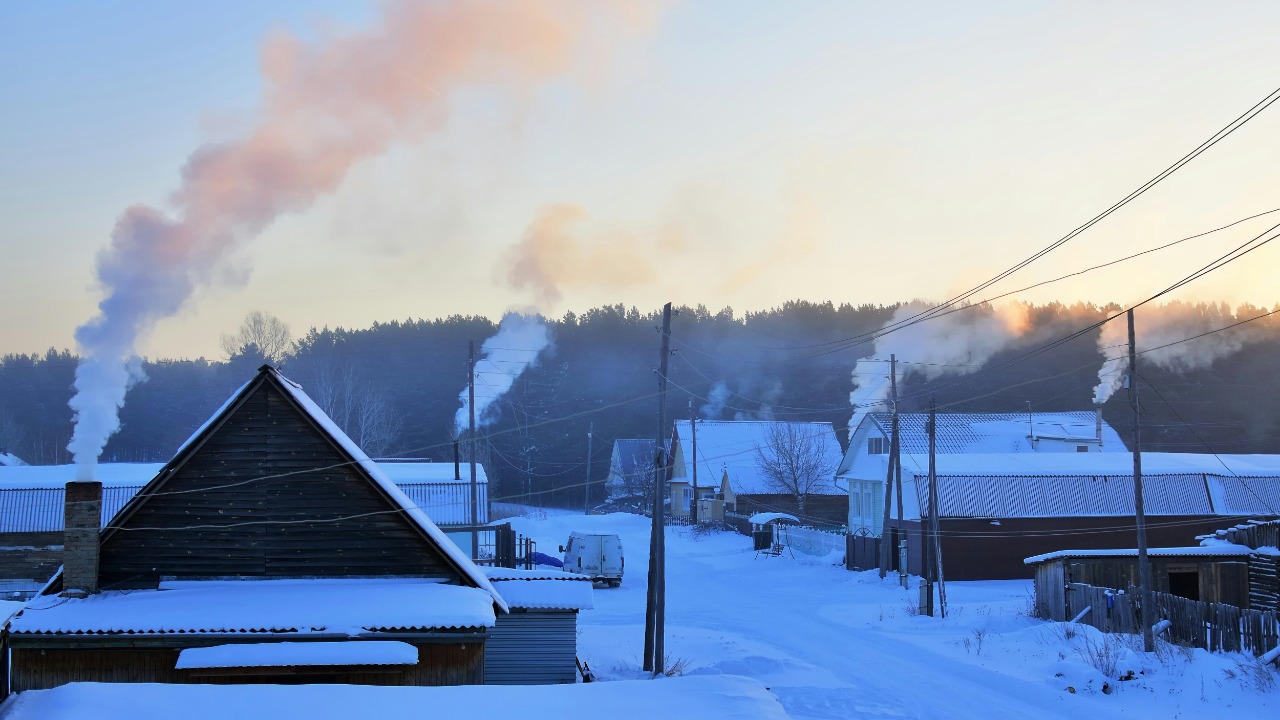
“Heating oil costs are projected to soar by 31% this winter.” That sentence, in a September 23 press release from Minnesota Senators Amy Klobuchar and Tina Smith, is the only support for the 31 percent figure behind this headline. The release names no forecaster and links no data. The number is best read as the senators’ stated projection, not as a federal forecast.
A projection with no author attached
The sentence sits inside a Senate press release about the Low Income Home Energy Assistance Program, known as LIHEAP. It is offered as background for why the senators want heating aid released early. No agency, trade group or price survey is cited for it, and the release does not say whether the 31 percent compares this winter with last winter, with a multi-year average or with some other base.
Two cautions follow. The figure describes a winter that has barely begun, so it cannot be a measured result. And it describes the price of one fuel, so a household that burns oil is exposed to it in a way that a household heating with something else is not. Any family-level conclusion has to be built from the percentage, and the release does not build one.
Thirty-one percent of what? Two ways to turn a percentage into dollars
The same release carries a second number: “families will likely spend around $1,030 to heat their homes this winter.” That figure, up $82 or 8.7 percent from last year, also appears on the website of the National Energy Assistance Directors Association, in a report dated September 14, 2026. The association represents state energy-assistance directors, which makes it an advocacy group and not a federal agency. Subtracting $82 from $1,030 leaves $948 for last winter, and $82 is 8.65 percent of $948, which matches the rounded 8.7.
The two numbers measure different things. The $1,030 is an average across homes and fuels, while the 31 percent applies to heating oil alone. Take a hypothetical household that paid $2,000 for oil last winter: 31 percent of $2,000 is $620, so the same household would pay $620 more if the projection held. A household sitting exactly on the national average would see the $82 increase. Neither calculation predicts a specific bill; each only shows how far apart the two percentages land once they are applied to a real budget.
Applying a percentage to a real bill takes two inputs the release does not supply: how many gallons a household bought and what each gallon cost. Last winter’s delivery invoices show both. If “heating oil costs” means the per-gallon price, as the phrase most naturally suggests, a household that buys fewer gallons pays less in total even when the price rises exactly as projected, and one that buys more pays more.
Who burns oil, and where
The Energy Information Administration reports that in the winter of 2023-2024, about 4.79 million U.S. households used heating oil as their primary heating fuel, and about 82 percent of those households were in the Northeast Census Region. Most heating oil use occurs from October through March, and annual residential use has declined nearly every year since a peak in the 1970s.
Those facts shape who the projection touches. A heating-oil figure matters most in the Northeast, where the fuel is concentrated, and says little about households heating with gas or electricity. That is one more reason the 31 percent should not be read as a national heating-cost forecast.
What the senators attach the number to
The projection is an argument, not the request itself. The release ties it to LIHEAP, which it says helped an estimated 6 million households with heating and cooling costs over the last year, including more than 100,000 in Minnesota last winter. “In Minnesota, heating your home isn’t a luxury, it’s a necessity,” Klobuchar said in the release. “With colder weather on the horizon, families shouldn’t have to choose between staying warm and putting food on the table.”
Seen that way, the 31 percent is persuasion material. It tells a reader why the senators think timing matters, and the release leaves the checking to others. A reader comparing it with the federal price of oil has nothing in the release to compare it against.
Where a federal number will come from
The Energy Information Administration’s Short-Term Energy Outlook page lists September 9, 2026 as the current edition, with the forecast completed September 3, and gives October 6, 2026 as the next release date. The page carried no winter heating forecast when read on October 1. The agency’s Winter Fuels Outlook is a separate publication, and any heating oil figure it eventually publishes would be a federal projection that could land above, below or near the senators’ 31 percent.
Until such a figure appears, the 31 percent belongs to the September 23 Senate release and to nobody else. The release is the only record of it, and it comes with no method attached.
Home-cost relief programs for older households
A single housing budget can include property taxes, heating bills and repairs, and each of those has its own relief program with its own paperwork and renewal dates. A kit built for older homeowners and renters keeps those programs together in one place.
The Senior Property Tax & Home-Cost Relief Kit is an 11-page kit covering the 5 kinds of property-tax relief and heating, cooling and home-repair help, with an application log and renewal calendar for tracking each one.
Click here to get The Senior Property Tax & Home-Cost Relief Kit →
An AI assistant helped draft this article, which was checked against the Senate release and the EIA pages it cites.


