
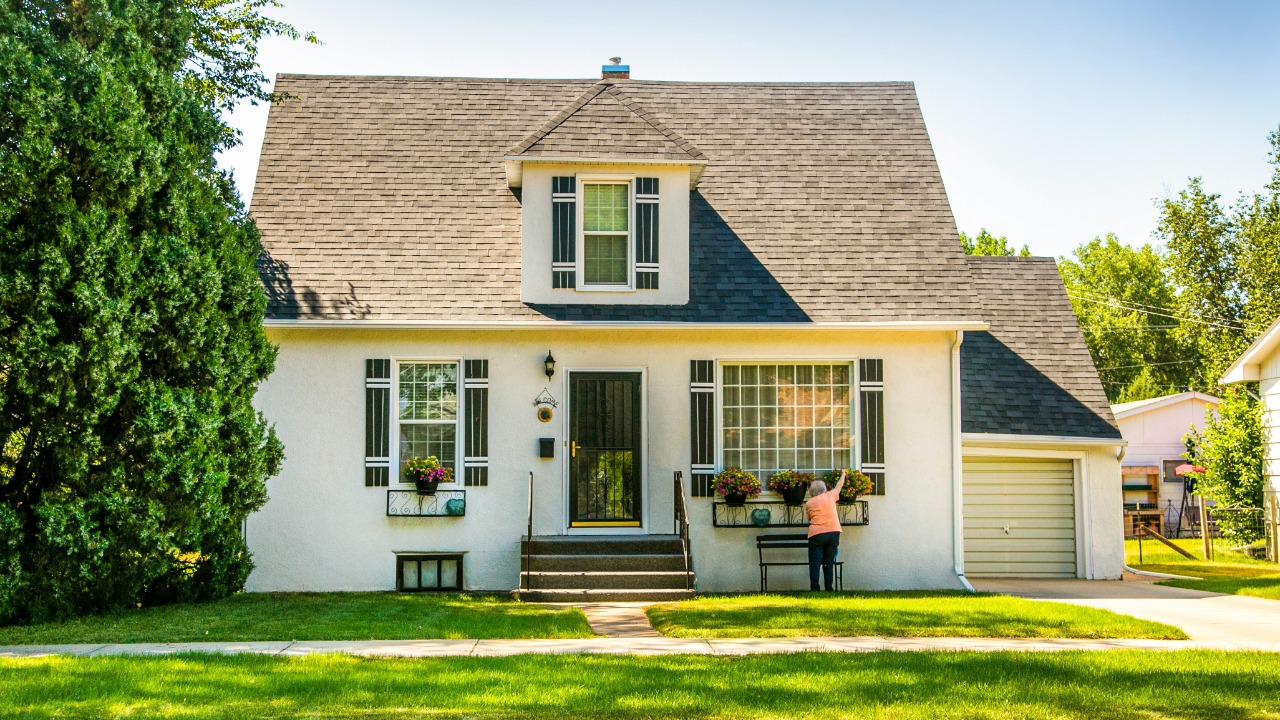
When the last borrower on a reverse mortgage dies, the loan comes due, and the heirs have a short window to decide what happens to the house. If the loan is larger than the home is worth, the Consumer Financial Protection Bureau says heirs can still settle it by selling for at least 95% of the appraised value. Separately, HUD is taking bids Oct. 27 on about 4,200 reverse mortgages where every borrower has died.
A loan that comes due at the last borrower’s death
A reverse mortgage lets an older homeowner borrow against home equity, with the balance coming due later. According to the CFPB’s page on what heirs can do, the loan “becomes due and payable after your death and after the death of any coborrowers or of an eligible nonborrowing spouse.” The bureau’s answer applies to Home Equity Conversion Mortgages, known as HECMs, which are the most common type.
The trigger matters for families with more than one name involved. A surviving co-borrower or an eligible non-borrowing spouse postpones the due date. Only when the last of those people is gone does the clock the CFPB describes begin to run.
Thirty days to decide, and up to six months if allowed
Once the loan is due, the CFPB says heirs have 30 days from the due-and-payable notice “to buy, sell, or turn the home over to the lender to satisfy the debt.” The bureau adds that “it might be possible for the timeline to be extended up to six months so your heirs can sell the home or obtain their own loan to purchase the home.” The wording is conditional. An extension is possible, not automatic, and the CFPB page does not promise one.
Heirs who want to keep the house have one route: they can “pay off the balance of the reverse mortgage and stay in the home,” and the bureau notes they might need to get a loan of their own to finance that. For a family without cash on hand, the six-month window is the practical time to line up that financing or a sale.
The 95% rule when the loan exceeds the home’s value
The provision behind the headline number covers the case where the debt is bigger than the house. The CFPB states that heirs can “pay off the loan by selling the home for at least 95 percent of the home’s appraised value. The rest of the loan is covered by the mortgage insurance.”
A simple example shows the effect, and it is an illustration, not a case from the sources. If a home appraises at $200,000 and the loan balance is $260,000, a sale at $190,000 or more would meet the 95% threshold, because 95% of $200,000 is $190,000. The heirs would owe nothing further, and the mortgage insurance would absorb the shortfall. A sale below $190,000 would not meet the rule as the CFPB describes it. The bureau’s page does not detail how the appraisal is ordered or who pays for it, so families with a specific loan would need the servicer or a housing counselor to confirm the steps.
HUD’s Oct. 27 sale of about 4,200 reverse mortgages
A separate track concerns loans where no heirs are in the picture. In a notice published Sept. 23, HUD announced the HUD Vacant Loan Sale 2027-1, covering approximately 4,200 home equity conversion mortgages with a total balance of approximately $1.3 billion. The notice is signed by Joseph M. Gormley, president of the Government National Mortgage Association, who is performing the duties of Assistant Secretary for Housing and Federal Housing Commissioner.
Bids are due before 1:00 p.m. Eastern on Oct. 27, 2026, with an award expected on or about Oct. 30 and settlement within 60 days of the award. The loans are secured by single-family, vacant residential properties where all borrowers are deceased and no borrower is survived by a non-borrowing spouse. The notice gives the purpose as reducing risk to the Mutual Mortgage Insurance Fund and disposing of defaulted assets efficiently. HUD’s Office of Asset Sales page lists the same Oct. 27 bid date, the same loan count and the same $1.3 billion figure.
Keeping the two stories apart
The sale and the heirs’ rules are related only by subject. The loans in HUD’s pool are vacant properties with no surviving borrower or non-borrowing spouse, and the notice does not say that heirs living in those homes are being pushed out. It describes a sale of the loans themselves to qualified bidders, who must complete a confidentiality agreement and a HUD qualification statement first. John Lucey, director of HUD’s Office of Asset Sales, is the listed contact for the notice.
For families dealing with a parent’s loan, the CFPB’s page points to HUD-approved housing counseling agencies and state attorneys, and lists a phone number, (855) 411-2372. The controlling source for the 95% rule and the 30-day and six-month timelines remains the CFPB’s own answer, which is an evergreen page rather than a new rule.
Relief for the ongoing costs of owning or renting a home
Older homeowners and renters on fixed incomes often carry housing costs that programs can reduce, such as property taxes, heating and cooling bills and home repairs, and most of that relief has to be applied for. The kit described below is about those ongoing costs and does not address mortgage debt of any kind.
The Senior Property Tax & Home-Cost Relief Kit is an 11-page kit covering the 5 kinds of property-tax relief and the circuit-breaker credit that includes renters, with an application log and renewal calendar for tracking each filing.
Open The Senior Property Tax & Home-Cost Relief Kit here →
This article was drafted with AI assistance and checked against the CFPB, HUD and Federal Register pages named in the text before publication.


