
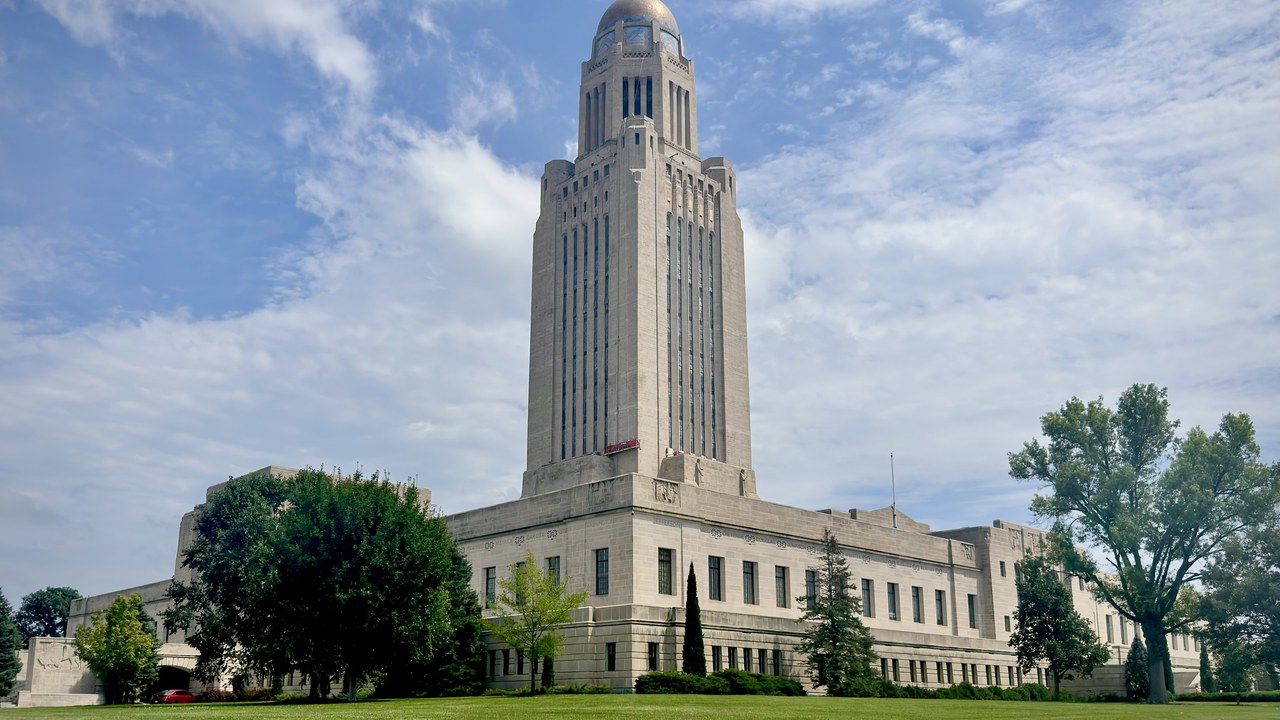
Three state income tax cuts are written into law for the tax year that begins Jan. 1, 2027. Nebraska’s top rate falls to 3.99% from 4.55%, Mississippi’s rate on income above $10,000 drops from 4% to 3.75%, and Montana’s top rate moves to 5.4% from 5.65%. Each figure comes from the state’s own statute or revenue department.
Nebraska’s statute steps the top rate down to 3.99%
The rate schedule sits in Nebraska Revised Statute 77-2715.03. It sets the top rate at 4.55% for taxable years beginning on or after January 1, 2026, and before January 1, 2027. For taxable years beginning on or after January 1, 2027, the top rate is 3.99%.
The wording is about tax years, not filing dates. A calendar-year taxpayer feels the 3.99% rate on income earned during 2027, and the return that reflects it is filed in early 2028. The statute sets the top rate only, and the income at which it applies depends on the bracket thresholds in the same law.
To see the size of the step, take each $10,000 of income taxed at the top rate. At 4.55% that is $455 in tax, and at 3.99% it is $399, a difference of $56.
Mississippi’s 4% rate becomes 3.75% above $10,000
The Mississippi Department of Revenue lists the schedule on its individual income tax rates page. The first $10,000 of taxable income is taxed at 0%. For 2026, the excess of $10,000 of taxable income is taxed at 4%, and for 2027 that excess is taxed at 3.75%.
A worked example shows what the cut means for a household. A Mississippi taxpayer with $60,000 of taxable income has $50,000 above the $10,000 threshold. At 4% the tax is $2,000, and at 3.75% it is $1,875, so the tax falls by $125. The example uses taxable income, meaning what is left after deductions and exemptions, and it is arithmetic from the department’s rates, not a projection for any actual return.
Montana’s top rate falls to 5.4% and the bracket widens
Montana’s schedule is in the state code, section 15-30-2103 of the Montana Code Annotated. For 2025 and 2026, the top rate of 5.65% applies to married joint filers on Montana taxable income in excess of $95,000. For 2027 and later, the top rate is 5.4% on taxable income in excess of $130,000.
Two changes therefore arrive together. The rate on the top slice falls by 0.25 percentage point, and the point at which a joint filer reaches that top slice moves from $95,000 to $130,000. On each $10,000 taxed at the top rate, 5.65% is $565 and 5.4% is $540, a difference of $25. The higher threshold adds to the benefit for joint filers whose income falls between $95,000 and $130,000, since that income is no longer reached by the top rate. The statute page read for this article does not give the lower-bracket rate that applies there, so the amount depends on the state’s schedule.
The three cuts side by side
Measured in percentage points, Nebraska’s step is the largest of the three. Its top rate falls by 0.56 point, from 4.55% to 3.99%, while Mississippi’s rate falls by 0.25 point, from 4% to 3.75%, and Montana’s top rate falls by 0.25 point, from 5.65% to 5.4%. The points are not comparable dollar for dollar, because each state applies its rate to a different slice of income: Nebraska and Montana to the top bracket, and Mississippi to everything above the first $10,000.
For that reason a household’s own savings depend on where its taxable income falls in the state’s schedule, and none of the three pages read for this article promises a specific dollar change for a typical taxpayer.
A fourth state on the same calendar is left out
North Carolina is not counted among the cuts described here. The state revenue department’s rate schedule page says the individual income tax rate is 3.99%, and adds that additional rate changes may apply to tax years beginning with 2027 based on certain rate reduction triggers. Because a trigger decides whether a further cut happens, North Carolina’s 2027 rate is not fixed the way the Nebraska, Mississippi and Montana figures are.
Other states have adjusted rates for 2027 too, according to national trackers, but the figures for those states were not confirmed on official state pages for this article, so they are not listed.
What was checked before the cuts were reported
All three schedules were read on the state pages for this article, and a search for news of a delay, repeal or suspension of the Nebraska, Mississippi or Montana cuts turned up nothing. Rate schedules can be amended in a later legislative session, so the statute and department pages remain the place to confirm the rate for a given tax year. The pages read here do not publish 2027 withholding tables, so the effect on paychecks depends on when each state’s revenue department and employers update them.
The Nebraska Legislature, the Mississippi Department of Revenue and the Montana Legislature each state the new rate in plain terms on their own pages, and those three documents are the basis for every figure in this article.
A federal refund that arrives late or short
State rate cuts change what is due on a state return, but a federal refund that arrives late, smaller than expected or not at all is a separate problem. The kit below is written for taxpayers holding an IRS notice about a refund or waiting on one that has stalled.
The IRS Refund Recovery Kit includes a notice decoder, a refund status tracker spreadsheet and the refund-trace steps for Form 3911.
Click here to get The IRS Refund Recovery Kit →
This article was prepared with AI assistance and checked against the cited state statute and revenue department pages.


