
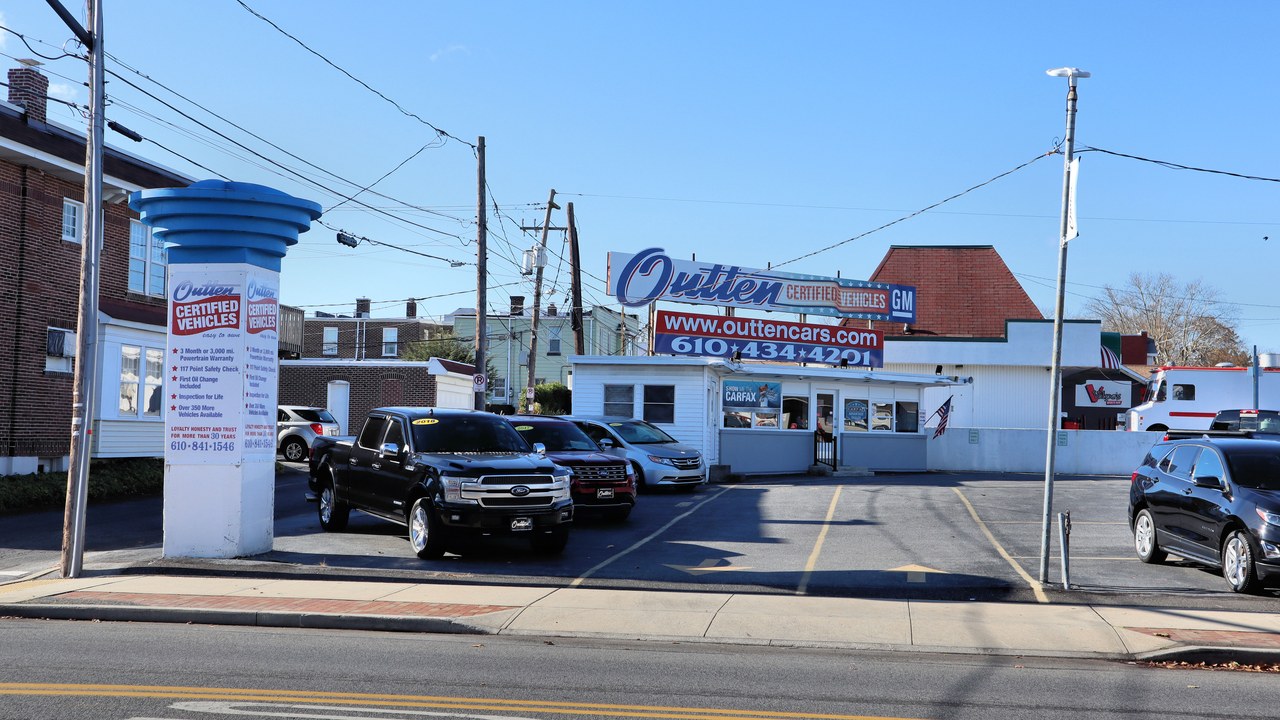
Starting Oct. 1, 2026, a California used-car dealer can charge a buyer a restocking fee of $200 to $600 for canceling a purchase within three days. The fee only applies if the buyer paid for an optional cancellation agreement at the time of sale, since California has no automatic right to return a used car. Senate Bill 766, the California Combating Auto Retail Scams Act, is what extends that option and sets the new fee.
The three-day cancellation fee: SB 766 sets what a dealer can charge but not what a buyer keeps if a dealer disputes it, the gap The Senior Fraud Defense & First-Hour Recovery Kit’s fraud evidence and report log covers. Start a fraud evidence and report log for the dispute →
The Cancellation Agreement Buyers Have to Purchase
California does not give used-car buyers a built-in cooling-off period. The California DMV’s Car Buyer’s Bill of Rights states plainly that there is no cooling-off period “unless you purchase a contract cancellation option agreement,” meaning the right to change one’s mind has to be bought at the time of sale, not assumed after the fact. Once a vehicle leaves the lot without that agreement attached to the paperwork, the sale is final no matter how quickly a buyer has second thoughts about the financing, the price or the car itself. Under the rules in place before Oct. 1, 2026, the agreement covered vehicles priced up to $40,000, ran for two days, and carried a restocking fee capped between $175 and $500 depending on the price of the car.
What Senate Bill 766 Extends Starting October 1
The DMV’s own CARS Act page confirms the law becomes operative Oct. 1, 2026, and that it extends the cancellation option to used vehicles priced at $50,000 or less, a $10,000 jump from the old ceiling. It also stretches the window from two days to three days, and unlike some return policies that count only business days, the DMV specifies the new window runs through weekends. A roughly 400-mile driving limit still applies while the option is active, so a buyer who puts significant miles on the car during those three days risks losing the right to cancel even before the window closes. The underlying statutory language sits in Senate Bill 766, Chapter 354, Statutes of 2025, which the Legislature passed and had chaptered in October 2025 ahead of the later operative date.
How the $200-to-$600 Fee Is Calculated
SB 766’s text sets the new restocking fee at 1.5% of the vehicle’s price, with a floor of $200 and a ceiling of $600. That formula means the $200 floor applies to any car priced under roughly $13,333, since 1.5% of that amount already equals $200, while the $600 ceiling kicks in once the price crosses $40,000, since 1.5% of $40,000 equals $600 exactly. A buyer who purchases the cancellation option on a $25,000 used car and later exercises it would owe a $375 restocking fee, squarely between the two caps. That is a wider fee range than the $175-to-$500 cap the DMV describes under the current, pre-October rules, though it now applies across a bigger pool of vehicles.
What the Option Itself Costs Upfront
The restocking fee is separate from what a buyer pays just to add the cancellation option to a deal in the first place. Under the DMV’s published cost table, that upfront charge runs $75 for a vehicle priced at $5,000 or less, $150 for one priced $5,001 to $10,000, $250 for one priced $10,001 to $30,000, and 1% of the price for one priced $30,001 to $39,999. The DMV’s page does not list a separate upfront tier for the newly eligible $40,001-to-$50,000 range, so a buyer shopping in that bracket should ask the dealer directly what the option costs before signing anything.
Which Purchases Are Covered
The extended terms apply only to used vehicles sold by a licensed dealer for $50,000 or less. The DMV’s guidance excludes new cars, motorcycles, off-highway vehicles and private-party sales from the option altogether, so a car bought from a neighbor or through a classified ad carries none of these protections regardless of price. A buyer still has to ask for and pay for the cancellation agreement at the time of purchase, since it is not automatically part of a standard sales contract, and a dealer who never mentions it is under no obligation to bring it up first.
What the Fee Means for a Canceled Deal
For a household weighing whether to buy the cancellation option in the first place, the new fee schedule sets a predictable ceiling: no matter how expensive the used car, walking away within three days will cost at most $600, on top of whatever the dealer charged upfront for the option itself. That is a real cost against a refund, not a hypothetical one, and it applies whether the buyer changes course over financing terms, a mechanical issue found after the sale, or a simple change of mind. Add the upfront charge for the option, which works out to $350 at the 1% rate on a $35,000 car, and a household financing a $35,000 used car could see $850 or more move between its bank account and the dealer’s before a canceled deal is fully unwound.
Documenting a Disputed Cancellation Fee
SB 766 fixes what a dealer can charge for a canceled sale, but it does not require the dealer to hand over a receipt showing how the 1.5% figure was calculated. A buyer who questions the math, or who cancels within the three-day window only to have a dealer push back, has no built-in paper trail beyond whatever records the buyer happens to keep.
The Senior Fraud Defense & First-Hour Recovery Kit pairs a fraud evidence and report log with the free credit-freeze steps for anyone who suspects a dealer transaction went wrong.
See the fraud evidence and report log in The Senior Fraud Defense & First-Hour Recovery Kit.
This article was produced with AI assistance and reviewed by a human editor, who checked the fee formula and effective date against California’s own DMV guidance.


