
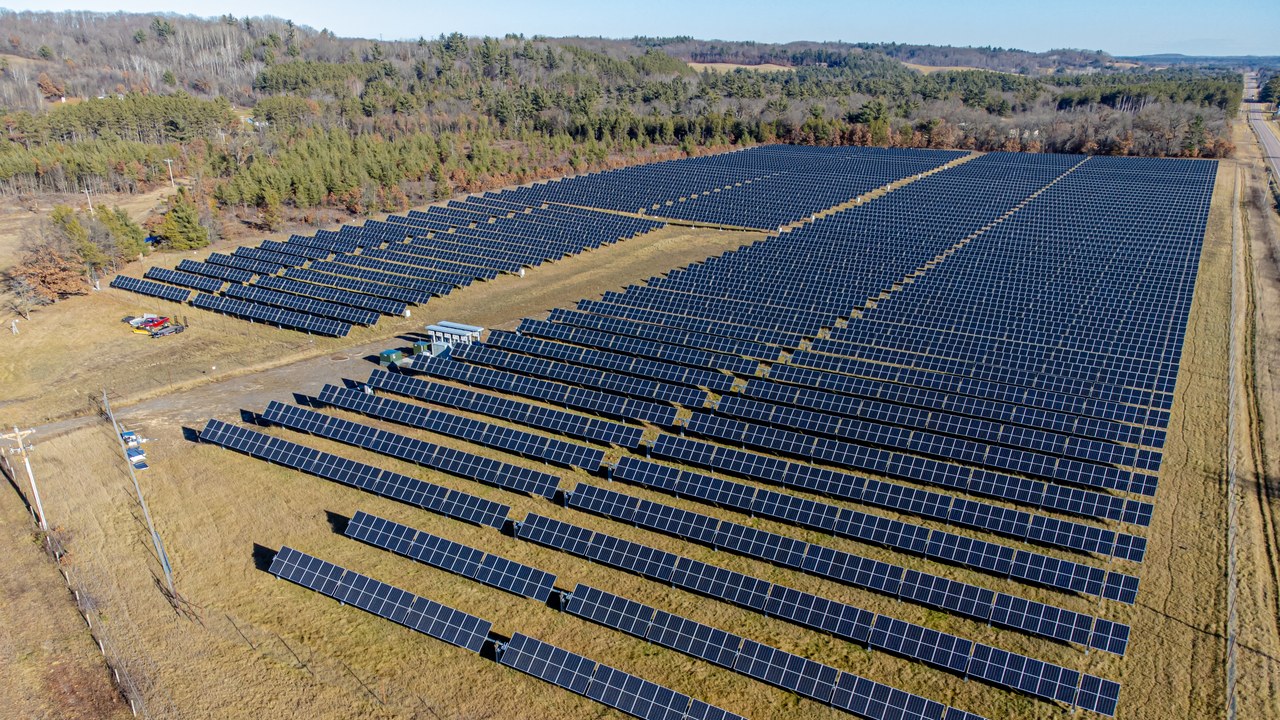
A new 15 percent tariff on imported polysilicon, the raw material at the base of nearly every solar panel sold in the United States, takes effect December 4, 2026. The tariff, and a minimum price floor issued alongside it, is aimed at rebuilding a domestic polysilicon industry that has nearly disappeared over the past two decades. For a household weighing a rooftop solar quote or another home-energy purchase this winter, the change sets a new, government-fixed floor under the price of the imported material behind almost any panel on the market.
The Section 232 Proclamation Setting the Rate
The tariff comes from a proclamation signed on August 6, 2026, titled “Adjusting Imports of Polysilicon and Its Derivatives Into the United States,” issued under Section 232 of the Trade Expansion Act of 1962. It sets a 15 percent tariff on polysilicon and polysilicon-derivative products imported from most countries, reduced to 10 percent for imports from the United Kingdom, and the rate takes hold at 12:01 a.m. Eastern time on December 4, 2026. An independent summary from the tax advisory firm EY, in its own reading of the same proclamation, confirms both the rate and the date, and notes that a handful of trading partners covered by earlier trade agreements, including Japan, South Korea, Taiwan, Switzerland, Liechtenstein and the European Union, have the new rate layered on top of duties those agreements already set rather than swapped in place of them. Polysilicon itself rarely appears in a household’s own vocabulary, but it is the refined form of silicon that gets melted into ingots, sliced into wafers, and built into the solar cells that make up a finished panel, so a tariff set at the polysilicon stage works its way through every later stage of that chain.
Inside the kit: The Senior Property Tax & Home-Cost Relief Kit breaks down the five kinds of property-tax relief a household may already qualify for, plus an application log and renewal calendar for tracking which filing window is still open. Open The Senior Property Tax & Home-Cost Relief Kit to see where a solar purchase or any other home-equipment cost fits against that relief.
The Minimum Import Price Floor Under Panels and Cells
Alongside the tariff, the proclamation sets minimum import prices: $21 per kilogram for raw polysilicon, $100 per kilogram for silicon ingots and wafers, 22 cents per watt for finished solar cells, and 38 cents per watt for assembled solar modules. Those floors work differently than a straight percentage tariff. A percentage applied to a very low invoice price can still leave an imported product cheap; a minimum import price sets a dollar amount underneath the transaction itself, so a shipment invoiced below the floor gets taxed as though it had sold at the floor price instead. The proclamation frames the combination as a response to a production collapse, stating that the United States supplied roughly 50 percent of the world’s polysilicon in 2005 and under 2 percent of it by 2024, a decline it ties to both the semiconductor and solar-power supply chains. Because the floor is set in dollars per kilogram or per watt rather than as a percentage of whatever price a foreign producer chooses to invoice, it applies at the same dollar level regardless of how sharply a subsidized manufacturer discounts its own selling price.
How the Tariff Reaches a Rooftop Solar Quote
Solar cells and modules are the visible piece of a rooftop system, but nearly every one on the market starts as imported polysilicon or is built from cells and wafers made from it. Once the December 4 rate applies, an installer sourcing panels, or the raw silicon behind them, from outside the United States faces either the 15 percent tariff or the per-watt floor, whichever charges more, layered on top of the price already paid to a manufacturer. A homeowner comparing a quote taken before December 4 against one taken after, for the same system size, is comparing two different cost bases for the panels themselves, even if the installer’s labor charge and every other line item on the estimate stays flat. The proclamation sets no retail price for a finished installation, and it does not reach back to panels or systems already purchased and installed before the effective date. It also does not distinguish between a large utility-scale project and a single household’s rooftop array; the same rate and the same floor price apply to both, since the tariff attaches to the imported material itself rather than to the size of the buyer.
Why Washington Calls Polysilicon a Security Issue
The proclamation’s stated justification is national security, not consumer pricing. It argues that polysilicon underpins both the solar-power and semiconductor supply chains, and that foreign government policy has hollowed out domestic production capacity to the point described above. That argument is why the tariff is paired with a minimum import price rather than left as a plain percentage: a percentage alone can still be undercut by a producer selling far below cost, while a dollar floor cannot. This tariff also arrives inside a much larger run of Section 232 and related actions the current administration has taken on trade in 2026, a pattern the Tax Foundation’s running tariff tracker has been logging month by month, from duties on lumber and furniture to a separate tariff on imported drones. Whether the polysilicon tariff succeeds in rebuilding domestic production is a separate question from whether it raises near-term costs for anyone installing solar equipment this winter. The proclamation itself only fixes the December 4 start date and the rate; the market response is left to play out afterward, and the White House’s own text remains the only document that currently states either number.
A Solar Tariff and the Home Costs Sitting Next to It
A new tariff on the material behind solar panels adds to a set of home costs that already move on their own separate calendars, among them property-tax bills, heating-season expenses and home-repair costs. None of those wait for a December tariff date to arrive, and the relief programs meant to offset them each carry a filing window that closes whether or not a household ever applies.
The Senior Property Tax & Home-Cost Relief Kit pairs the circuit-breaker credit that includes renters with separate help for heating, cooling and home-repair costs, the kind of expense that climbs alongside any new home-equipment purchase.
See the five kinds of property-tax relief in The Senior Property Tax & Home-Cost Relief Kit.
This article was produced with AI assistance and reviewed by a human editor. Rates and dates are linked to the federal proclamation that set them.


