
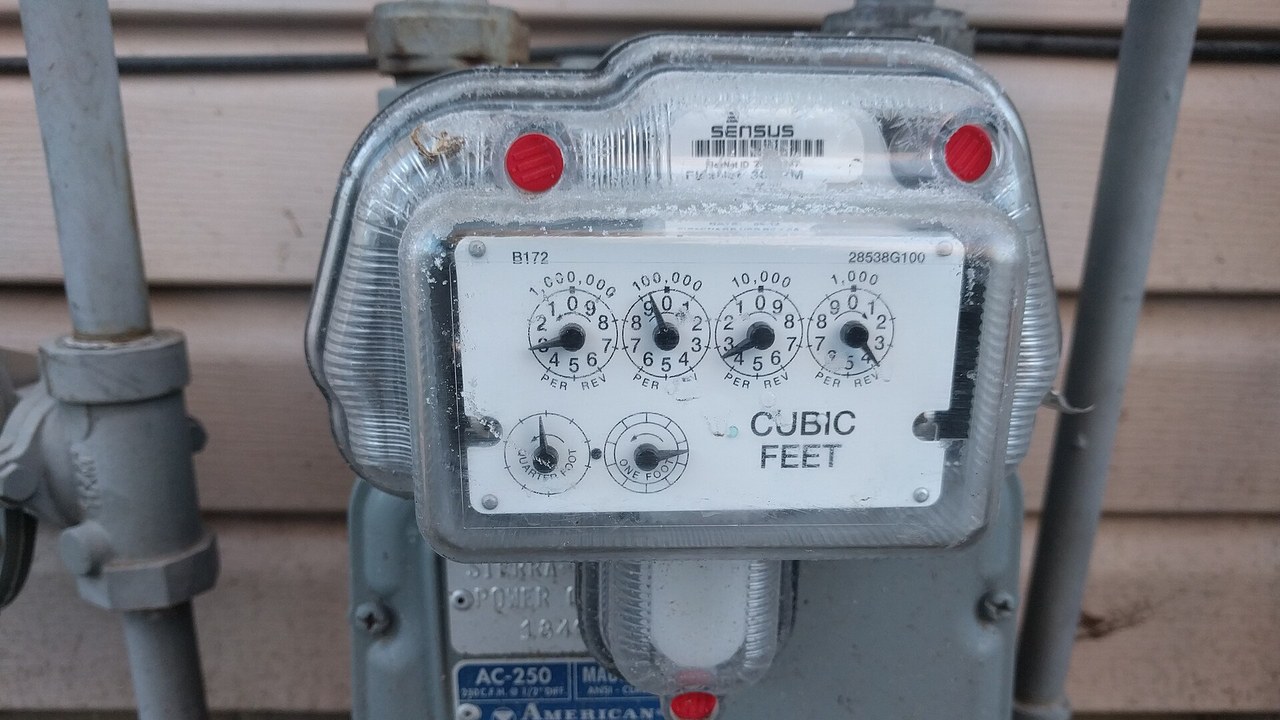
A monthly credit that had sat at $40 for income-eligible DTE Gas Co. customers is now $58. The Michigan Public Service Commission set the higher figure deliberately, pegging it at approximately 70 percent of the utility’s proposed average monthly bill rather than picking a round number. For a household inside the program, the change is worth $216 over a year, and it arrives in the same order that raises everyone else’s gas bill.
The Commission issued that order on September 10, 2026, in DTE Gas’s rate case. Much of the order concerns money the utility asked for and did not receive. The Low-Income Assistance Credit is the part of the ruling that shows up as a line item on a customer’s bill.
Why the credit is 70 percent of a bill rather than a flat number
Tying a credit to a percentage of the average bill is a design choice with consequences. A flat $40 loses value every time rates rise; a credit calibrated to about 70 percent of the average monthly bill moves with the thing it is supposed to offset. The Commission’s order in Case No. U-21973 raised the credit for income-eligible customers to $58 from $40 on exactly that basis.
The Commission paired the increase with an instruction that reads as a criticism. It directed DTE Gas to improve how it communicates with customers about existing energy assistance programs, to clearly inform customers about the availability of those programs and how they work, and to report back on the improvements in its next rate case. A credit that eligible households never hear about does not reduce anyone’s bill.
Relief that waits to be asked for: Property-tax freezes, exemptions and utility help are rarely applied automatically, and each has its own filing window. See the five kinds of relief in The Senior Property Tax & Home-Cost Relief Kit.
$162.7 million sought, $74.52 million approved
DTE Gas asked for a total increase of $237.5 million, a figure that included $74.8 million in an infrastructure recovery mechanism charge already sitting in rates, leaving a net request of $162.7 million. The Commission approved $74.52 million of that net amount, a reduction of more than 54 percent, and tied the money to continued modernization of the company’s transmission and distribution system and to rising operations and maintenance costs.
Several of the Commission’s directives target how future requests will be judged. It ordered DTE Gas to file an annual report on its new market attachment program so that existing customers are not subsidizing new customers connecting to the system, including comparisons of actual against projected usage and revenues. It told the company to establish a mechanism tracking all costs associated with preparing and filing rate cases, and to disclose the cost of the previous case with each new filing. It also found the company’s 10-year Gas Delivery Plan overly narrow and ordered a workshop with Commission staff before an updated plan is filed.
The Commission also set a 50-50 debt-to-equity capital structure and a return on equity of 9.8 percent. DTE Gas had sought 50.75 percent equity and a 10.25 percent return. The 0.45-point difference is invisible on a bill and substantial across a rate base, which is why utility rate cases are fought over decimal points.
The Taggart Compressor Station and the $284.1 million the Commission refused
The single largest rejection in the order concerns a compressor station. DTE Gas sought $284.1 million in capital costs to replace its aging Taggart Compressor Station. The Commission found that the request came with limited evidentiary support and almost no discussion of alternatives, and directed the company to show significantly stronger support for the project and the reasonableness of its costs before returning with it.
A second disallowance ran to $17.9 million in fleet costs. The Commission found that DTE Gas retires vehicles earlier than historical averages without justification, and without showing that accelerated retirement is more cost-effective than keeping trucks in service longer. It ordered a comprehensive vehicle idling study to test whether changes in idling practice would produce savings. Both disallowances are money that would otherwise have been collected from customers.
$2.87 this winter, 68 cents more on January 1, 2027
A typical residential customer burning 75 ccf of natural gas a month sees an increase of $2.87, or 3.34 percent. A separate infrastructure recovery mechanism surcharge adds 68 cents, or 0.77 percent, starting January 1, 2027. Against that, the credit for an income-eligible household went up by $18 a month.
The surcharge has a long tail. The Commission approved a total annual infrastructure recovery amount of $340 million for the 2027-2028 calculation, $311.02 million for 2029, $310.13 million for 2030 and $309.04 million for 2031, covering the replacement of aged bare steel pipe, the move of customer meters from inside homes to outside, and at-risk pipe in populated areas. It refused to fold two new programs, corrosion and cathodic protection and regulator station replacement, into that mechanism, directing DTE Gas to seek those costs through base rates instead. Michigan households looking for the assistance side can start from the Commission’s energy assistance page, which routes to the Michigan Energy Assistance Program and the utility-specific programs the Commission has just ordered DTE Gas to publicize better.
An order on shutoffs that names a date in December
Intervenors in the case, among them the Michigan Department of Attorney General, the Citizens Utility Board of Michigan, Urban Core Collective, Soulardarity and We Want Green Too, raised what the Commission described as an apparent racial disparity in the rate of shutoffs for customers of color. The Commission directed DTE Gas to investigate the concern thoroughly, analyze possible corrective measures and submit a report by December 30, 2026.
That deadline is the piece of this order most likely to matter after the winter is over, and it sits alongside the credit rather than behind it: one changes what an income-eligible household is billed, the other examines what happens when the bill goes unpaid. The full record, including the order itself, is docketed on the Commission’s E-Dockets system under Case No. U-21973.
The Low-Income Assistance Credit only reaches households that are already enrolled
The Michigan order raises the credit and then tells the utility to explain the program better, which is an admission that the number and the enrollment are two different problems. A household that never applies to an energy assistance program is billed the full amount whatever the Commission sets the credit at. The same gap runs through property-tax relief, where the rule is published and the application is not automatic.
The Senior Property Tax & Home-Cost Relief Kit is an 11-page kit that lays out the circuit-breaker credit that includes renters next to an application log and renewal calendar.
Look up heating, cooling and home-repair help in The Senior Property Tax & Home-Cost Relief Kit.
This article was produced with AI assistance and reviewed by a human editor. Figures are linked to their primary sources.


