
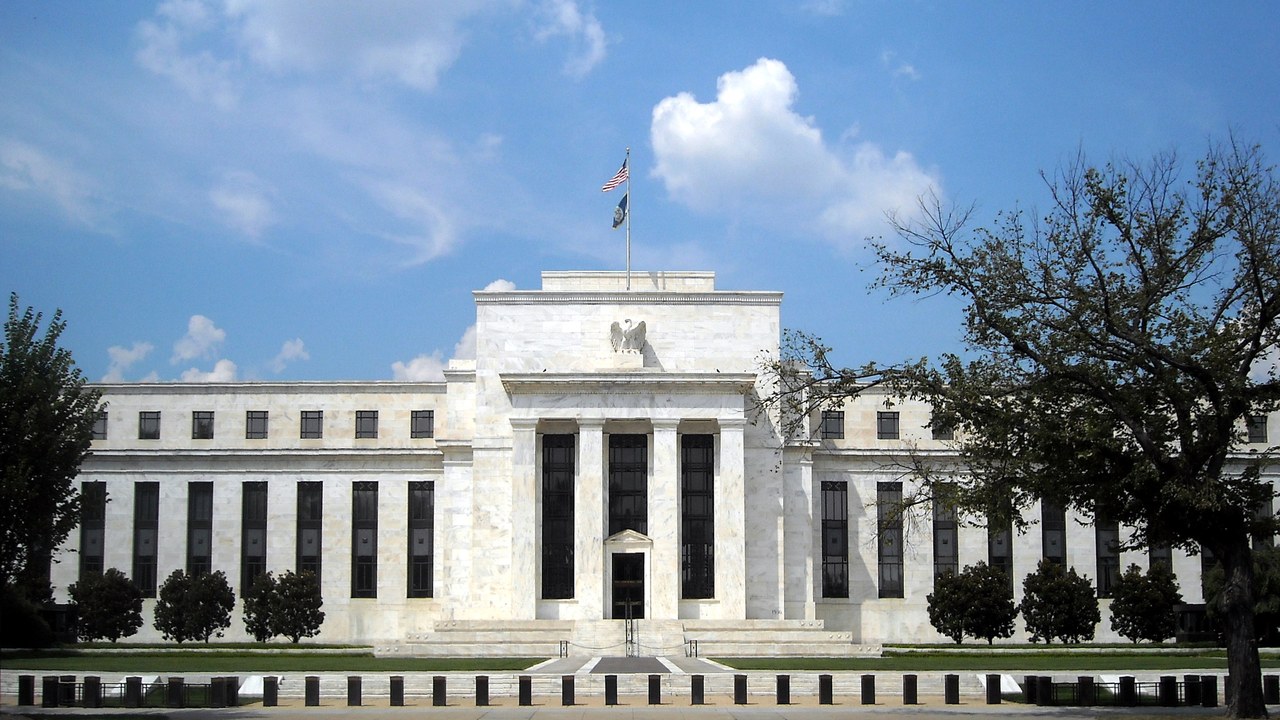
For three years, every move the central bank made on short-term interest rates went in one direction: down, or nowhere at all. That run ended on Wednesday, September 16, 2026, when the Federal Open Market Committee lifted its target range a quarter point and every voting member signed off on it. The change took effect the following morning, and one household borrowing cost had already repriced before most people read a word about the meeting. Others will not budge for months, and one of the largest did not follow at all.
The quarter-point move, and the 12-0 vote behind it
The Committee’s September 16 statement is short. It says the Committee decided to raise the target range for the federal funds rate by 1/4 percentage point to 3-3/4 to 4 percent, and it gives two sentences of reasoning: inflation “remains elevated,” and the action “will support a timelier return” to the 2 percent goal. The release records the vote as 12 to 0. No dissenting members are named, which is how the Fed reports a unanimous decision.
Direction is what makes this meeting worth a household’s attention, and the Board’s own table of target rate changes shows why. The previous increase was July 27, 2023, which took the range to 5.25 to 5.50 percent. Everything logged after that is a decrease: three cuts in 2024, three more in 2025, and no change at all in 2026 until this month.
The implementation note issued the same afternoon set the machinery. It raised the interest rate paid on bank reserve balances to 3.90 percent and approved a quarter-point increase in the discount window’s primary credit rate to 4.00 percent, both effective September 17, 2026.
Free 2026 deadline calendar: Retirement-account, tax and Medicare deadlines don’t sit on one calendar, and a missed one can carry a penalty. Get every key date on the free calendar.
Prime repriced overnight, and cards and home-equity lines ride on prime
Banks did not wait. The Fed’s H.15 release of selected interest rates, posted September 18, shows the bank prime loan rate holding at 6.75 percent through Wednesday, September 16, then printing 7.00 percent on Thursday, September 17. The effective federal funds rate made the same jump on the same day, from 3.63 percent to 3.88 percent.
Prime is the hinge for ordinary borrowing because most variable-rate consumer credit is written as prime plus a fixed margin. Credit cards work that way, and so do the great majority of home equity lines of credit. When prime gains a quarter point, those rates gain a quarter point, though the new number typically appears on a statement only after the next billing cycle closes rather than the day the rate changes.
The base it is building on was already steep. The Fed’s G.19 consumer credit release published September 8, 2026 put the average rate across all commercial bank credit card accounts at 20.94 percent as of May 2026, and the average on accounts actually assessed interest at 22.15 percent. Against those levels a quarter point is a small addition: roughly $2.50 a year for every $1,000 carried on a variable balance. Loans already closed at a fixed rate are untouched by any of it. The same release put the average 60-month new car loan at commercial banks at 7.14 percent in May 2026, and a contract signed at that rate keeps it.
Savings and CD yields run on a slower clock than the funds rate
Deposits are the side of the ledger where a rate increase can work in a saver’s favor, and they are also the last to reflect it. Nothing in the decision requires a bank to pay more on a savings account. What changes is what a bank can earn on the alternatives, and that is the pressure that eventually reaches a rate sheet.
The implementation note’s 3.90 percent on reserve balances is part of that arithmetic, as is the 3.75 percent offering rate it set on overnight reverse repurchase agreements. The other part is what a saver can get without a bank at all. The same H.15 table shows short Treasury bills, the closest low-risk competitor to a certificate of deposit, sitting on September 17 at 3.83 percent for four-week paper, 4.10 percent at six months and 4.18 percent at one year.
Institutions already holding more deposits than they need have little reason to move quickly. Online banks and credit unions competing for balances tend to raise posted yields first, large branch networks tend to move last and often by less than the full quarter point, and a certificate already opened keeps its original rate until maturity no matter what the Fed does in the meantime.
The mortgage rate takes its cue from the 10-year Treasury
An increase in the funds rate does not mechanically raise mortgage rates, because a 30-year fixed loan is priced against long-term yields rather than overnight money. The H.15 figures show the split clearly. The 10-year Treasury constant maturity yield stood at 5.01 percent on September 16 and 4.94 percent on September 17, the day the new range took effect. The 30-year yield slipped over the same two days, from 5.35 percent to 5.29 percent. The short end went up; the long end went down.
Freddie Mac’s Primary Mortgage Market Survey reported the 30-year fixed-rate average at 6.95 percent as of September 17, 2026, up from 6.76 percent a week earlier, with the 15-year at 6.26 percent. That reading averages applications from the prior Thursday through Wednesday, so its window closes on the day of the decision rather than capturing anything that happened afterward. Where mortgage rates go from here rests on what long-term investors conclude about inflation, not on this vote.
Why the unanimous count is the unusual part
The absence of a dissent is what separates this meeting from the last one. In July the Committee held the range at 3-1/2 to 3-3/4 percent, and the July 29 statement records a 9 to 3 vote, naming Beth M. Hammack, Neel Kashkari and Lorie K. Logan as voting against because they preferred a quarter-point increase at that meeting. Seven weeks later the rest of the Committee came to them, and the September release names no one in opposition. The Board of Governors was unanimous on its own half of the action as well, approving both the reserve-balances rate and the higher primary credit rate without objection.
The Tax Side of a Bigger Interest Line
Higher yields on cash do not arrive tax-free. Interest from savings accounts and certificates is ordinary income, and it lands on the same return that decides how much of a Social Security benefit is taxable and which Medicare premium tier applies the following year. For a retiree drawing from several accounts at once, a growing interest line quietly changes the arithmetic of which account to draw down first.
The Retirement Tax & Withdrawal Planner is a 12-page planner built around four calculators, including provisional income and IRMAA tier, and it sets the account withdrawal order alongside the senior deduction and the IRMAA appeal route (SSA-44).
See the account withdrawal order in The Retirement Tax & Withdrawal Planner.
AI-assisted research and drafting; reviewed by an editor.


