
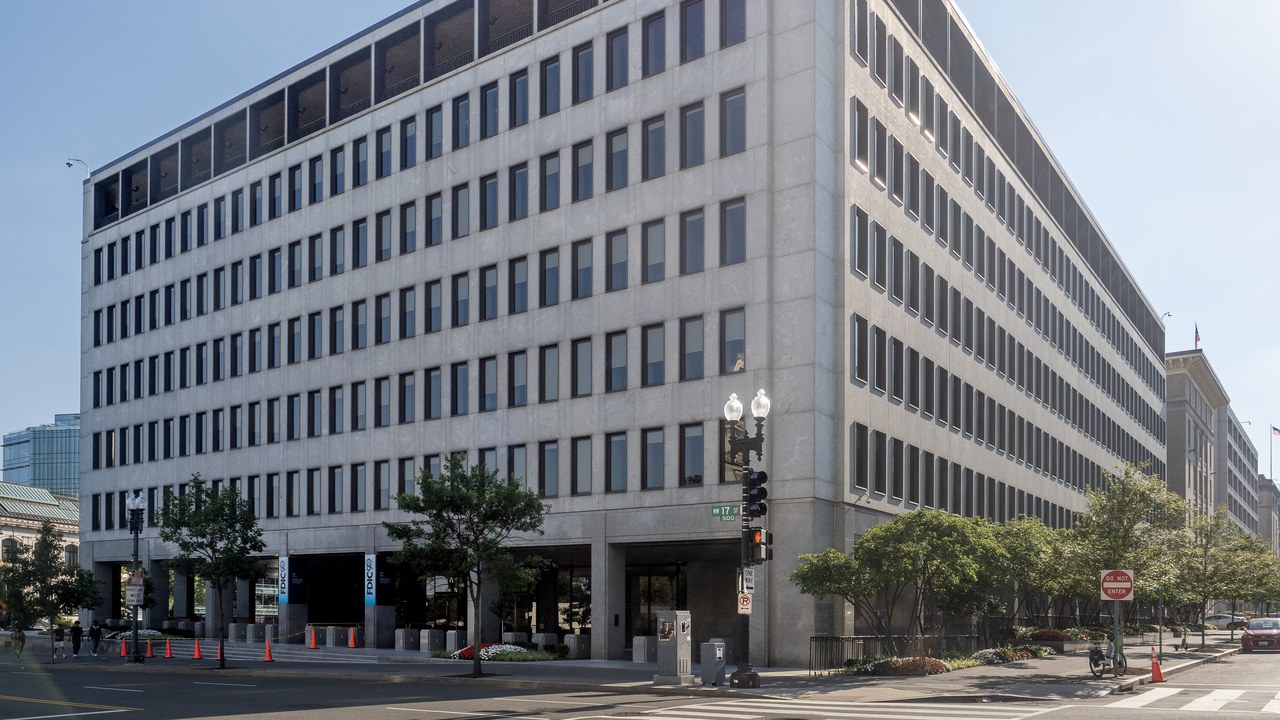
A small Philadelphia savings bank closed its doors last month, and by the following business day every checking and savings account it held had a new owner. Tioga-Franklin Savings Bank, a single-branch lender, was taken over by Pennsylvania regulators on August 21, making it the fifth bank to fail in the United States this year. For the households and small businesses who banked there, the ordinary rhythm of paying rent, cashing a paycheck or covering an automatic withdrawal did not skip a beat.
Pennsylvania Regulators Closed the Bank, and Second Federal Took Over by Monday
The Pennsylvania Department of Banking and Securities closed Tioga-Franklin Savings Bank on Friday, August 21, and appointed the Federal Deposit Insurance Corporation as receiver, according to the FDIC’s press release on the closure. State regulators, not the FDIC, make the call to shut a bank down; the FDIC’s job starts the moment that decision is made, lining up a buyer and managing the handoff so customers feel as little disruption as possible.
Second Federal Savings and Loan Association of Philadelphia agreed to assume every deposit account and buy substantially all of Tioga-Franklin’s assets. The single branch reopened under Second Federal’s name during normal business hours on the following Monday, August 24, and depositors became Second Federal customers automatically, with no forms to sign and no action required on their part. Over the weekend in between, checks written against Tioga-Franklin kept clearing, debit and ATM cards kept working, and loan customers were told to keep making payments on the usual schedule.
The FDIC also opened a dedicated phone line for the transition, staffed from Friday evening until 9 p.m. Eastern, then Saturday from 9 a.m. to 6 p.m. and Sunday from noon to 4 p.m., before shifting to normal weekday hours. That kind of staffing is routine for a closure of this size: the agency expects the first questions — is the money still there, will a scheduled bill payment go through, does a debit card still work — to land in the first 48 hours, well before Second Federal’s branch reopens its doors.
Free download: Which benefits are protected and how to show it, what to do about a frozen account, and how to answer a debt collector. Download the free bank and debt checkup.
Free download from RetireShield. Getting it also signs you up for the free Retirement Money Brief, a weekday email. Unsubscribe anytime.
Why No One Banking at Tioga-Franklin Lost a Dollar
The FDIC’s frequently asked questions page for the closure spells out the mechanic that mattered most to customers: every deposit, regardless of dollar amount, transferred automatically to Second Federal and stayed insured without a gap in coverage. That is the ordinary design of federal deposit insurance, which covers up to $250,000 per depositor, per ownership category, at an insured bank — a ceiling that covered Tioga-Franklin’s roughly $67 million in total deposits many times over. Customers kept full access to their money through the entire weekend and never had to file a claim, prove a loss or wait on a check from Washington.
Households with balances well under that $250,000 line rarely think about ownership categories at all, since a single checking or savings account is automatically covered on its own. The distinction matters more for a family carrying a joint account alongside individual savings, or a retirement account at the same bank as a checking account, because each of those categories gets its own separate coverage rather than sharing one combined limit. Tioga-Franklin’s customers never had to test that math, since the bank’s entire deposit base was a fraction of what federal insurance can absorb at a single institution.
The Bill Landed on the FDIC’s Deposit Insurance Fund, Not on Customers
Someone still absorbs the cost when a bank fails, and here it was the FDIC’s Deposit Insurance Fund rather than any depositor. Tioga-Franklin reported about $68 million in assets and $67 million in deposits as of June 30, and the FDIC put the preliminary cost to the fund at roughly $5.5 million, according to the same press release, a figure that can move as retained assets are sold off in the months ahead. That fund is built from premiums banks pay in, not from tax dollars, which is part of why a failure this size barely ripples outside the neighborhood the branch served.
Every FDIC-insured bank pays quarterly assessments into that fund, priced to each bank’s size and risk profile, long before any single institution runs into trouble. The arrangement means the industry effectively pre-funds its own safety net, and a small failure like Tioga-Franklin’s draws down a reserve that was built for exactly this purpose rather than triggering a new bill anywhere else in the banking system.
A Fifth Failure in a Year of Small, Quiet Bank Closures
Tioga-Franklin’s closure marked the fifth bank failure in the United States so far in 2026. Each of this year’s failures has followed the same pattern seen here: a healthier bank absorbs the deposits over a weekend and reopens the branch under its own name before the next business day begins, with no line at the door and no run on the bank. That pattern is why the size or reputation of a local bank matters less than the sign that eventually goes up in its window — federal deposit insurance, not the bank itself, is what protected the $67 million in deposits Tioga-Franklin held when Pennsylvania regulators stepped in, the same figure the FDIC listed as the bank’s total deposit base when it announced the takeover.
When an Account Freezes Without a Regulator’s Help
Tioga-Franklin’s depositors got a clean handoff because federal deposit insurance is built to work automatically, without a form to fill out or a deadline to track. Most account freezes that households actually run into are not bank failures at all — they are disputed joint accounts, a bank’s own fraud hold, or a debt collector chasing money in an account — and none of those situations come with a regulator managing the timeline. Nobody hands out a script for what to say to a bank representative or a collector when money that was there yesterday is suddenly out of reach.
The Bank Account & Debt Protection Kit is a 10-page kit built around the 2-month bank protection rule and the debt-validation steps, with a frozen-account response and a protected-funds and dispute log for tracking the back-and-forth.
Look up the frozen-account response inside The Bank Account & Debt Protection Kit.
AI-assisted research and drafting; reviewed by an editor.


