
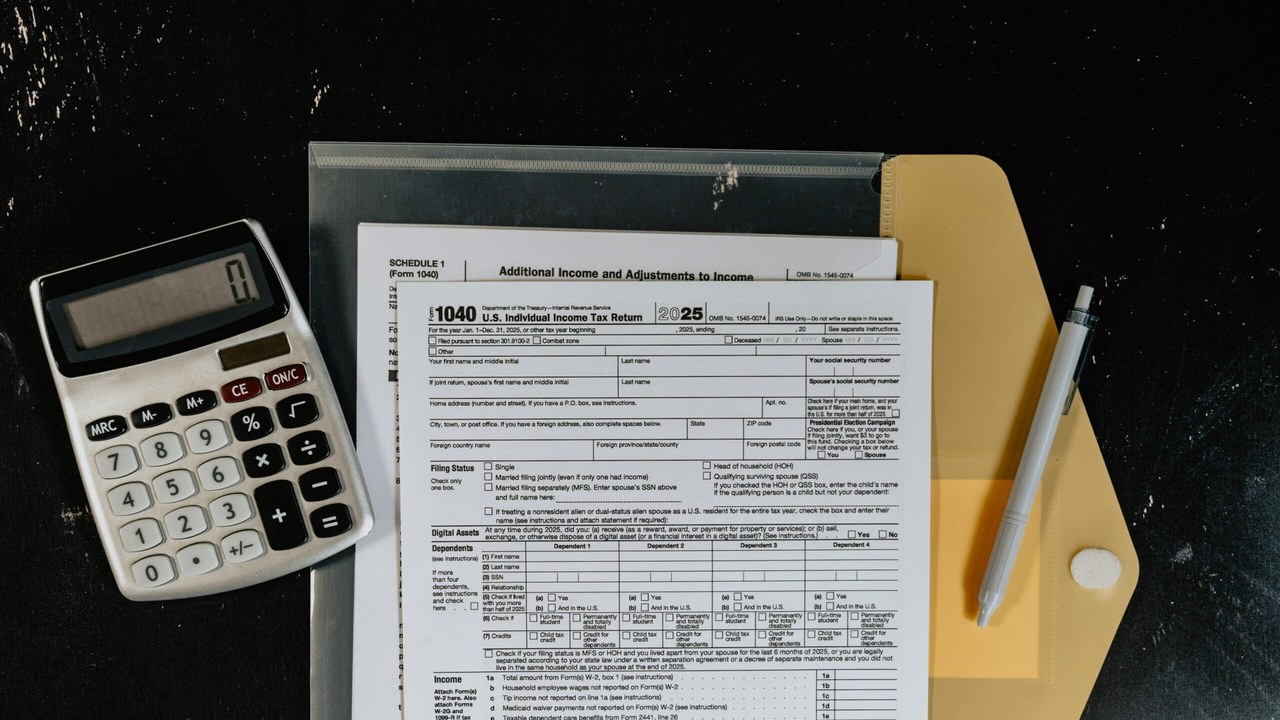
Millions of taxpayers who asked the IRS for more time this spring are now closer to the real deadline than the extension ever suggested. October 15 is the date Form 4868 actually buys, and for households still sitting on an unfinished return, the IRS Free File program remains open to help finish it without paying for software. Missing that date does not erase a tax bill — it adds interest that has been running since April, extension or not.
Form 4868 Bought Time to File, Not to Pay
An extension filed on Form 4868 moved the paperwork deadline to October 15, 2026, but it never moved the payment deadline, which stayed fixed at April 15. Anyone who owes money and has not paid keeps accruing both a failure-to-pay penalty and interest for every month the balance sits unpaid, extension or not.
The IRS restated that distinction in a reminder published in late August, urging taxpayers who requested more time to file “as soon as possible” rather than waiting for the final days of the extension window (IRS, Aug. 26, 2026). The extension only blocks the steeper failure-to-file penalty, and only if the return itself reaches the IRS by October 15 — a household that mistakes the filing extension for a payment extension can end up owing both penalties by the time the return finally goes in.
Free download: What each refund-status message means, the direct-deposit and paper-check paths, and when to follow up with the IRS. Get the free refund delay decision tree.
Free download from RetireShield. Getting it also signs you up for the free Retirement Money Brief, a weekday email. Unsubscribe anytime.
Free File’s Software Access Is Still Live, With an $89,000 Ceiling
IRS Free File — guided, brand-name tax software offered at no cost through the agency’s partnership with private preparation companies — is still accepting extension filers this month, with eligibility for the guided version capped at $89,000 in 2025 adjusted gross income (IRS.gov). The program carries guarantees a paid preparer’s app does not have to offer: participating companies must cover any IRS penalty or interest that results from an error in their own software’s math, and none may sell add-on bank products such as refund-anticipation loans or charge a hidden fee to prepare the federal return.
Filers above the $89,000 threshold can still use Free File Fillable Forms, which carry no income limit but require entering figures onto the electronic form without the guided prompts, error checks or free state-return preparation that the branded software includes.
The program only works as advertised when a filer starts at IRS.gov rather than going directly to a partner company’s commercial website, since that direct route can trigger a fee the free version does not charge. Each participating company also sets its own additional eligibility rules — income, age or state residency — layered on top of the federal $89,000 ceiling.
The Fourth-Quarter Interest Rate Just Locked In at 7 Percent
Interest on an unpaid 2025 balance is calculated at the federal short-term rate plus three percentage points, reset every quarter, and the IRS confirmed in an announcement dated August 21 that the rate for individual underpayments holds at 7 percent, compounded daily, for the quarter beginning October 1, 2026 (IRS, Aug. 21, 2026).
That rate applies whether or not a return has been filed, so a household waiting until the last days of the extension is already paying interest on a debt the IRS has tracked since April, separate from any late-filing penalty a missed October 15 date could add. The 7 percent figure carries over unchanged from the prior quarter, so filers who ran the math over the summer are not working from a stale number.
A Payment Plan Can Cap Penalties, Interest Does Not Stop
Taxpayers who cannot cover the full balance by October 15 are not without options. The IRS payments page directs anyone facing a shortfall to pay what they can right away and apply for a payment plan, noting that setting one up can reduce the penalties that would otherwise keep compounding month over month (IRS, Payments: Penalties).
Interest is a separate mechanism from penalties, and the agency is explicit that it cannot remove or reduce interest by law unless the underlying penalty itself is removed or reduced first. That distinction matters for extension filers doing the math before October 15: arranging a payment plan can cap the penalty side of a bill, but the 7 percent interest clock keeps running on any unpaid balance regardless.
Guided Software or Fillable Forms — Both Close on October 15
Guided software walks a filer through each entry, checks the math and flags likely errors, while Free File Fillable Forms hands over a blank electronic version of the paper return with none of those prompts — a route built for someone who has already prepared a return by hand before. Both options lead to the same October 15 cutoff, and both require starting the process from the IRS’s own site rather than a preparer’s outside page.
The Free File program page, last reviewed by the agency on June 12, 2026, lists both routes as active for the current filing season, with the guided software’s list of partner companies reachable through the IRS’s own free-file tool rather than any outside search result.
Tracking a Refund Once an Extended Return Is Filed
Filing the extended return answers only the paperwork question. It says nothing about what happens after the IRS receives it, and for extension filers who turn out to be owed a refund rather than a balance, the agency’s own tracking tools show a status update without ever printing a next step if that status stalls. Nothing in the reminder or interest announcement above addresses what a filer does when a refund goes quiet after the paperwork is in.
The IRS Refund Recovery Kit is a 13-page kit with a notice decoder and the refund-trace steps for Form 3911, built around a refund status tracker spreadsheet.
See The IRS Refund Recovery Kit.
AI-assisted research and drafting; reviewed by an editor.


