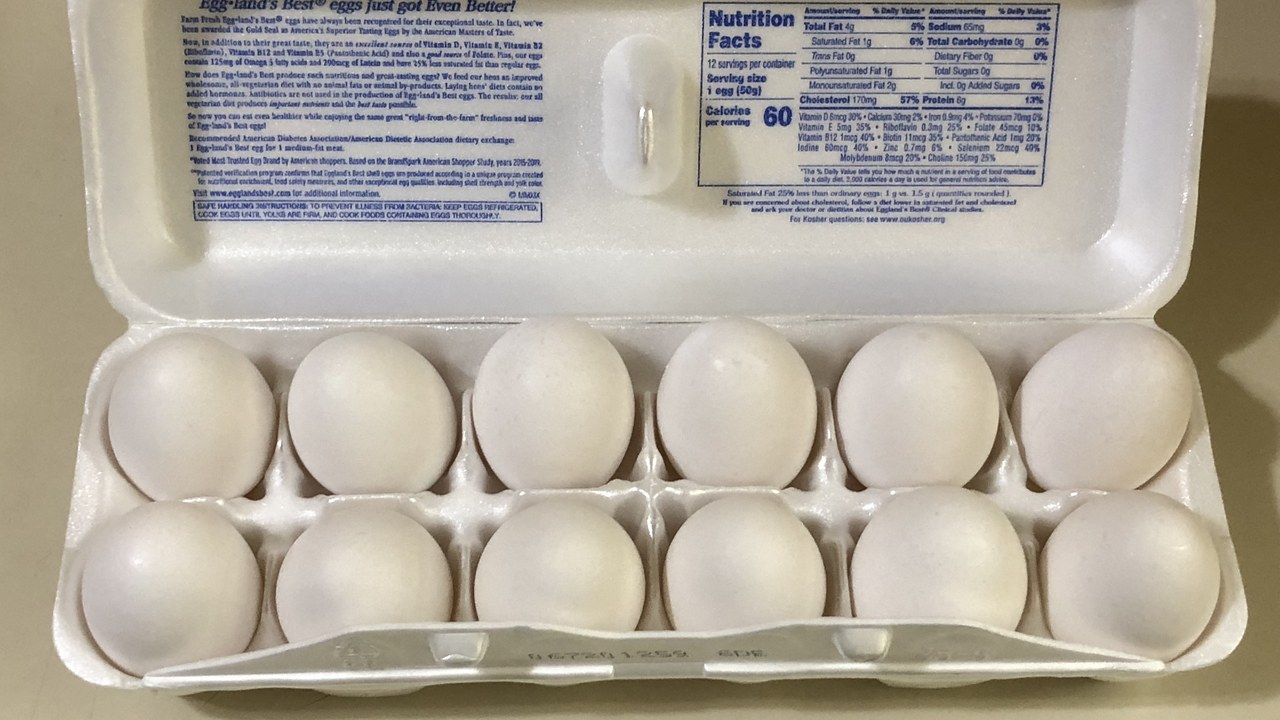
Grocery shoppers scanning the egg case this week are looking at one of the widest price gaps between egg types tracked in recent months. Federal market researchers who survey supermarket advertising nationwide found conventional caged eggs on sale for $1.36 a dozen this week, while cage-free barn and aviary eggs carrying the UEP-certified label were advertised at $3.07. For a household that buys a dozen eggs every week, choosing the cage-free carton now means paying more than double what the conventional carton costs.
The Ad-Price Gap Widens to $1.71 a Dozen
The numbers come from a weekly national retail egg feature report that tracks advertised prices at major grocery chains across the country. The average ad price for conventional caged eggs rose a penny this week to $1.36 a dozen, while promotions on those eggs actually decreased slightly in number. At the same time, featuring of UEP-certified barn and aviary cage-free eggs increased, holding the average ad price at $3.07 a dozen. That puts the spread between the two at $1.71 a dozen, the largest gap currently showing up in the weekly feature data behind these two mainstream carton types.
The report, published by USDA’s Agricultural Marketing Service, also notes that non-organic free-range and pastured eggs are being promoted even more heavily than standard cage-free cartons right now, and that organic eggs were featured less often than the previous week, with the average organic price ticking down. In other words, the exact spread a shopper sees depends heavily on which specific carton lands in a store’s weekly ad, not just whether the word “cage-free” appears on the front of the box.
Free retirement updates: Miss an enrollment or claim deadline and it may be gone. Our free Retirement Shield newsletter keeps readers ahead of the ones that matter. Get the free newsletter.
Why Cage-Free Hens Cost More to Keep
The price gap traces back to how the two systems raise hens, not to any difference in the eggs themselves. Conventional egg operations house hens in cages that pack more birds into a given barn footprint, which keeps labor, heating, and feed-delivery costs lower per dozen produced. Cage-free barns and aviaries give hens room to move, perch, and nest, but that means fewer birds per square foot of barn space, more labor to collect eggs from open floors and nest boxes, and higher construction costs to convert or build that kind of housing in the first place.
Cage-free flocks also tend to see higher mortality from pecking injuries and disease exposure than caged flocks kept in more controlled conditions, which producers factor into what they charge packers and, eventually, retailers. Those costs get passed down the chain from farm to processor to grocery shelf, which is why the cage-free carton lands at more than double the price of the conventional one even in the same week, at the same stores, from birds that lay essentially the same egg.
State Confinement Laws Are Reshaping the Egg Case
Part of why cage-free eggs are showing up in ads more often, even at a premium price, is that a growing number of states have passed laws restricting how egg-laying hens can be housed. According to a USDA Economic Research Service analysis of state confinement laws, at least nine states have enacted bans on caged confinement of laying hens since California’s Proposition 2 passed in 2008, with many of those bans phased in between 2022 and 2026. ERS estimated that the share of the nation’s egg-laying flock covered by these restrictions was on track to more than double by 2026 compared with before 2022, even though the large majority of U.S. egg production would still legally be allowed to use cage systems after that.
As more states require cage-free production for eggs sold within their borders, grocery chains operating in those markets stock more cage-free cartons by default, whatever the price gap looks like that week. That structural push from state law is one reason cage-free featuring keeps climbing even while the premium over conventional eggs stays wide, since the chains in covered states have little choice but to keep the cage-free product on the shelf and in the weekly ad.
How USDA Tracks What’s on the Shelf
The prices in this week’s report aren’t averages pulled from cash registers. USDA’s Market News division compiles advertised retail pricing for eggs and several hundred other grocery items by reviewing publicly available sources, primarily retailer websites and weekly circulars, at major supermarket chains nationwide. That means the $1.36 and $3.07 figures reflect what stores are actively promoting in their ads this week, not necessarily the shelf price on every carton in every store. A shopper who skips the sale rack could pay more for either type, and one who catches a deeper cage-free promotion in a future week could see the gap narrow some.
For now, the report’s own read on the week is that feature activity for shell eggs was “almost unchanged” compared to seven days earlier, with cage-free types continuing to dominate the ads even as conventional promotions eased slightly. That combination, steady conventional pricing near $1.36 and cage-free holding near $3.07, is a signal that the $1.71 gap is likely to hold through the next several weekly reports rather than close in the near term.
This article was produced with AI assistance and reviewed by a human editor. Figures are linked to their primary sources; where a claim could not be verified from the public record, we say so.
More Financial Reading