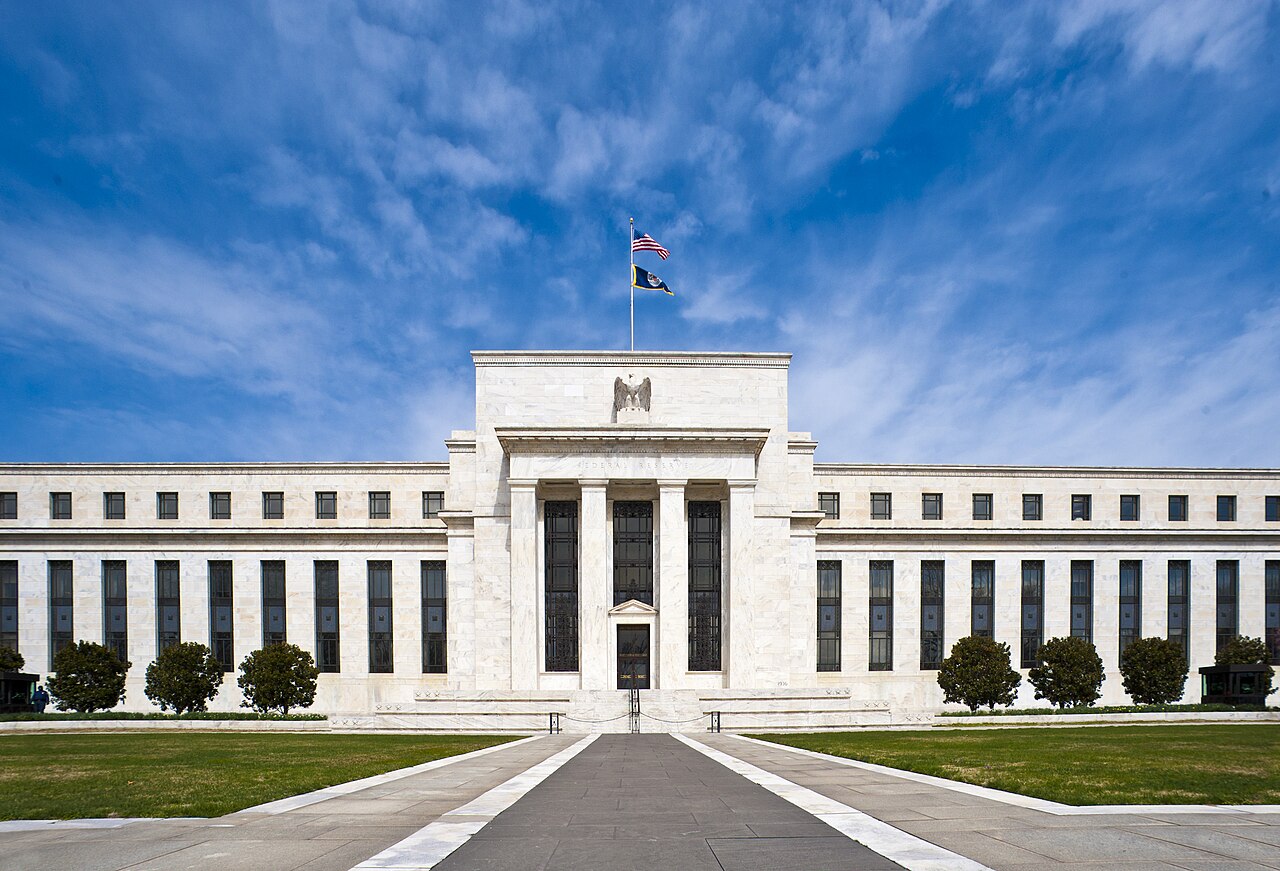
The Federal Reserve wrapped up its two-day meeting Wednesday and left its benchmark interest rate exactly where it found it: a target range of 3½ to 3¾ percent, per the FOMC statement released April 29. If you have a savings account, a CD maturing soon, or cash sitting in checking earning nothing, that one sentence sets the terms for your money for at least the next several weeks. Here’s the decision in plain English — and what a saver should actually do about it.

What the Fed said, translated

The committee’s statement described an economy “expanding at a solid pace,” but with two complications pulling in opposite directions: job gains “have remained low,” while inflation “is elevated, in part reflecting the recent increase in global energy prices.” It also flagged that “developments in the Middle East are contributing to a high level of uncertainty about the economic outlook.”
Translation: the Fed’s two jobs — keeping employment strong and inflation low — are giving it conflicting instructions right now. Cutting rates would support hiring but risk feeding energy-driven inflation; raising them would do the reverse. So it did neither.
What made this meeting unusual was the vote: 8 to 4. One member, Stephen Miran, wanted to cut rates by a quarter point immediately. Three others — Beth Hammack, Neel Kashkari, and Lorie Logan — voted no from the other side, objecting to language leaning toward future cuts. Four dissents at a single meeting is genuinely rare, and it tells you the path from here is contested even inside the building. Anyone promising you they know where rates go next is guessing.
Why your savings account cares
The federal funds rate is what banks pay to borrow overnight, and it anchors what they’re willing to pay you for deposits. When the Fed holds steady, deposit rates mostly hold too — but “mostly” hides a lot, because banks reprice with a lag and in whichever direction helps them.
The gap between banks remains the real story. The FDIC’s national deposit rates for April put the average savings account at 0.38 percent — while competitive online banks and credit unions continue to pay several times that. With the Fed’s benchmark sitting in the mid-3s, a bank paying you a fraction of one percent is simply keeping the difference. On a $20,000 emergency fund, the average savings rate earns about $76 a year; a high-yield account priced anywhere near the Fed’s rate earns several hundred dollars more, with identical federal insurance up to $250,000.
A hold, in other words, changes nothing about the most profitable move most savers have available: moving cash from a near-zero account to a high-yield one.
CD shoppers: the market has already voted

Here’s the wrinkle worth understanding if you’re weighing a certificate of deposit. Banks don’t price CDs off what the Fed did — they price them off what they expect it to do. And the drift is visible in the FDIC’s own data: the national average 12-month CD rate has slipped from 1.61 percent in January to 1.53 percent in April, per the FDIC’s monthly rate history. Banks, in aggregate, have been quietly positioning for rates to head lower, not higher — the same direction the statement’s easing-tilted language points, and the very language three committee members objected to.
For a saver, that suggests two practical points. First, if you’ve been waiting for CD rates to improve before locking in, recognize that the recent trend runs the other way. Locking a portion of savings you won’t need — at today’s rates, for 12 or 24 months — insures that money against future cuts. Second, the reverse also matters: don’t lock up your emergency fund chasing yield. Early-withdrawal penalties routinely claw back months of interest, and the whole point of that money is that you can grab it at 2 a.m.
A middle path is a simple ladder: split the cash you can commit across CDs maturing at different dates, so some money is always coming free no matter what the Fed does next.
Borrowers got nothing — which is also information
A hold means credit card rates, which float, stay painful; carrying a balance remains the most expensive ordinary financial habit in America, and no Fed meeting this spring rescued it. Auto loans and mortgages key off longer-term rates that move on expectations rather than announcements. If your plan was “wait for the Fed to fix my borrowing costs,” Wednesday’s 8–4 stalemate is your notice that the fix has no scheduled arrival date.
The kitchen-table summary
Rates are on hold; the committee is openly split; and the members’ next scheduled decision comes in June. None of that is in your control. What is: check what your own bank actually pays you (the APY is in your app), move idle cash somewhere competitive, consider locking a slice of true surplus savings into a CD while yields are still well above their averages of a few years ago, and keep paying down floating-rate debt as if help isn’t coming — because on Wednesday, once again, it didn’t.
This article was produced with AI assistance and reviewed by a human editor. Figures are linked to their primary sources; where a claim could not be verified from the public record, we say so.